Here’s the thing about LinkedIn Pulse that nobody tells you: the platform has completely changed how professionals share knowledge and build authority online. But most people still treat it like a regular social feed, wondering why their carefully crafted articles get maybe 50 views while others rack up thousands.
The difference? Understanding what actually works.
LinkedIn Pulse isn’t just another blogging platform. It’s where 590 million professionals come to learn, connect, and make decisions. And in 2025, the data tells a fascinating story about who’s winning and who’s wasting their time.
This guide breaks down every LinkedIn Pulse statistic you need to know, from engagement rates to optimal posting schedules. Whether you’re a content creator building thought leadership or a professional looking to expand your network, these numbers will change how you approach the platform.
Let’s dive into what the data actually says.
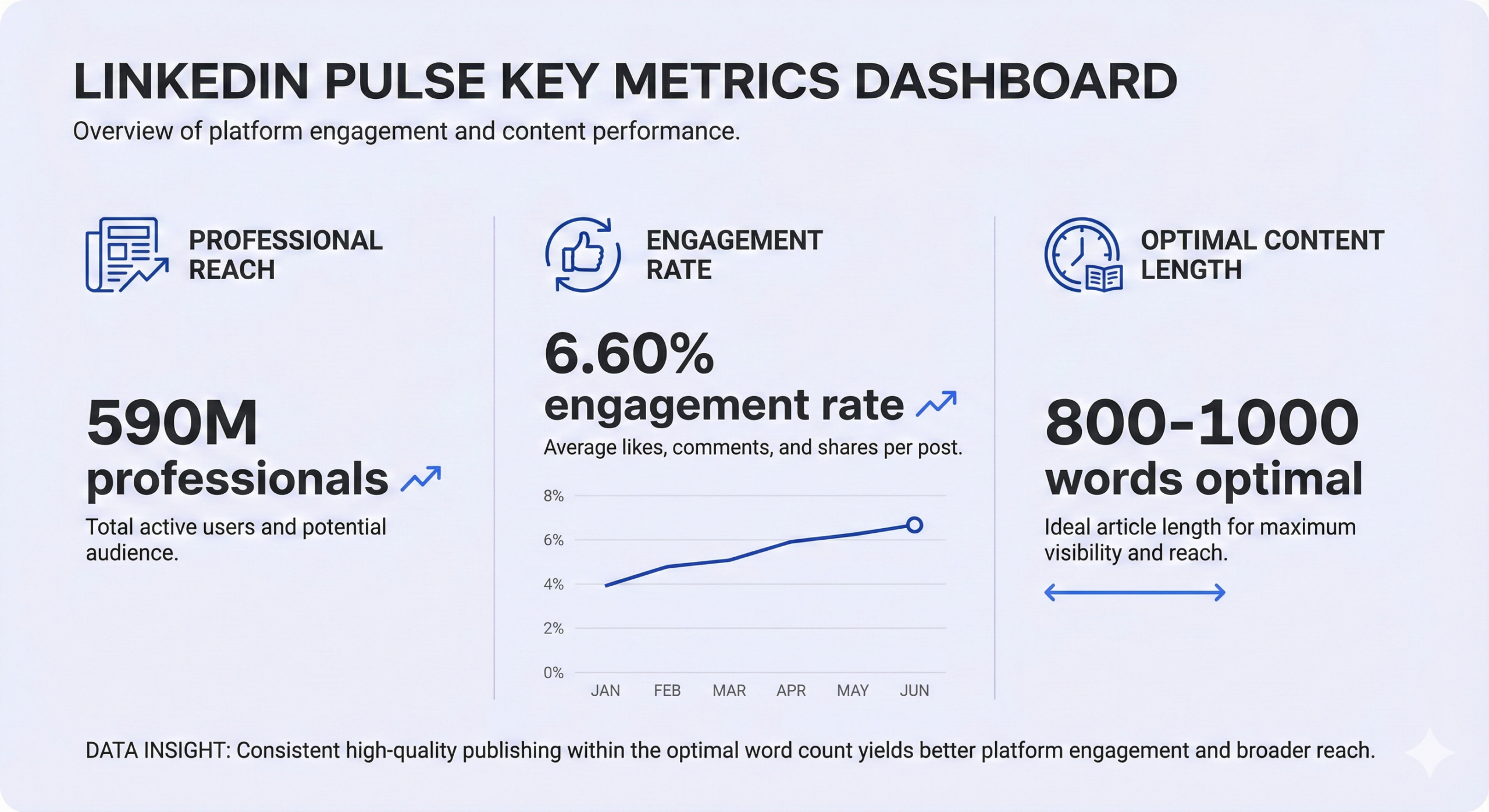
hit “publish” on your next piece, consider this: the platform’s engagement rate by impressions sits at 5.20% by mid-2025, but that number tells only part of the story.
LinkedIn isn’t just another content platform. It’s where 65 million business decision-makers actively consume content, research solutions, and make purchasing decisions. When you understand how LinkedIn Pulse performs, you’re not just optimizing for likes—you’re positioning yourself in front of the people who actually matter for your career or business.
The data reveals something fascinating: only 1% of LinkedIn’s monthly users share content weekly, yet these users generate 9 billion impressions. This means massive opportunity exists for anyone willing to consistently publish quality content.
Here’s why these numbers matter: every piece of content you publish on Pulse becomes a permanent, searchable asset. Unlike regular feed posts that disappear after 48 hours, Pulse articles live on your profile indefinitely, show up in Google search results, and continue attracting readers months after publication.
The professionals who win on LinkedIn aren’t guessing—they’re using data to inform every decision about what to create, when to publish, and how to structure their content.
LinkedIn Pulse Engagement Statistics You Need to Know
The engagement landscape on LinkedIn has shifted dramatically. Here’s what’s actually working right now.
Content Format Performance
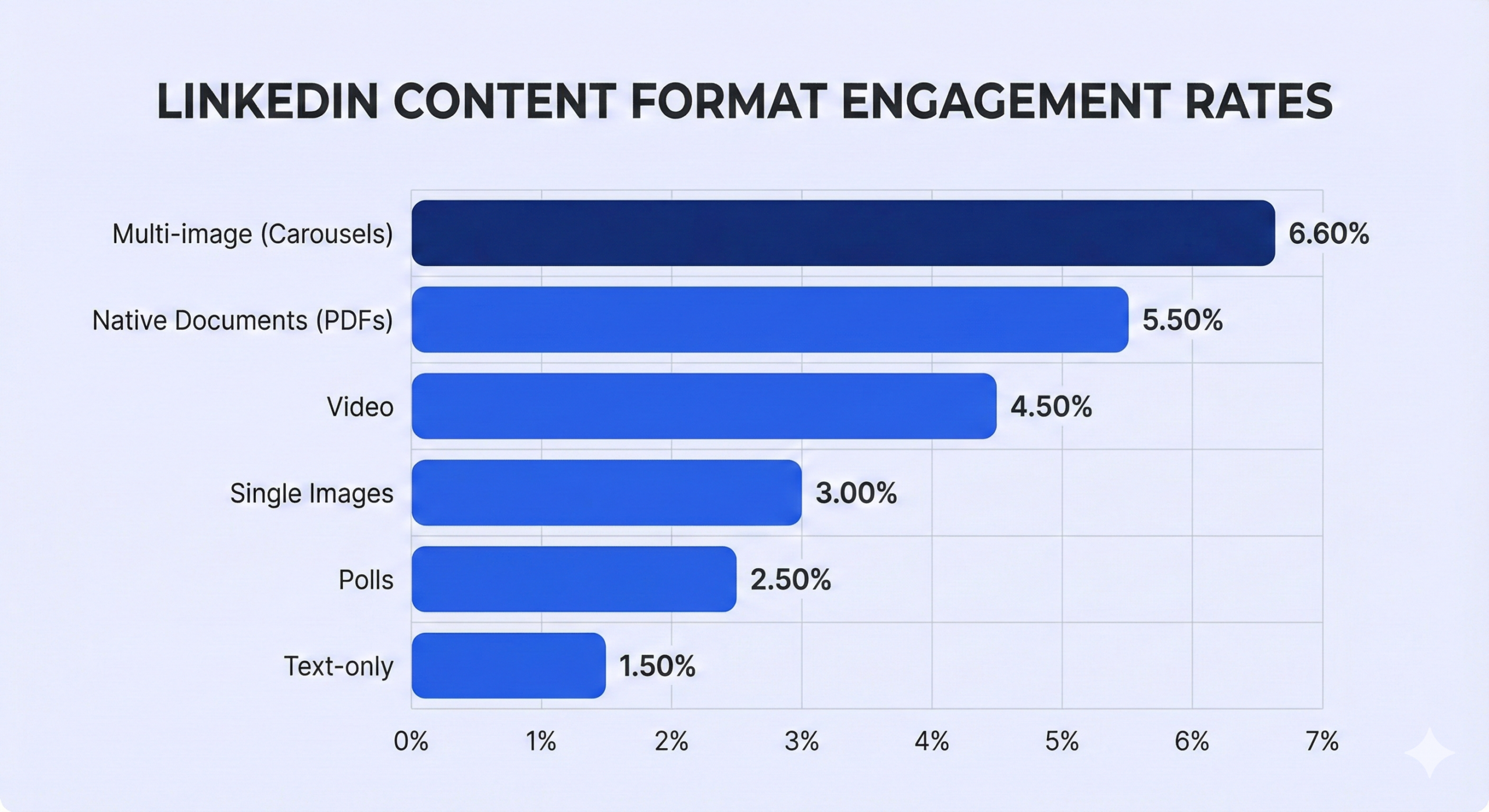
Not all content formats perform equally. Multi-image posts lead with a 6.60% engagement rate, followed by native documents at 5.85% and videos at 5.60%. This is a huge insight for content creators who’ve been focusing solely on video.
The carousel format (multi-image posts) forces users to interact—they must click to see the next slide. This active engagement signals to LinkedIn’s algorithm that your content deserves wider distribution. If you’re still posting plain text updates, you’re leaving reach on the table.
Here’s the breakdown:
- Multi-image/Carousel posts: 6.60% engagement
- Native documents: 5.85% engagement
- Video content: 5.60% engagement
- Static images: 4.85% engagement
- Polls: 4.40% engagement
- Text-only: 3.0-3.5% engagement
Videos have seen significant growth too. Total video views increased 36% year-over-year, and video views rose 6x quarter-over-quarter in early 2025. The platform is clearly pushing video content harder than ever before.
Post Length and Performance
Here’s where it gets interesting. Articles with 1,800-2,100 words perform best, driving higher engagement and reach. This flies in the face of the “short attention span” narrative that dominates social media advice.
LinkedIn users aren’t mindlessly scrolling like on other platforms. They’re at work, looking for insights that help them solve problems or make better decisions. Comprehensive, well-researched content wins because it delivers real value.
For shorter posts in the feed (not Pulse articles), aim for 300-800 words. These hit the “see more” button threshold, which creates a micro-conversion that boosts algorithmic ranking. About 40% of users click to expand these medium-form posts.
The mobile versus desktop divide matters too. Desktop users—who make up 74.24% of LinkedIn traffic—can handle longer, more detailed content. They’re sitting at their office computers with time to dig into substantive material.
Timing Your Posts for Maximum Reach
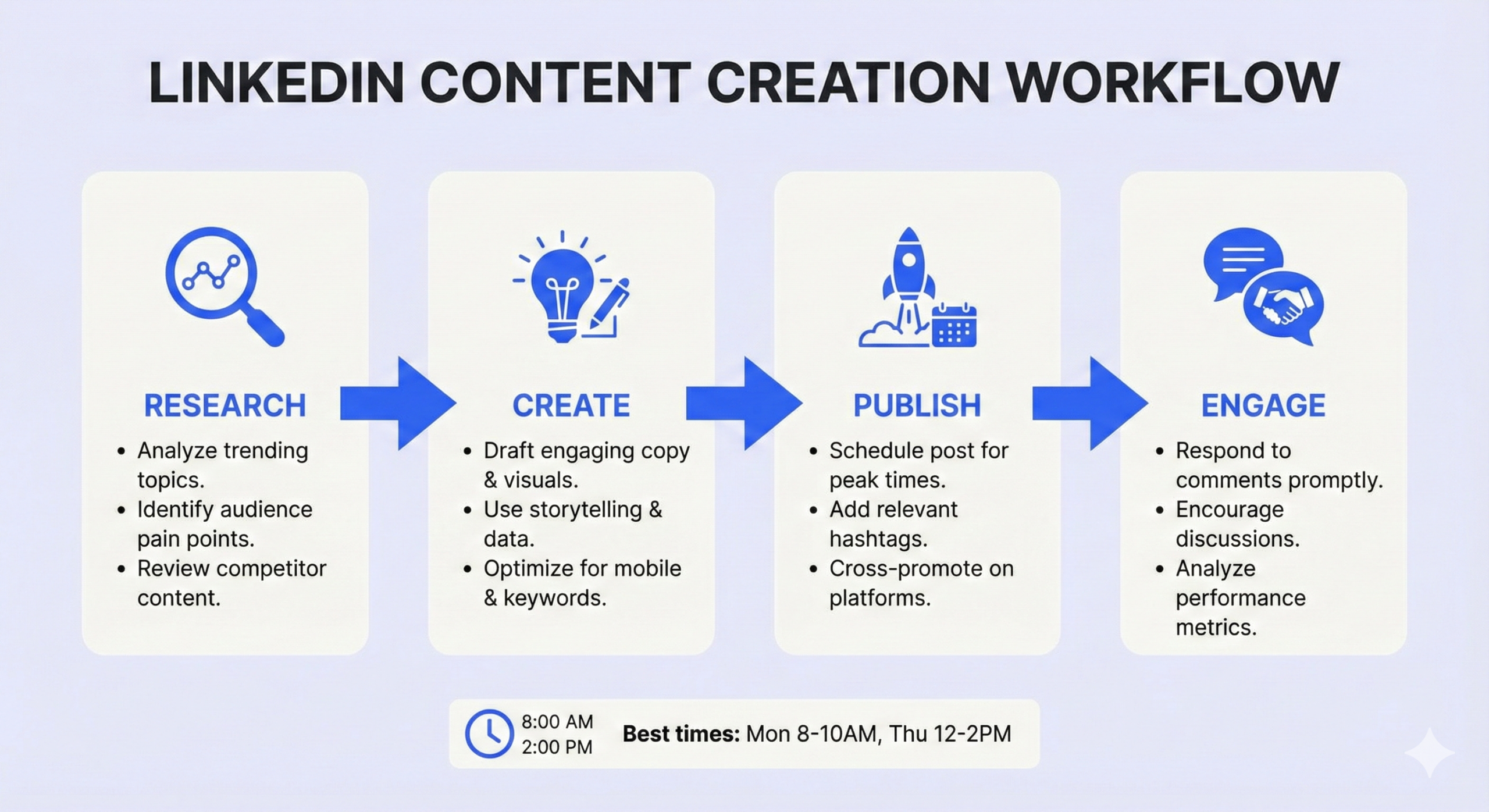
Timing isn’t everything, but it’s something. The best times to post are Monday at 8 AM and 10 AM, and Thursday at 12 PM and 2 PM. These windows align with when professionals check LinkedIn between meetings or during lunch breaks.
Tuesday through Thursday consistently outperform other days. Mondays are busy with catch-up work, but by Tuesday morning, people have settled into their week and are more likely to engage with content.
Avoid weekends entirely unless you’re targeting entrepreneurs or executives who work through weekends. Professional content sees dramatic drops in engagement on Saturdays and Sundays—save your best material for weekdays.
The 72-hour lifespan of LinkedIn content gives you more breathing room than platforms like Twitter or Instagram. A post published Tuesday morning might peak on Thursday afternoon as the algorithm continues finding the right audience.
LinkedIn Pulse Audience Demographics
Understanding who’s actually on the platform changes how you create content.
Who’s Reading Your Content
LinkedIn hit a major milestone: over 1 billion users globally in 2025. But raw numbers don’t tell the whole story. What matters is who these users are and what they’re looking for.
The demographics break down interestingly:
- 50.6% of users are 25-34 years old (Millennials dominate)
- 56.4% are male, 43.6% are female
- The United States leads with 230 million users, followed by India with 135 million and Brazil with 78 million
For content creators, this millennial dominance is crucial. This demographic grew up with social media—they expect authentic, valuable content, not corporate jargon. They can spot marketing speak from a mile away and will scroll right past it.
The professional level of LinkedIn users sets it apart from every other platform. Over 65 million business decision-makers actively use LinkedIn, making it the only social network where you can consistently reach people with purchasing authority.
How Users Engage With Content
Average session length matters. Users spend an average of 8.33 minutes per session on LinkedIn. This isn’t passive scrolling time—it’s focused, intentional browsing during work hours.
The platform sees 1.7 billion visits per month, and most of this traffic happens on desktop during working hours. This desktop-heavy usage explains why longer, more detailed content performs well. Users aren’t trying to consume content on a tiny phone screen while commuting—they’re at their desks with time to read.
Engagement patterns differ significantly from other platforms. Video content gets 5× more engagement than text-only posts, and live broadcasts see 24× more interaction than pre-recorded videos. The live element creates urgency and authenticity that pre-recorded content can’t match.
LinkedIn Pulse Publishing Best Practices
Now that you understand the statistics, here’s how to actually use them.
Content Strategy That Works
Thought leadership posts generate 6x more engagement than job-related content. This means sharing your actual insights, experiences, and perspectives—not just announcing your latest job change or company milestone.
The most successful LinkedIn content follows a pattern:
- Personal stories that connect to professional lessons
- Industry analysis with unique perspectives
- How-to guides that solve specific problems
- Data-driven insights that challenge conventional thinking
Consistency beats everything else. Companies that post weekly gain 5.6x more followers than those that don’t. The algorithm rewards regular publishers by showing their content to more people over time.
Here’s a practical posting schedule that aligns with the data:
- 2-3 long-form Pulse articles per month (1,800-2,100 words)
- 3-4 mid-length posts per week (300-800 words)
- Daily engagement with others’ content (commenting builds visibility)
Making Your Content Stand Out
The platform now prioritizes “dwell time”—how long people actually spend looking at your post. This explains why carousel posts dominate: users must click through multiple slides, creating extended engagement.
For articles, structure matters. Break content into scannable sections with clear subheadings. The average engagement rate on LinkedIn posts is 2.8%, but well-structured content consistently beats this average by making information easy to consume.
Include visuals wherever possible. Posts with images receive twice the engagement rate, and video posts are 20 times more likely to be shared. Even a simple header image can double your engagement compared to text-only posts.
Understanding the Algorithm
LinkedIn’s algorithm has become more sophisticated. It doesn’t just count likes—it measures conversation quality. Posts that generate thoughtful comments (not just “great post!” responses) get significantly more distribution.
The algorithm also considers your past performance. If your recent posts have consistently generated engagement, your next post starts with a visibility boost. This creates a compounding effect for consistent publishers.
Hashtags still matter, but use them strategically. Include 3-5 relevant hashtags that your target audience actually follows. Going overboard with 15+ hashtags signals spam behavior and can actually hurt your reach.