LinkedIn Sales Statistics That'll Change How You Sell in 2026
- Sophie Ricci
- Views : 28,543
Table of Contents
LinkedIn Sales Statistics
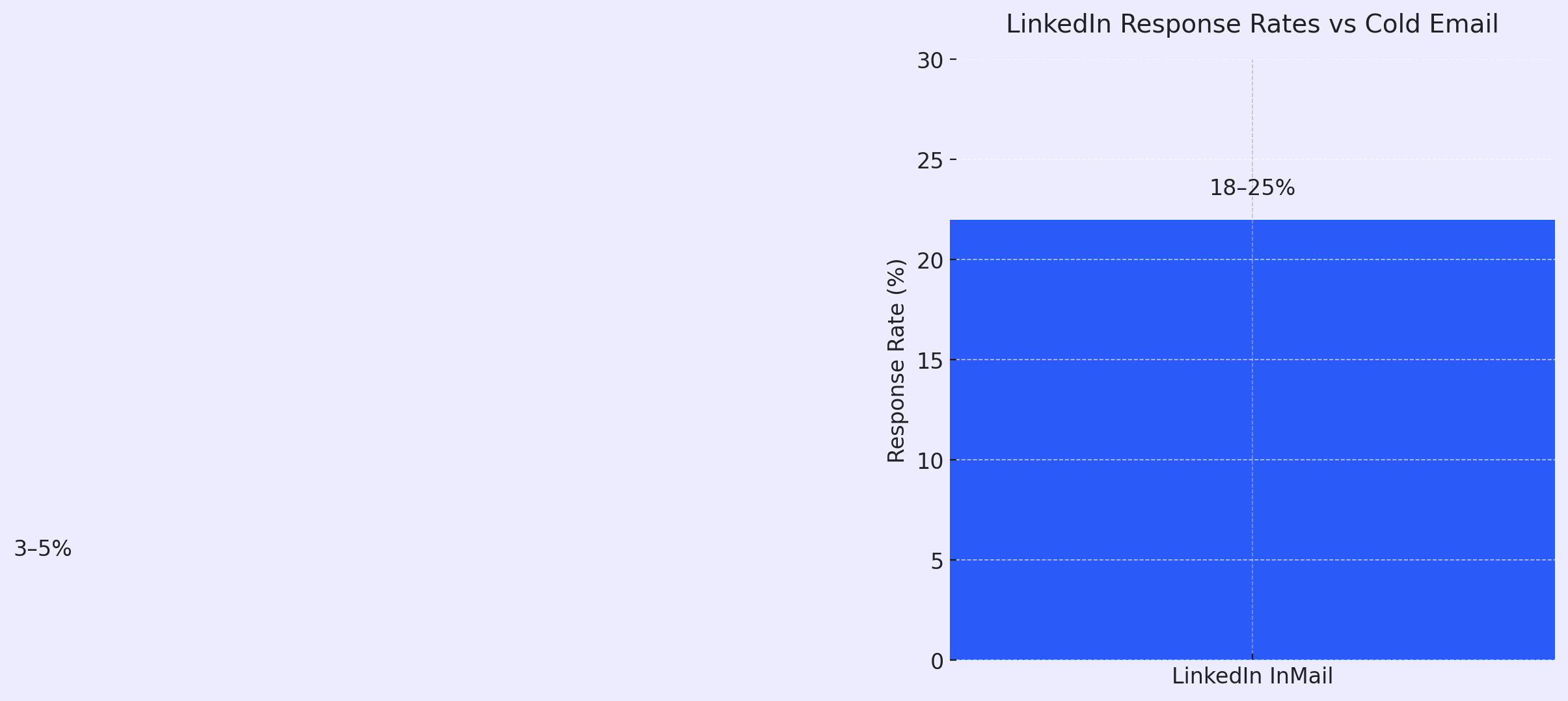
- LinkedIn InMail gets 18-25% response rates – while cold email averages 3-5%, making InMail significantly more effective for B2B outreach
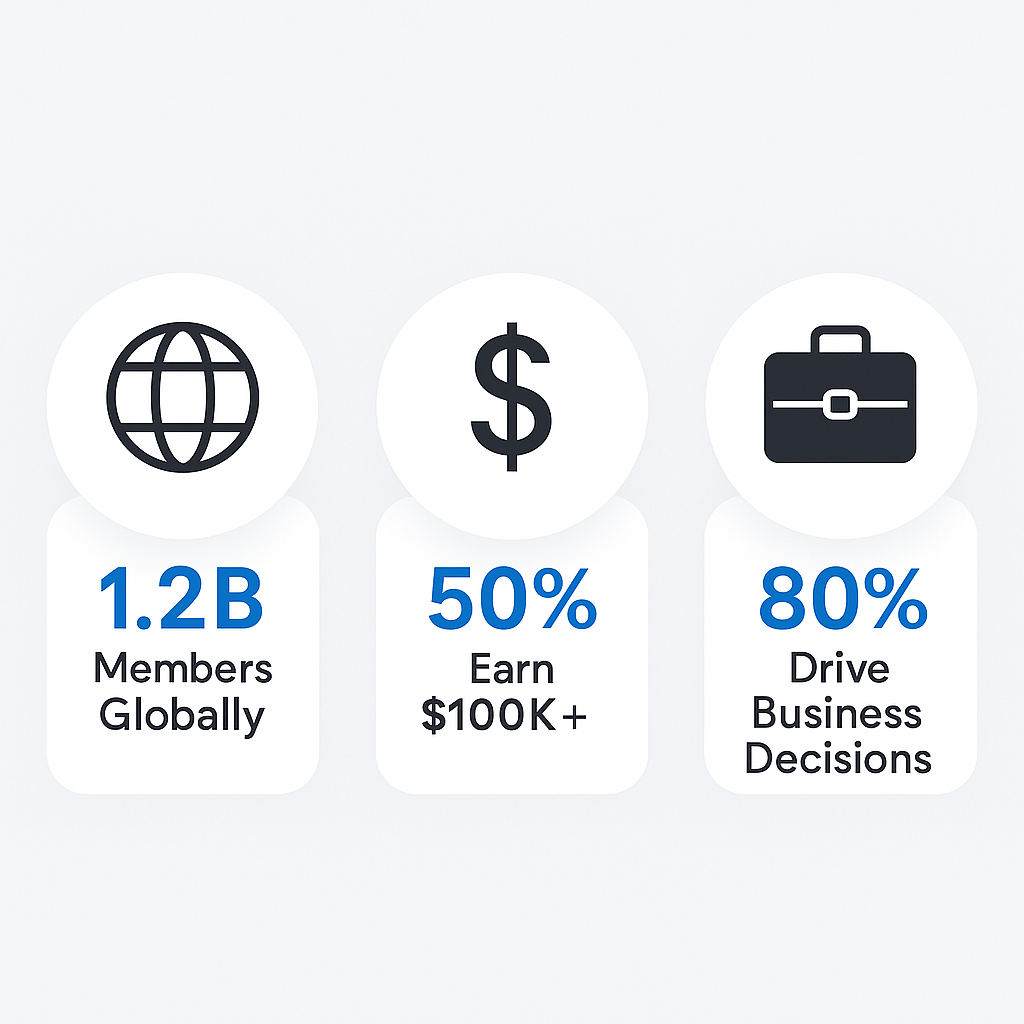
- More than 50% of LinkedIn members earn over $100,000 annually – providing access to prospects who can actually afford high-ticket products and services
- 4 out of 5 members drive business decisions – meaning 80% of the platform consists of actual decision-makers with purchasing authority
- 61 million users are senior-level influencers and 40 million are in decision-making positions – representing direct access to C-suite and VP-level buyers
- LinkedIn Direct Messages get 10.3% engagement versus 5.1% for cold emails – effectively doubling engagement rates compared to traditional email outreach
- Combining email with LinkedIn touches and phone calls boosts results by 287% – showing the power of multichannel orchestration over single-channel approaches
- Connection acceptance rates hover between 20% and 55% – but only if messages are personalized and targeting second-degree connections
- Personalized requests see 9.36% reply rate compared to 5.44% for blank requests – demonstrating the ROI of spending 30 seconds on customization
- Tuesday shows the highest reply rates at 6.90% – with mornings between 10 AM and 12 PM being the golden window for outreach
- Sales professionals with high SSI scores are 51% more likely to hit their quotas – and create 45% more sales opportunities than peers with lower scores
- 78% of social sellers outsell peers who don’t use social media – proving social selling is no longer optional for top performance
- Organizations using social selling see 20-30% acceleration in sales cycle time – trust built digitally reduces warming-up time during actual conversations
- Content shared by employees gets 8x more engagement than content shared by brand channels – with employee-shared brand messages achieving 561% greater reach
- LinkedIn Lead Gen Forms convert at 13% versus 2.35% for standard landing pages – making native LinkedIn forms dramatically more effective for lead capture
- Free accounts should stick to 15-20 connection requests daily (max 100/week) – with Premium and Sales Navigator users able to send 20-25 daily
Listen, if you’re still relying on cold email alone in 2025, you’re fighting with one hand tied behind your back.
Here’s the truth nobody wants to admit: LinkedIn InMail gets 18-25% response rates while cold email averages 3-5%. That’s not a small difference—that’s a game-changer.
But here’s what’s wild—most people still don’t know how to use LinkedIn for sales. They’re either spamming connection requests or completely ignoring the platform’s potential.
This article breaks down the exact linkedin sales statistics you need to know. No fluff. Just data that’ll help you make better decisions about where to spend your time and energy.
Why LinkedIn Actually Matters for Sales (The Numbers Don’t Lie)
The Scale Is Massive
LinkedIn isn’t just another social media platform. It has over 1.2 billion members globally, with 1.77 billion monthly visits in February 2025 alone. Think about that—people are visiting this platform more than once per month on average.
But here’s the kicker: More than 50% of linkedin members earn over $100,000 annually. You’re not just reaching people—you’re reaching people who can actually afford what you’re selling.
The platform hosts 326 million members in the Asia Pacific region and 260 million in North America. If you’re only focused on one timezone, you’re leaving money on the table.
The Quality Beats Every Other Platform
Here’s where it gets interesting. Over 50% of linkedin users hold at least a bachelor’s degree. Compare that to other platforms where you’re lucky if users finished high school.
And get this: 4 out of 5 members drive business decisions. That’s not engagement for engagement’s sake—that’s access to actual decision-makers.
Want more proof? 61 million users are senior-level influencers and 40 million are in decision-making positions. Your prospects aren’t just scrolling—they’re actively looking for solutions.
LinkedIn vs. Cold Email: The Response Rate Reality Check
Here’s where most people get it wrong. They think it’s either/or. Email or LinkedIn. Pick one.
Wrong approach.
The Data Shows You Need Both
LinkedIn Direct Messages get 10.3% engagement versus 5.1% for cold emails. That’s double the engagement. But here’s the real secret: combining email with LinkedIn touches and phone calls boosts results by 287%.
Think about it. When someone gets your cold email, what’s the first thing they do? They check your LinkedIn profile. If it’s blank or sketchy, your email is dead on arrival.
InMail averages 18-25% response rates in high-performing campaigns. Meanwhile, cold email sits at 3-5% generally (though personalized campaigns can hit 12-15%).
But here’s the thing—starting with light LinkedIn engagement (viewing profiles, liking posts) before sending a cold email lifts email reply rates to 15%.
The mechanism is simple: LinkedIn builds trust. Email scales the conversation.
📈 Want 18-25% Response Rates Consistently?
Our LinkedIn outbound engine handles targeting, messaging, and follow-up to deliver qualified pipeline monthly
Connection Request Benchmarks (Don’t Get “LinkedIn Jailed”)
Most people burn their LinkedIn accounts because they don’t understand the limits. Here’s what you need to know:
Acceptance Rates That Actually Work
Connection acceptance rates hover between 20% and 55%—but only if your message is personalized and you’re targeting second-degree connections.
Personalized requests see a 9.36% reply rate compared to just 5.44% for blank requests. The data is clear: those extra 30 seconds matter.
And here’s something interesting: AI-driven first messages result in a 4.19% response rate compared to 2.60% for non-AI messages. But follow-up messages perform slightly better when written manually. AI to start, human to finish.
Industry-Specific Performance
Not all industries respond the same way. Legal and professional services hit 10.42% reply rates—the highest across all sectors. They rely heavily on networking, so they’re more open to connections.
On the flip side? Software and SaaS only see 4.77% engagement. The market is saturated with sales outreach, so you need to be extremely precise.
Geography matters too. Southern Europe shows 11.81% engagement while North America sits at 5-7%. Cultural differences in networking behavior are real.
Daily Limits You Can’t Ignore
Here’s the part that trips up most people. LinkedIn has tightened restrictions to combat spam. Ignore these limits and you’ll lose your account.
Free accounts should stick to 15-20 connection requests daily (max 100 per week). Premium and Sales Navigator users can push 20-25 daily (max 150-200 per week).
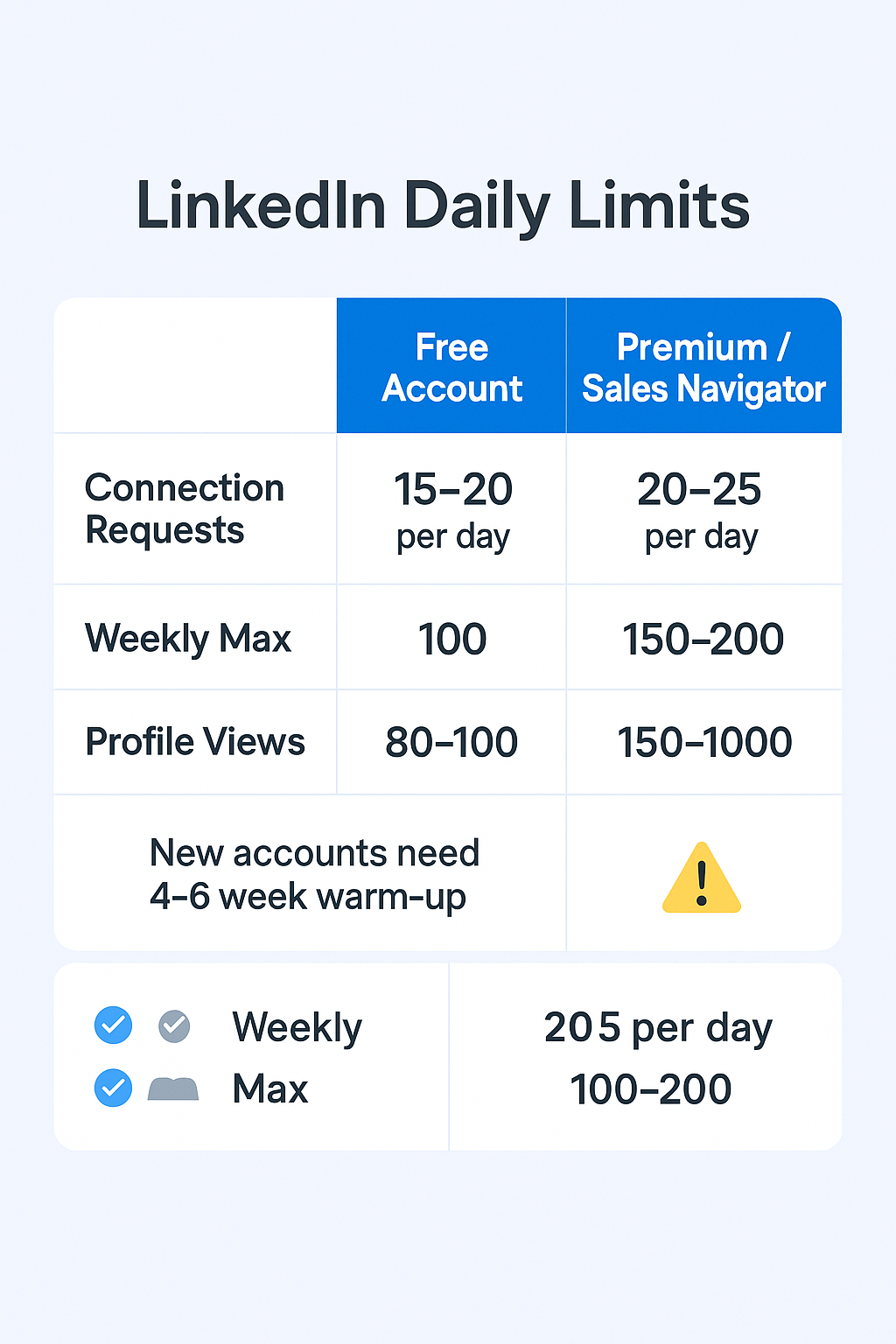
Profile views are safer: 80-100 daily for free accounts, 150-1,000 for premium (depending on your method and tools).
New accounts can’t immediately hit these numbers. You need a 4-6 week warm-up period to establish credibility with LinkedIn’s monitoring systems.

🚀 Skip the Learning Curve Completely
We manage your LinkedIn outreach limits, timing, and personalization while you focus on closing deals
When to Actually Send Your Messages (Timing Kills)
You can have the perfect message and still fail if you send it at the wrong time.
Tuesday, Wednesday, and Thursday are peak engagement days. Tuesday shows the highest reply rates at 6.90%, with Monday close behind at 6.85%.
Mornings between 10 AM and 12 PM are golden. That’s when professionals settle into their workday and check their messages.
Avoid the weekends. Saturday reply rates drop to 2.65%. And don’t send connection requests on Fridays—they get buried by Monday’s inbox flood.
⏰ Timing Mastered. Messaging Perfected. Results Delivered.
Our LinkedIn campaigns use optimal timing plus proven messaging frameworks to book 15-25 qualified meetings monthly
The Social Selling Index: Vanity Metric or Revenue Predictor?
Some people dismiss the Social Selling Index (SSI) as meaningless. The data says otherwise.
Sales professionals with high SSI scores are 51% more likely to hit their quotas compared to those with lower scores. They also create 45% more sales opportunities.
And here’s the stat that matters most: 78% of social sellers outsell peers who don’t use social media.
The average SSI hovers between 26-50. A score above 70 puts you in the top 1% of your industry. The advertising industry averages around 37, while top performers hit 62+.
But LinkedIn is shifting focus. They’re moving away from raw SSI scores toward “Deep Sales” metrics powered by AI. The emphasis is changing from activity (liking posts) to outcomes (relationship depth and CRM connectivity).
How Social Selling Actually Speeds Up Deals
This isn’t just about more leads. It’s about faster, bigger deals.
Organizations using social selling strategies see a 20-30% acceleration in sales cycle time. Trust built through content and digital presence reduces the need for extensive “warming up” during calls.
Companies with robust social selling strategies realize up to 48% larger average deal sizes. The mechanism? Multi-threading. Using LinkedIn to connect with multiple stakeholders within an account secures broader buy-in for larger contracts.
And here’s something crucial: 75% of buyers use social media to inform purchasing decisions. Much of the “selling” happens before you ever speak to the prospect—through the content they consume on your profile.
Content That Actually Gets Engagement
Not all content performs equally on LinkedIn. Here’s what the data shows:
Multi-image carousels lead with 6.60% engagement. Users swipe through, increasing dwell time and signaling high interest to the algorithm.
Native documents (PDFs) hit 6.10% and work great for how-to guides and slide decks. Video posts see 5.60% engagement and are growing fast—up from 4.0% in 2023.
Single images get 4.85%, polls hit 4.40% (doubled from 2023), and text-only posts sit around 4.00%.
Here’s something important: Video creation is growing at 2x the rate of other content formats. But the algorithm penalizes links to external video sites like YouTube. Videos must be uploaded natively.
Weekly posts see 2x the engagement of sporadic posting. Consistency signals reliability to the algorithm.
And the stat that should change how you think about corporate marketing: Content shared by employees gets 8x more engagement than content shared by brand channels. Brand messages shared by employees achieve a 561% greater reach.
LinkedIn Ads: Expensive But Quality
If you’re running paid campaigns, here’s what to expect:
Cost per lead averages $96-$150 globally. For b2b sales, that climbs to around $125. Compare that to Facebook’s $10-$20 CPL.
But here’s the thing—a $125 lead from LinkedIn is often a qualified decision-maker, while a cheap Facebook lead might be completely irrelevant.
Cost per click runs about $5.58 on average. If you’re targeting senior decision-makers, expect around $6.40.
Click-through rates hover between 0.44% and 0.65%. Not amazing, but the conversion rate for LinkedIn Lead Gen Forms averages 13%—far outperforming standard landing pages at 2.35%.
Message Ads (Sponsored InMail) have a 38-52% open rate and roughly 3% CTR, making them highly effective for direct response offers.
Real Estate on LinkedIn
48% of real estate agents use LinkedIn, compared to 90% on Facebook. This suggests the platform is underutilized, leaving room for those willing to adopt it.
The key difference: LinkedIn works better for commercial real estate than residential. Agents can target by company size or industry to find businesses needing office space or warehousing.
Real estate advertisers using paid social media campaigns see an average ROAS of 520%. While this aggregates data across platforms, LinkedIn contributes significantly through high-value commercial deals.
Successful agents don’t just post listings. They share market data, investment analysis, and “state of the market” reports—positioning themselves as investment advisors rather than just property sellers.
Industry Performance and Sales Navigator Insights
LinkedIn Sales Navigator categorizes companies into specific industries. Understanding which sectors are most active helps with targeting.
Technology and SaaS lead the pack with the highest activity. High SSI scores, heavy ad spend, and aggressive outreach adoption. If you’re selling to tech, you need to be sophisticated—they know all the tricks.
Professional services (consultants, legal, accounting) show 10.42% reply rates—the highest of any sector. They rely on thought leadership content to sell expertise, and they’re highly responsive to networking.
Manufacturing is surprisingly active, using Sales Navigator to find supply chain partners and distributors.
Finance and insurance have high usage for recruiting and high-net-worth client acquisition.
Healthcare is growing rapidly, especially in MedTech and B2B healthcare services.
When building prospect lists in Sales Navigator, successful users don’t just select broad categories like “Software.” They use sub-filters (like “Computer & Network Security” vs “Wireless Services”) to tailor messaging. Generic industry messaging fails. Specific sub-niche messaging wins.
The Future: AI and Automation in LinkedIn Sales
2 in 3 B2B marketers now use Generative AI—a 20% increase year-over-year.
Automation tools exist for connection requests, but LinkedIn’s detection algorithms are improving. The trend is toward “augmented” selling—using AI to write drafts or research prospects, but using humans to hit “send.”
LinkedIn is pushing its “Deep Sales” platform, which uses AI to predict who’s ready to buy based on intent signals like hiring, funding, and content consumption. The focus is moving away from cold outreach toward warm, intent-based engagement.
Over 11 million users have turned on Creator Mode. This feature is becoming standard for high-performing sales professionals who want to build an audience.
How to Actually Use This Data (The Action Plan)
Here’s the framework that works in 2025:
Start with Sales Navigator filters (industry + headcount + job change triggers). Job changes are critical—prospects starting new roles are 65% more likely to evaluate new vendors within the first 90 days.
Engage on LinkedIn first (view profile + follow). This triggers a notification and builds familiarity before you ever send a message.
Send a connection request with a low-friction, personalized message. Aim for that 45% acceptance rate by focusing on second-degree connections and adding context.
Email concurrently. Reference the LinkedIn connection in the subject line (“Saw your post on…”). The cross-channel reinforcement is powerful.
Nurture through content. Even if they don’t reply immediately, they’ll see your case studies and multi-image posts in their feed, building trust passively.
This isn’t about choosing email OR LinkedIn. It’s about orchestrating both channels to create an unfair advantage.
Why Most People Still Fail (Even With Great Data)
Here’s the uncomfortable truth: 71% of sellers send 50 or fewer connection requests per week. They’re focusing on quality over quantity.
But the flip side? 39% of professionals say social selling reduced research time—yet the most successful reps actually spend MORE time on research per prospect to ensure relevance.
The difference? Depth versus breadth. Successful sellers use trigger events. Reaching out with context about a funding round is infinitely more effective than a generic check-in.
Sales Navigator allows tracking of funding news, hiring spikes, and leadership changes. These are high-intent signals. Ignore them at your own risk.
The Multi-Channel Reality
Silos kill sales performance in 2025.
Teams that rely 100% on cold email face declining deliverability and lower trust. Teams that rely 100% on LinkedIn hit activity caps and scale limitations.
The winning formula is omnichannel orchestration.
The data is clear: combining channels boosts conversions by up to 287%. That’s not a small edge—that’s the difference between struggling and thriving.
But here’s what people miss: LinkedIn isn’t just a prospecting tool. It’s a reputation engine. Your profile is your landing page. Your content is your proof of expertise. Your engagement is your warm-up.
When used correctly, LinkedIn makes everything else work better.
🎯 Get the 287% Multi-Channel Lift
We orchestrate LinkedIn outreach with complementary channels to deliver consistent pipeline without the complexity
7-day Free Trial |No Credit Card Needed.
Conclusion
The linkedin sales statistics for 2025 paint a clear picture: LinkedIn is no longer optional for serious sellers.
18-25% InMail response rates, 10.3% DM engagement, and 287% lift when combined with other channels—these aren’t small improvements. They’re the kind of numbers that separate top performers from everyone else.
But here’s the thing: most people won’t act on this data. They’ll read it, nod along, and go back to doing exactly what they’ve always done.
Don’t be that person.
The platforms, the data, and the decision-makers are all there. The question is: are you going to use them?
If you’re looking to combine the power of LinkedIn outreach with automated cold email software, Salesso offers the complete solution. Email warmup, deliverability tools, and LinkedIn campaign management—all in one place.
Because in 2025, it’s not about picking the right channel. It’s about orchestrating all of them to win.
FAQs
What is a good response rate on LinkedIn?
How many LinkedIn connection requests can I send per day?
What is the LinkedIn selling score?
What industry is most active on LinkedIn for sales?
Is LinkedIn better than cold email for sales?
Scale LinkedIn Without The Tech Headaches
Get 15-25% Response Rates With Our Done-For-You LinkedIn Outbound Engine
Segmentation That Actually Converts
LinkedIn outbound targets precise demographics with strategic campaign design and scaling methods
- blog
- Statistics
- LinkedIn Sales Statistics 2025: Data You Need to Know