

The delete button is just one click away.
Your cold email has about 3 seconds to grab attention before it gets tossed into the digital trash bin. And here’s the thing that might surprise you: the length of your message could be the deciding factor between a response and radio silence.
Most sales professionals get this wrong. They either write novels that nobody reads, or send one-liners that feel robotic and impersonal. But there’s a sweet spot that gets results, and we’ve got the data to prove it.
Why Does the Length of Your Cold Email Matter?
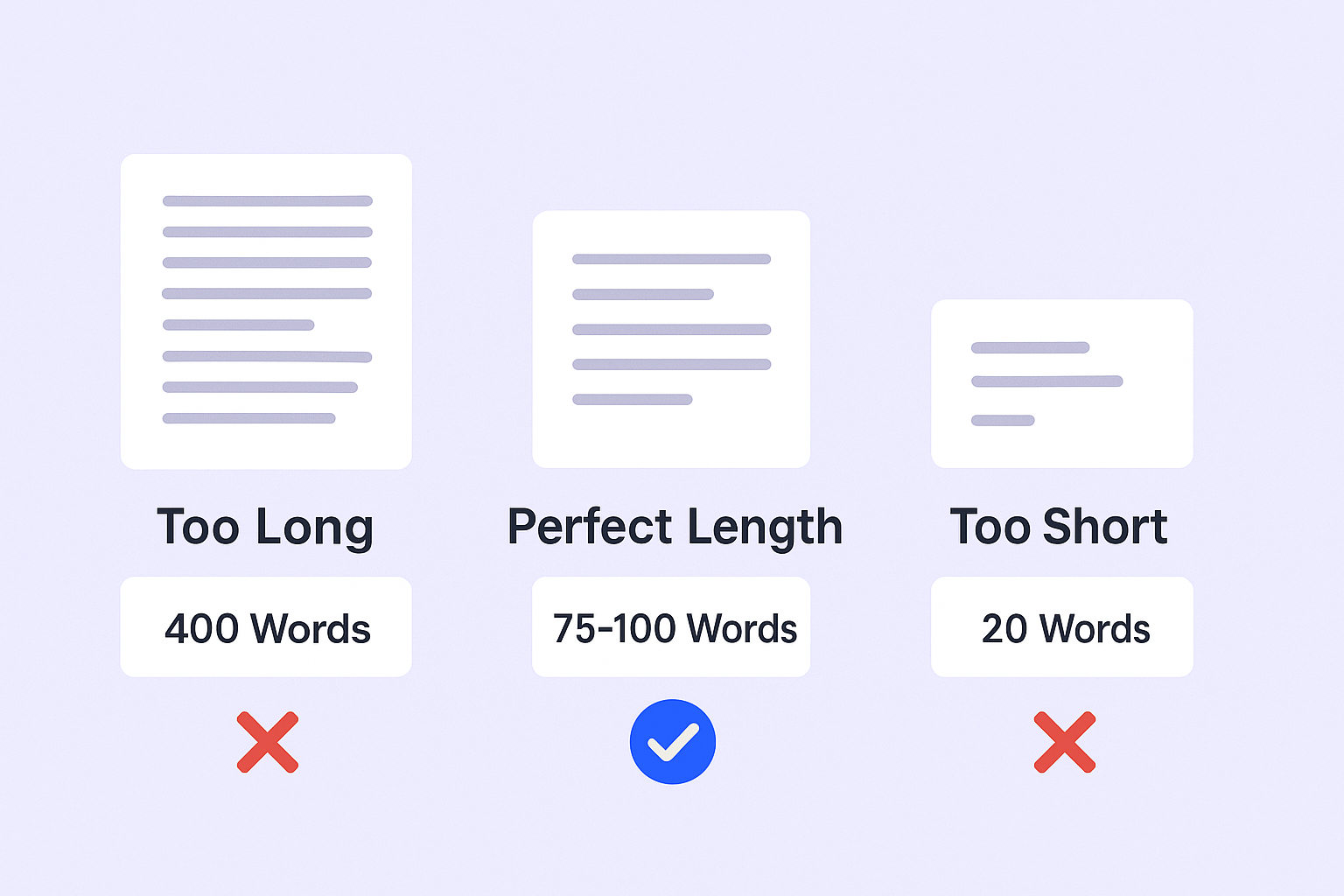
Picture this: You’re scrolling through 50+ emails in your inbox on a Monday morning. Coffee’s getting cold. Meetings are starting soon. Which email gets your attention?
The 126-word email that gets straight to the point, or the 400-word essay about someone’s company history?
Length directly impacts your open and response rates. Here’s why:
Attention spans are shrinking. The average professional spends just 11.2 seconds reading an email before deciding to engage or delete. Every extra word you add reduces the chances of your message being fully read.
Mobile optimization matters. Over 68% of emails are opened on mobile devices. Long emails get cut off, creating a poor user experience that kills engagement.
Cognitive load affects decisions. When people see a wall of text, their brain immediately signals “too much work.” Short, scannable content feels manageable and actionable.
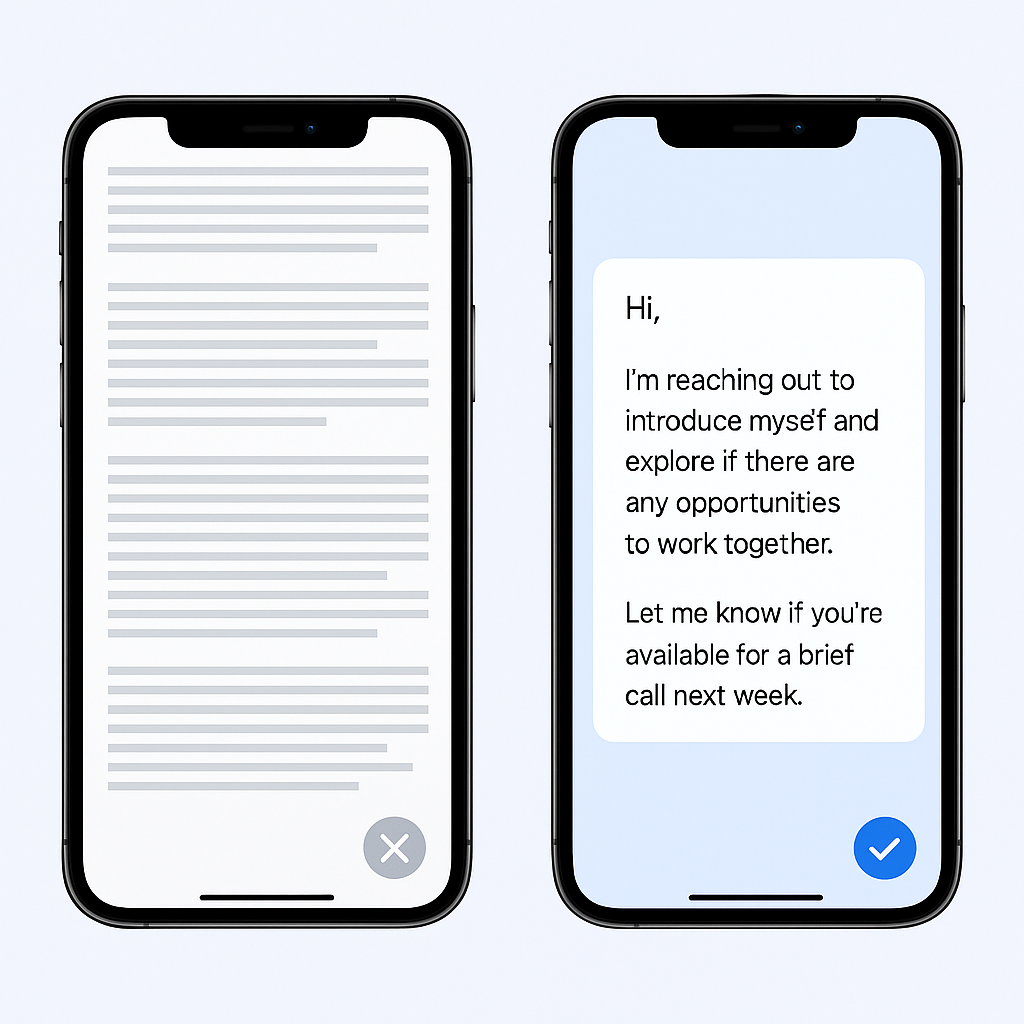
The psychology is simple: respect their time, and they’ll respect your message.
What Should Be the Optimal Length of a Cold Email?
Here’s what the data tells us about cold email length:
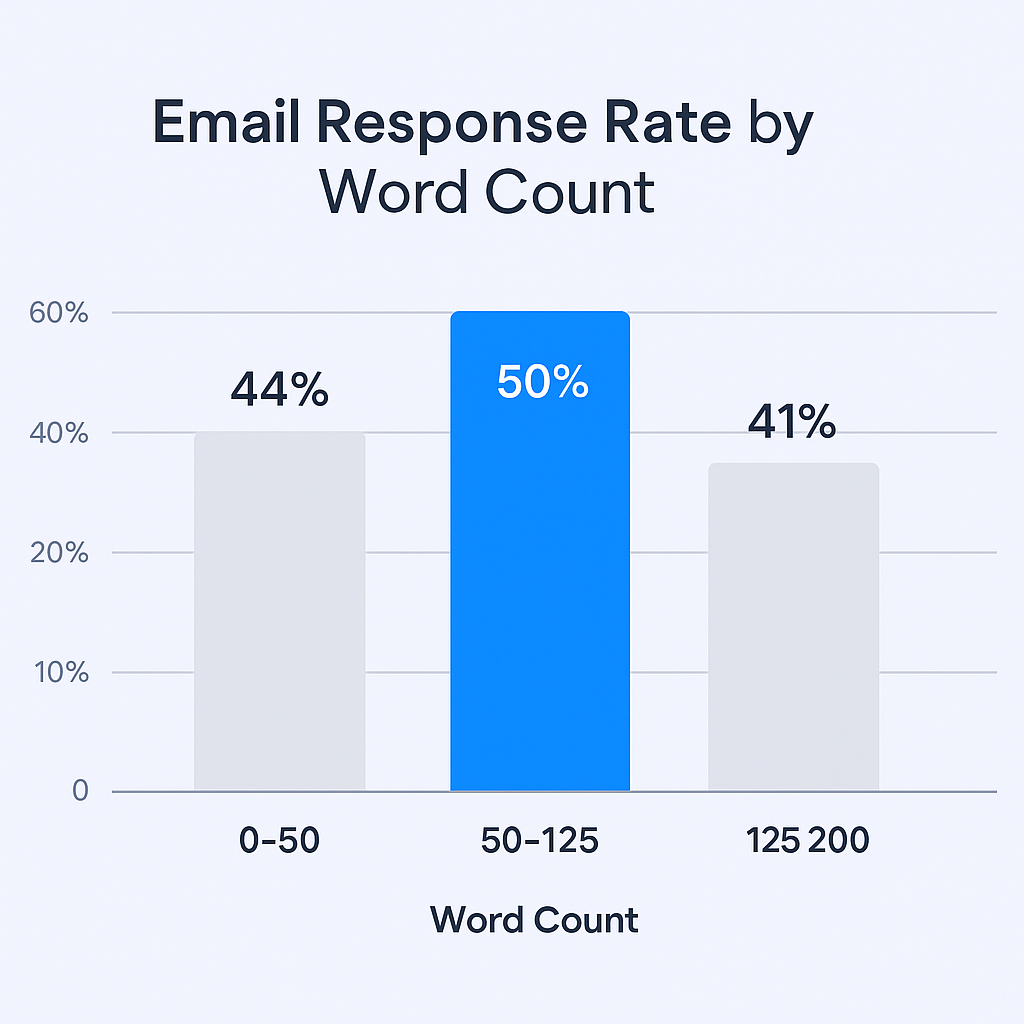
The magic number is 50-125 words. This range consistently delivers the highest response rates across industries and use cases.
Research from Boomerang analyzed over 40 million emails and found that messages between 50-125 words achieved the highest response rates at 50-60%. Meanwhile, emails longer than 200 words saw response rates drop to 24%.
Subject lines should be 30-50 characters. Shorter subject lines have 58% higher open rates than longer ones. Think “Quick question about [Company Name]” rather than “Exploring potential collaboration opportunities between our organizations.”
Mobile-first length matters most. Since most emails are opened on phones, your entire message should be readable in one screen scroll. That’s roughly 75-100 words on most devices.
Industry benchmarks show clear patterns:
- SaaS cold emails: 75-100 words average highest response
- Consulting outreach: 90-125 words work best
- Job-related emails: 50-75 words get more replies
- Partnership proposals: 100-125 words optimal range
Short Cold Email Templates That Work
Here are five proven templates that hit the optimal length while driving responses:
Template 1: The Quick Win (62 words)
Subject: Quick question about [Company Name]
Hi [Name],
I noticed [Company Name] just [recent company news/achievement].
We helped [similar company] increase their [relevant metric] by 40% using [brief solution description].
Worth a quick 15-minute call to see if we can do something similar for [Company Name]?
Best,
[Your name]
Template 2: The Problem Solver (78 words)
Subject: [Specific pain point] solution for [Company]
Hi [Name],
Most [job title]s struggle with [specific problem]. At [similar company], this was costing them [specific impact].
We solved it with [brief solution] and they saw [specific result] in just [timeframe].
I have a few ideas that might work for [Company Name].
Free for 10 minutes this week to explore?
[Your name]
Template 3: The Social Proof (85 words)
Subject: How [Similar Company] solved [problem]
[Name],
[Similar Company] faced the same [challenge] that many [industry] companies deal with.
After implementing our [solution], they:
- [Specific result 1]
- [Specific result 2]
- [Specific result 3]
Given [Company Name]’s focus on [relevant business area], I think we could achieve similar results.
Worth a brief conversation?
[Your name]
Template 4: The Value-First Approach (69 words)
Subject: Free [resource] for [Company Name]
Hi [Name],
I created a [specific resource] that shows [industry] companies how to [achieve specific outcome].
Since [Company Name] is [relevant business context], thought you might find it valuable.
Happy to send it over – no strings attached.
Also open to a quick chat if you’d like to discuss [relevant topic].
[Your name]
Template 5: The Direct Question (56 words)

