
🎉Find Prospects and Send Cold Emails & LinkedIn Outbound | All in One Place

Non-Profit Industry Email Statistics: 13 Key Insights for 2025

Table of Contents

Non-Profit Industry Email Statistics

  • 86% of non-profits use email marketing as their primary outreach tool – making it mission-critical infrastructure, not just another marketing channel
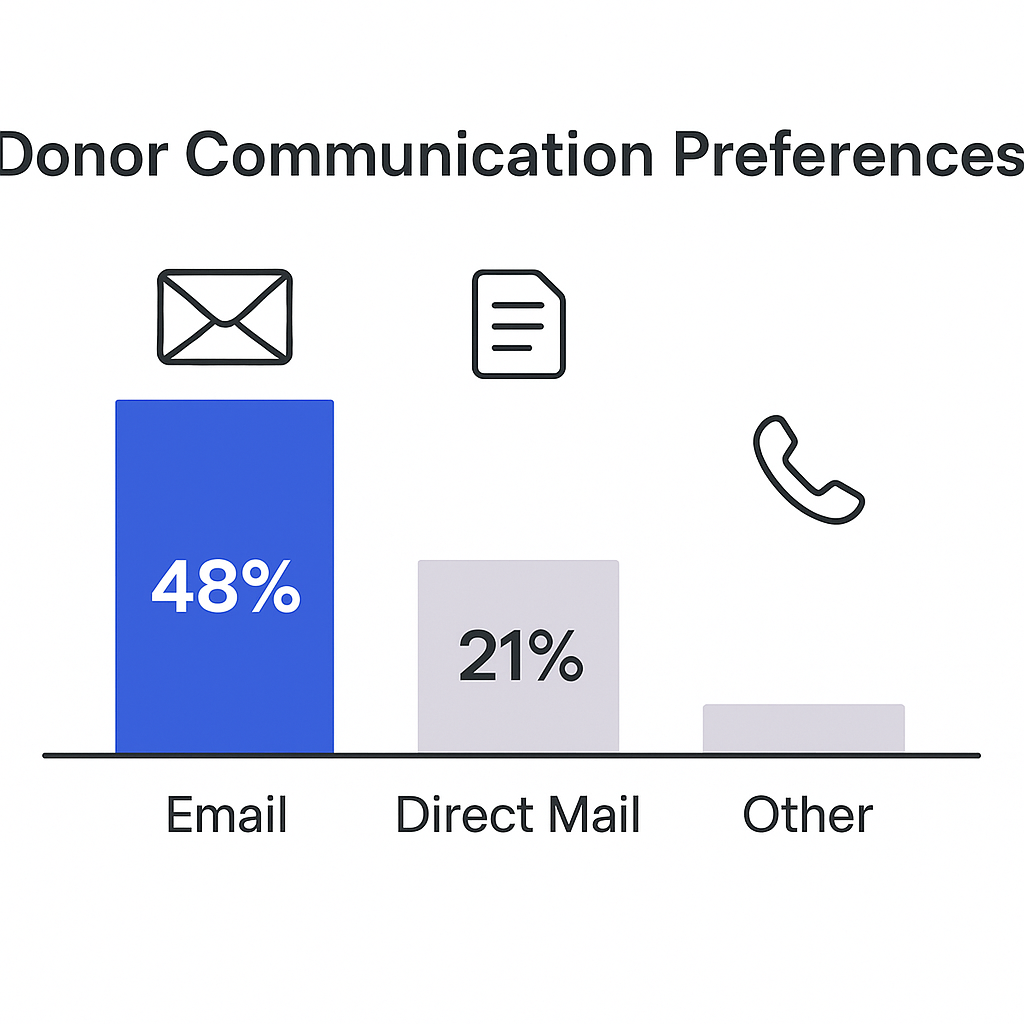
  • 48% of donors prefer receiving updates via email – more than double the next closest channel, direct mail at 21%
  • Email drives 11% of all online revenue for non-profits – down from 14% in 2023, creating a pain point of declining efficiency despite 9% more email volume
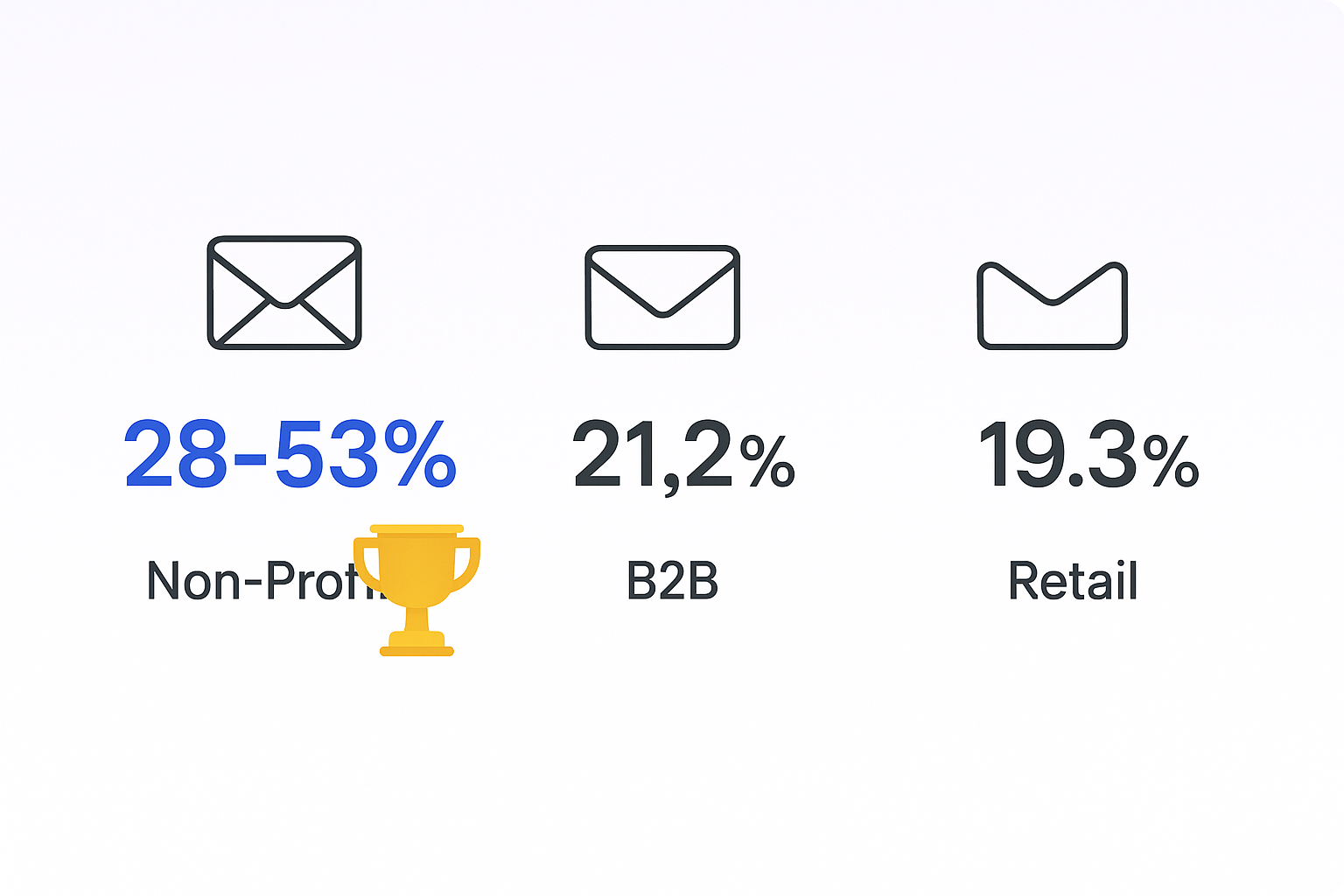
  • Non-profit email open rates soar between 28-53% – significantly higher than average B2B open rate of 21.2% or retail’s 19.3%
  • Welcome emails achieve an impressive 80% open rate – showing this audience is uniquely open to new connections at the beginning of relationships
  • Click-through rates consistently hit 3-7% – compared to typical B2B rates of 2.5% or retail’s 2.0%
  • Personalized subject lines boost opens by 26% – with 63% of non-profits already using personalization tactics
  • Non-profits raise $1.11 per email contact on average – jumping to $6.15 per contact for smaller organizations
  • Every 1,000 fundraising emails sent generates $58 – providing a concrete benchmark for measuring email performance
  • List hygiene problems plague 65% of organizations – only 35% of non-profits regularly clean their email lists
  • Mobile devices account for 53% of email opens – making mobile optimization essential, not optional
  • Subject lines with 6-10 words achieve highest open rates at 21% – the sweet spot for mobile preview visibility
  • Video content increases click-through rates by 65% – aligning with the sector’s storytelling nature
  • Email is preferred over direct mail by more than 2x – showing clear channel preference for digital communication
  • Non-profit audiences are most receptive at the beginning of new relationships – as evidenced by 80% welcome email open rates, making introduction-style communication highly effective

Want to know where your email campaigns have the best chance of success? The non-profit sector isn’t just leading the pack in engagement—it’s crushing it. With open rates hitting 53% and donors actively preferring email communication, this industry proves that email marketing isn’t dead. It’s just waiting for you in the right inbox.

Whether you’re prospecting into the non-profit space or looking for benchmark data to improve your own campaigns, these statistics will change how you think about email outreach. We’ve compiled the most critical non profit industry email statistics to give you a data-backed understanding of why this sector deserves your attention.

How We Collected This Data

These statistics aren’t just numbers pulled from random sources. We’ve curated and analyzed data from the most credible industry reports available, including:

  • M+R Benchmarks – The gold standard for non-profit digital marketing metrics
  • Neon One – Comprehensive fundraising platform insights
  • Nonprofit Tech for Good – Industry-leading research on digital trends
  • GetResponse – Analysis of over 4.4 billion messages
  • MailerLite – Data from 3.3 million campaigns analyzed

Each statistic comes from recent 2024-2025 reports, ensuring you’re getting the most current and actionable insights available.

Non-Profit Email Statistics: The Complete Picture

The Big Picture: Why Email Dominates Non-Profit Strategy

1. A massive 86% of non-profits use email marketing as their primary outreach tool

When nearly 9 out of 10 organizations in a sector rely on a single channel, that’s not coincidence—that’s proof of effectiveness. Email marketing has become the backbone of non-profit communication, fundraising, and donor engagement.

📧 Email Crowded? Try LinkedIn Instead

Target non-profit executives with precision campaigns that bypass spam filters and land directly in decision-maker feeds.

This high adoption rate signals that email isn’t just another marketing channel for non-profits; it’s mission-critical infrastructure. Development directors, marketing managers, and executive directors live in their email inboxes because that’s where the real work happens.

2. Nearly half of all donors (48%) prefer receiving updates via email

Here’s the game-changer: 48% of donors actively choose email as their preferred communication method. This preference rate is more than double the next closest channel, direct mail at 21%.


This isn’t just about convenience—it’s about relationship building. Email allows for thoughtful consideration, provides a permanent record, and isn’t high-pressure. When you email a non-profit prospect, you’re not interrupting them; you’re meeting them on their preferred communication channel.

3. Email drives 11% of all online revenue for non-profits

Despite increased competition for inbox space, email still accounts for 11% of total online revenue for non-profit organizations. That’s a direct line to their bottom line—and it represents millions of dollars across the sector.

📉 Email Revenue Declining? Go Where They’re Not Overwhelmed

LinkedIn outbound reaches non-profit leaders with 3x lower competition and personalized targeting based on role, organization size, and initiatives.

Interestingly, this figure is down from 14% in 2023, even as email volume increased by 9%. This creates a clear pain point: organizations are sending more emails but getting proportionally less revenue. This declining efficiency presents a perfect opportunity for services that improve targeting, deliverability, and engagement.

Engagement Benchmarks: Proof They’re Actually Reading

4. Non-profit email open rates soar between 28-53%

The average open rate for non-profit emails ranges from 28.59% to an incredible 53.21%, depending on the source. Even at the low end, that’s significantly higher than the average B2B open rate of 21.2% or retail’s 19.3%.


This isn’t just about better subject lines—it’s about trust. The relationship between non-profits and their subscribers is built on shared mission and values, not commercial transactions. This creates a “halo effect” that extends to professional communications landing in their inbox.

5. Welcome emails achieve an impressive 80% open rate

Welcome emails in the non-profit sector see an astounding 80% average open rate. This reveals a psychology of engagement: non-profit audiences are most receptive at the beginning of new relationships.

For outreach professionals, this statistic is golden. It shows that this audience is uniquely open to new connections and willing to engage with introduction-style communication, provided it’s relevant and valuable.

6. Click-through rates consistently hit 3-7%

Non-profit clickthrough rates range from 3.29% to 6.70% across different studies. Compare this to typical B2B rates of 2.5% or retail’s 2.0%, and you’ll see why this audience is so valuable.

High click-through rates indicate an audience that doesn’t just read—they take action. When you include links to case studies, relevant resources, or your scheduling page, there’s a statistically higher chance they’ll engage.

 🎯 Skip the Inbox Competition Entirely

Our LinkedIn campaigns identify and engage the exact non-profit decision-makers you need, with zero deliverability issues.

7. Personalized subject lines boost opens by 26%

Emails with personalized subject lines are 26% more likely to be opened, and 63% of non-profits are already using personalization tactics. This means generic, mass emails will stand out—for all the wrong reasons.

The personalization bar is set much higher in this sector. Simply using a first name isn’t enough. Successful outreach requires referencing specific programs, recent campaigns, or organizational achievements to truly stand out.

Fundraising & ROI: The Financial Power of Email

8. Non-profits raise $1.11 per email contact on average

Every contact on a non-profit’s email list generates an average of $1.11 in revenue. For smaller organizations, this jumps to $6.15 per contact—making their email lists incredibly valuable assets.

This metric provides powerful ammunition for ROI discussions. A non-profit with 10,000 contacts is sitting on an asset worth over $11,000. Services that improve list quality, deliverability, or targeting directly impact this revenue stream.

9. Every 1,000 fundraising emails sent generates $58

The industry standard for “revenue per 1k emails” sits at $58 in 2024. This provides a concrete benchmark for measuring email performance and calculating the potential impact of improvements.

What makes this stat particularly interesting is that it’s measured per emails sent, not delivered. With typical bounce rates and spam filtering, a significant portion of sends never reach an inbox—making deliverability improvements directly tied to revenue growth.

10. List hygiene problems plague 65% of organizations

Here’s a significant pain point: only 35% of non-profits regularly clean their email lists. This means 65% are dealing with inflated bounce rates, damaged sender reputation, and artificially deflated performance metrics.

🚫 No Bounce Rates. No List Hygiene. Just Results.

LinkedIn outbound eliminates email deliverability headaches while targeting verified non-profit executives with surgical precision.

7-day Free Trial |No Credit Card Needed.

This isn’t due to poor practices—it’s a resource constraint. Small, overworked teams simply lack the time or technical expertise to maintain proper list hygiene. This presents a clear opportunity for automated solutions that save time while improving performance.

Winning Tactics: Mobile and Subject Line Optimization

11. Mobile devices account for 53% of email opens

More than half of all non-profit emails (53%) are opened on mobile devices. If your email isn’t optimized for mobile, it’s likely to be deleted within three seconds.

This mobile-first reality demands more than just responsive design. It requires a complete shift in content strategy—from subject line length to call-to-action placement. Your entire value proposition must be understandable in a quick mobile scan.

12. Subject lines with 6-10 words achieve highest open rates

The sweet spot for subject line length is 6-10 words, achieving a 21% open rate—the highest performance bracket. This isn’t arbitrary; it’s roughly the number of words visible on a mobile preview before being cut off.

Instead of “Proposal for Partnership to Improve Non-Profit Email Marketing Deliverability” try “A question about your donor engagement.” Shorter, more intriguing, and mobile-optimized.

13. Video content increases click-through rates by 65%

Including video in emails can boost click-through rates by a massive 65%. This makes perfect sense for the non-profit sector, which is fundamentally in the storytelling business.

Video aligns with the sector’s established communication style and is perceived as more authentic than plain text. A quick personalized video in your outreach can be the difference between getting ignored and starting a meaningful conversation.

Why These Statistics Matter for Your Outreach Strategy

The data paints a clear picture: the non-profit sector offers unique advantages for email-based outreach:

High Receptivity: You’re prospecting into an industry with some of the world’s highest open and click-through rates. Your message is statistically more likely to be seen and engaged with.

Channel Preference: Email isn’t an interruption—it’s their chosen medium for important conversations. You’re meeting them where they want to be reached.

Clear ROI Connection: Email directly ties to their revenue, making solutions that protect or enhance email performance easy investments to justify.

The key is cutting through the noise with accurate, verified contact information. Having reliable email addresses isn’t just convenient—it’s the foundation of any successful prospecting strategy in this space.

FAQs

What's the average non-profit email open rate?

Non-profit email open rates range from 28-53%, significantly higher than most industries. The variation depends on organization size, email type, and audience segmentation.

How often should non-profits send emails?

While frequency varies by organization, the data shows non-profits increased their email volume by 9% in 2024. The key is balancing frequency with relevance to avoid donor fatigue.

Do non-profit email statistics vary by organization size?

Yes, smaller non-profits often see higher engagement rates and revenue per contact ($6.15 vs $1.11) because they're more dependent on email as a primary fundraising channel.

What's the best day to send non-profit emails?

While not covered in our core statistics, industry research suggests Tuesday-Thursday typically perform best, with Tuesday mornings showing particularly strong engagement.

How important is mobile optimization for non-profit emails?

Critical. With 53% of opens happening on mobile devices, non-mobile-friendly emails are likely deleted within three seconds of opening.

Conclusion

The non-profit sector isn’t just participating in email marketing—it’s mastering it. With open rates reaching 53%, strong click-through performance, and clear revenue attribution, this industry demonstrates what’s possible when email strategy aligns with audience preferences.

For professionals looking to break into this space, the advantages are clear: higher engagement, preferred communication channels, and quantifiable ROI. The foundation of success lies in reaching the right people with the right message through verified, accurate contact information.

The statistics don’t lie—non-profit email marketing works. The question isn’t whether to focus on this sector, but how quickly you can start.

Struggling to Reach Non-Profit Decision-Makers?

Our LinkedIn outbound engine targets verified executives with personalized campaigns that actually get responses.

Segmentation That Actually Converts

LinkedIn outbound targets precise demographics with strategic campaign design and scaling methods

How to Build a High-Converting B2B Sales Funnel from Scratch on LinkedIn ​