Recruitment and Retention Statistics 2026: The Complete Data Guide
- Sophie Ricci
- Views : 28,543
Table of Contents
Recruitment and Retention Statistics
- 42% of employee turnover is completely preventable – not losing people due to “better opportunities” but because something in hiring, onboarding, or management process is broken
- Exit costs between 50-200% of annual salary – replacing mid-level professional costing $37,500-$150,000, someone earning $75K representing over $600,000 in total losses per turnover event
- 7.7 million job openings remain steady with 84% of workers saying they’re happy – “Eggshell Economy” where happiness often masks gratitude for simply having job during uncertain times, not genuine satisfaction
- Voluntary quits dropped 17.1% over two years – not because workplaces improved dramatically but because economic caution made people “job hug” rather than job hunt during uncertainty
- Average time-to-hire: 42 days – during which work doesn’t stop, just gets redistributed to remaining team creating burnout risk and increasing likelihood of more turnover
- National average monthly turnover rate: 3.3% – industries ranging from Government 1.4% (lowest) to Leisure & Hospitality 5.9% (highest) showing dramatic variation
- Positive work environment: 81.5% cite as #1 retention factor – far exceeding health insurance 68.4%, work-life balance 63.9%, professional development 57.4%, competitive pay only table stakes
- 26.8% quit due to toxic work environments, 24.2% due to poor leadership, 22.8% due to direct manager – combined 73.8% chance it’s one of these three completely fixable reasons when losing people
- 1.15 billion LinkedIn members with 7 people hired every minute – 10,080 hires daily, 302,400 monthly, 3.6 million yearly just on one platform showing centrality to professional hiring
- LinkedIn InMail: 18-25% response rates vs 3% cold email – employee-shared content getting 561% more reach than brand posts, same principles making LinkedIn effective for both sales and recruiting
- 66% of job applicants accepted offers primarily due to positive candidate experience – interview process being first retention test with 79% willing to reapply after rejection if received feedback
- 81% of companies now use skills-based hiring approaches – prioritizing proven abilities over credentials, though 56% of employers still reporting talent shortages showing finding right fit remains challenge
- 411,000 teaching positions unfilled or under-certified (1 in 8 nationally) – 90% of teacher demand driven by attrition not retirement, revealing universal truth: can’t hire way out of retention problem
- 94% of employees would stay longer at company investing in career development – organizations with formalized training reporting 218% higher income per employee, interactive training increasing retention by 60%
- AI automation saving 2 hours 15 minutes daily – 88% saying automation increases job satisfaction by removing tedious work, when people spend less time on administrative tasks more on meaningful work they’re happier and stay longer
Why Your Best People Keep Leaving (And What the Data Says About It)
Here’s the uncomfortable truth: 42% of employee turnover is completely preventable.
You’re not just losing people because of “better opportunities” or “personal reasons.” You’re losing them because something in your hiring, onboarding, or management process is broken. And every exit costs you between 50% to 200% of that person’s annual salary.
The job market in late 2025 looks stable on the surface. 7.7 million job openings remain steady according to the Bureau of Labor Statistics. But dig deeper and you’ll find something interesting: people aren’t leaving because they’re confident about finding something better. They’re staying because they’re scared to move.
This “Eggshell Economy” means 84% of workers say they’re happy, but that happiness often masks gratitude for simply having a job during uncertain times. Voluntary quits dropped 17.1% over two years, not because workplaces improved dramatically, but because economic caution made people “job hug” rather than job hunt.
For anyone building a team—whether you’re hiring your first sales rep or scaling to 50—understanding recruitment retention isn’t just an HR concern. It’s the difference between a predictable revenue engine and a constantly spinning hamster wheel of hiring, training, and replacing.
This guide breaks down the essential recruitment and retention statistics you need to make smarter decisions about who you hire, how you keep them, and why investing in retention is the highest-ROI move you can make in 2026.
The Real Cost of Turnover (That Nobody Talks About)
When someone quits, you don’t just lose a salary line on your spreadsheet. You lose institutional knowledge, customer relationships, and months of momentum that took quarters to build.
Replacing a mid-level professional costs $37,500 to $150,000 when you factor in recruiting fees, lost productivity, training time, and the ramp period before a new hire reaches full performance. For someone earning $75,000, a single turnover event can represent over $600,000 in total losses.
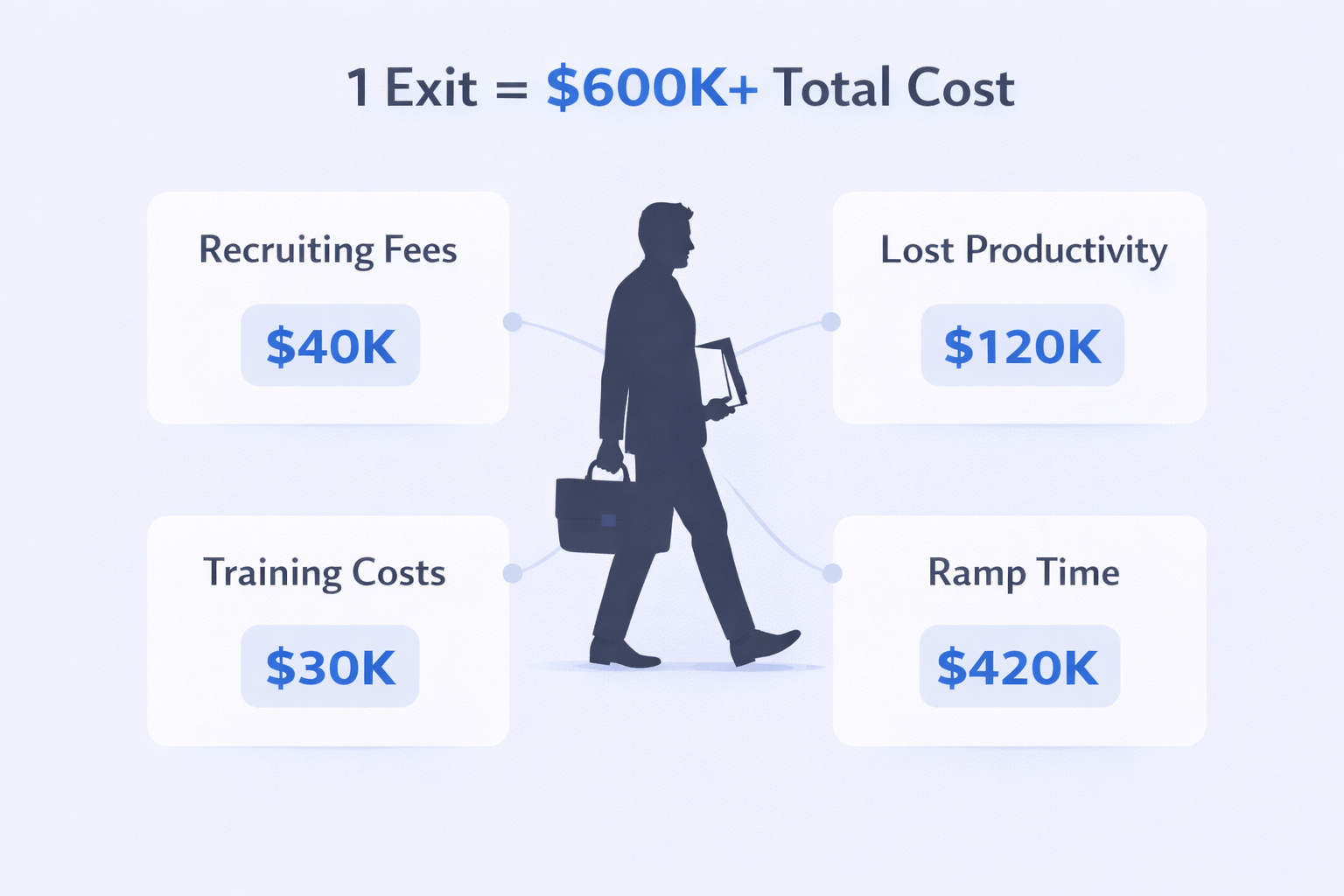
But here’s what makes it worse: the average time-to-hire is now 42 days. During those 42 days, the work doesn’t stop. It just gets redistributed to your remaining team, creating burnout risk and increasing the likelihood of more turnover.
Industry-Specific Turnover: Where You Stand
The national average monthly turnover rate sits at 3.3%. If you’re above that, you’re bleeding faster than most. If you’re below it, you’re doing something right.
Here’s how different industries stack up:
- Government: 1.4-1.5% (lowest, driven by stability and benefits)
- Finance & Insurance: 1.9% (competitive but stable)
- Manufacturing: 2.2% (automation creating pressure)
- Technology: 2.6% (skills gaps and poaching)
- Healthcare: 2.7% (burnout epidemic)
- Retail: 3.9-4.0% (low wages, limited growth)
- Professional Services: 4.5% (intense work, better offers)
- Leisure & Hospitality: 5.9% (seasonal, low engagement)
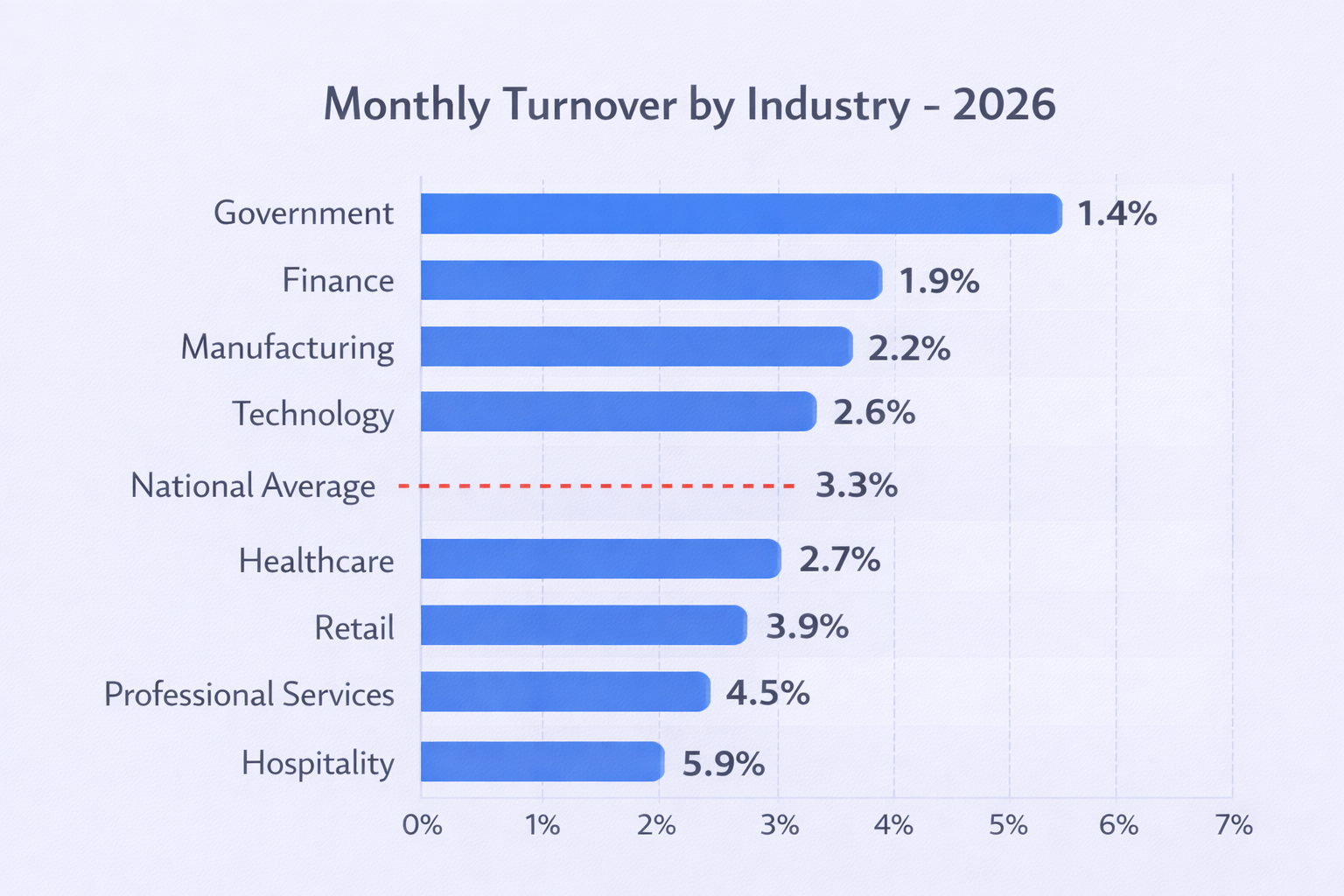
Quick takeaway: If you’re in tech and hitting 4% monthly turnover, you’re not “just dealing with industry norms.” You’re underperforming by 53% and need to fix your prospecting tools and retention strategies.
💼 Stop Replacing. Start Retaining.
LinkedIn outbound fills pipelines 5x faster than email. Book fewer meetings that matter more.
What Actually Makes People Stay (According to 2026 Data)
Competitive pay is table stakes. 52% of workers cite it as important, but it’s not the deciding factor.
Here’s what actually drives retention in 2026:
- Positive work environment: 81.5% (by far the #1 factor)
- Health insurance: 68.4% (non-negotiable for most)
- Work-life balance: 63.9% (flexibility matters more than ever)
- Professional development: 57.4% (people want growth paths)
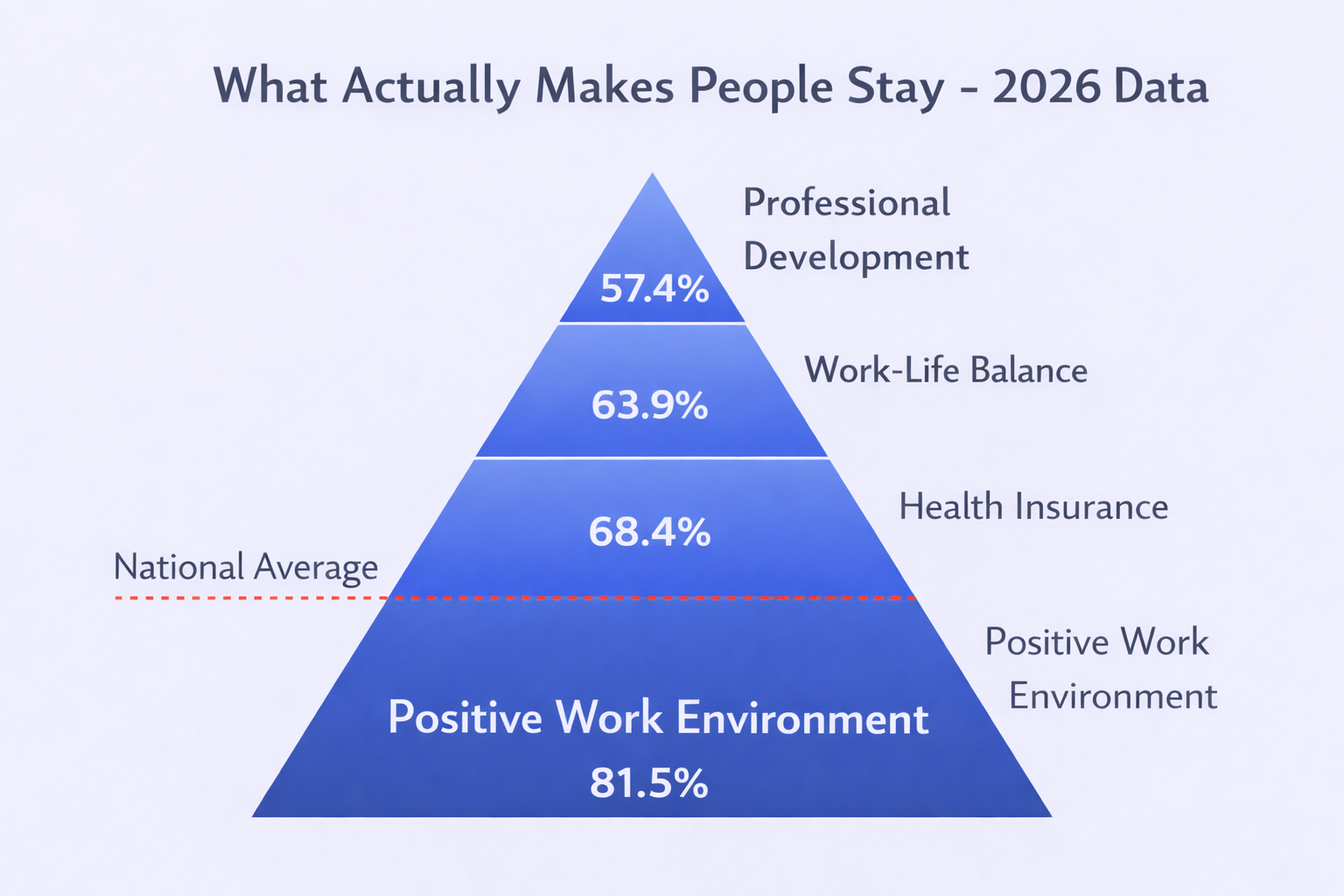
The data is clear: culture beats compensation when it comes to keeping people long-term. But “culture” isn’t ping-pong tables and free snacks. It’s about management quality, career clarity, and feeling like your work matters.
26.8% of people quit because of toxic work environments. 24.2% leave due to poor company leadership. 22.8% leave because of their direct manager.
If you’re losing people, there’s a 73.8% chance it’s one of those three reasons—all of which are completely fixable with the right appointment scheduling and management practices.
LinkedIn Networking Statistics: The Professional Pipeline You Can’t Ignore
LinkedIn isn’t just where people update their resumes. It’s become the central nervous system of professional networking, hiring, and business development.
1.15 billion members globally span over 200 countries. But the real power of LinkedIn isn’t in total users—it’s in active professional engagement.
Who’s Actually Using LinkedIn (And Why It Matters for Hiring)
50.6% of LinkedIn users are between 25 and 34 years old. If your recruitment retention strategies aren’t reaching this demographic, you’re missing half the active professional market.
Here’s the breakdown:
- United States: 234 million users (primary market for talent sourcing)
- India: 148 million users (rapidly growing hub for remote roles)
- Global decision-makers: 65 million users (the people who approve hires)
- C-level executives: 10 million users (ultimate hiring authority)
- High earners ($100k+): 53% of platform (quality over quantity)
7 people get hired through LinkedIn every minute. That’s 10,080 hires per day, 302,400 per month, and 3.6 million per year—just on this one platform.
The Lead Generation Power of LinkedIn (That Applies to Hiring Too)
80% of B2B leads from social media come from LinkedIn. If you’re still relying solely on job boards, you’re fishing in the wrong pond.
Here’s why LinkedIn outperforms for both sales and recruitment:
- InMail response rates: 18-25% (vs. 3% for cold email)
- Personal profiles generate 5x more engagement than company pages
- Employee-shared content gets 561% more reach than brand posts
- 89% of marketers say LinkedIn generates the highest-quality leads
The same principles that make LinkedIn effective for sales make it powerful for recruiting. When your team members share job openings or company culture content, it reaches 5.61x more people than posting from your official company page.
For organizations building outbound sales teams, understanding these LinkedIn statistics isn’t optional—it’s fundamental to both pipeline generation and team building.

🎯 LinkedIn Outbound > Job Boards
65 million decision-makers. Zero spam filters. Direct access to the people who matter for your growth.
The Candidate Experience: Where Recruitment Success Actually Starts
66% of job applicants accepted offers primarily because of a positive candidate experience. Translation: your interview process is your first retention test.
Here’s where most companies fail:
- 90 seconds: That’s how long it takes candidates to form initial impressions of your company
- 34% feel “ghosted” if they don’t hear back within one week
- 79% would reapply if they received feedback after rejection
- 42 days: Average time-to-hire (every day of delay risks losing top talent)
Speed matters. In specialized fields like healthcare, every day of hiring delay costs up to $10,000 in lost productivity. Even if you’re not in healthcare, prolonged vacancies hurt—especially in revenue-generating roles.
The Shift to Skills-Based Hiring
81% of companies now use skills-based hiring approaches, prioritizing proven abilities over credentials. This is especially true in sales, where a LinkedIn title matters less than demonstrated results and work ethic.
45% of companies now use AI in recruitment to standardize the top of the funnel, screen resumes, and identify patterns in successful hires. While automation speeds things up, 56% of employers still report talent shortages—finding people with the right fit remains the challenge.
Teacher Recruitment and Retention: A Crisis Worth Learning From
The education sector faces one of the most severe recruitment retention crises in 2026, and the lessons apply far beyond schools.
411,000 teaching positions are either unfilled or filled by under-certified teachers. That’s 1 in 8 teaching positions nationally—up from previous years.
Why Teachers Are Leaving (And What It Teaches Us About All Retention)
90% of teacher demand is driven by attrition, not retirement. People aren’t leaving because they’re aging out—they’re leaving because conditions are unsustainable.
Top reasons for teacher exits:
- Low salaries relative to education requirements
- Poor working conditions (large class sizes, lack of resources)
- Minimal administrative support or professional development
- Burnout from increasing responsibilities without proportional support
12.2-13.5% of teachers leave annually. Only 60% expect to stay for 3 years, down from 75% pre-pandemic.
The teacher recruitment crisis reveals a universal truth: you can’t hire your way out of a retention problem. When 45 states report shortages in special education alone, the issue isn’t pipeline—it’s the fundamental value proposition of the job itself.
What works: Teacher residency programs produce staff who stay longer and perform better. Mentoring and induction supports for new teachers significantly reduce early-career attrition. These same principles—structured onboarding, ongoing support, and clear growth paths—apply to every industry.
For more on effective lead enrichment in your hiring process, these teacher recruitment patterns offer valuable lessons in matching candidates to roles where they’ll actually thrive.
🚀 Fill Pipelines, Not Just Positions
LinkedIn outbound delivers qualified conversations in days, not months. Complete strategy from targeting to close.
Training and Development: The Retention Lever You’re Probably Underusing
94% of employees would stay longer at a company that invests in their career development through training.
Yet most companies treat training as a one-time onboarding checkbox rather than an ongoing retention strategy. That’s a massive missed opportunity.
The Financial Impact of Learning Investment
Organizations with formalized training programs report 218% higher income per employee than those without structured development. The ROI is undeniable.
But here’s the catch: traditional training fails because it’s passive. Sitting through a 2-hour video doesn’t create lasting behavior change.
Interactive training increases knowledge retention by 60%. When you add microlearning—delivering content in small, digestible pieces—focus and retention improve by 80%.
What Modern Training Actually Looks Like
71% of employees want mobile access to training. When you provide it, completion rates jump 43%.
AI-driven learning platforms improve employee stay-intent by 36% by offering personalized growth paths. Instead of generic courses, employees get development plans tailored to their role, goals, and skill gaps.
The skill sets required for most jobs have changed 25% since 2015. Constant upskilling isn’t a perk—it’s a necessity for staying competitive.
Quick insight: If your training consists of a welcome packet and a buddy system, you’re leaving serious retention value on the table. Make it interactive, make it mobile, and make it ongoing—and your team will actually learn, grow, and stay.
For sales teams specifically, understanding Basho email techniques and modern outreach methods should be part of continuous learning, not a one-time workshop.
AI and Automation: Saving Time and Improving Retention
74% of sales professionals believe AI and automation will significantly reshape their roles in 2026.
But here’s what they’re not worried about: AI won’t replace them. It’ll make them better at the parts of their job that actually matter.
AI tools save an average of 2 hours and 15 minutes daily by automating data entry, meeting scheduling, lead research, and other mundane tasks. 100% of prospecting professionals report saving at least one hour per week using AI for lead personalization.
For retention, this matters because 88% of employees say automation increases their job satisfaction by removing tedious work. When people spend less time on administrative garbage and more time on meaningful work, they’re happier and stay longer.
Organizations using automation tools for outreach see not just productivity gains, but higher team morale—people feel like they’re doing actual work instead of pushing buttons all day.
⚡ Automate Outreach. Elevate Results.
Our LinkedIn engine handles targeting and touchpoints. You handle conversations. Book 3-5x more qualified meetings.
7-day Free Trial |No Credit Card Needed.
Conclusion: Retention Is the New Revenue Strategy
The recruitment and retention statistics for 2026 tell a clear story: hiring is expensive, turnover is preventable, and culture beats compensation.
You can’t control the macro economy. You can’t prevent every resignation. But you can control:
- How quickly you hire (42-day average is too slow for critical roles)
- The candidate experience you create (66% accept because of it)
- The work environment you build (81.5% cite it as the #1 retention factor)
- The training and development you provide (94% would stay longer with investment)
- The technology you deploy to remove tedious work (88% say automation increases satisfaction)
42% of turnover is preventable through better management, clearer career paths, and genuine investment in people. That’s not a small number—it’s nearly half of all exits.
For organizations serious about growth, retention isn’t an HR initiative. It’s a revenue strategy. Every person who stays is knowledge retained, relationships maintained, and productivity compounded.
The companies winning in 2026 aren’t the ones with the flashiest perks. They’re the ones who’ve figured out that keeping great people is 10x easier than constantly finding new ones—and infinitely more profitable.
For additional resources on building effective outbound strategies that complement your retention efforts, explore the latest data on the government website of the Bureau of Labor Statistics for ongoing workforce trends.
FAQs
1. What is the current national turnover rate in 2026?
2. How much does employee turnover actually cost a business?
3. What are the top drivers of employee retention in 2026?
4. How effective is LinkedIn for B2B lead generation and recruitment?
5. Why is there a teacher recruitment crisis in the US?
- blog
- Statistics
- Recruitment Retention Statistics 2026 | Complete Guide