
Recruitment and Selection Statistics: Data-Driven Hiring Insights for 2026
- Sophie Ricci
- Views : 28,543
Table of Contents
Recruitment and Selection Statistics
- 70% of organizations struggle to find qualified talent even in cooling economy – difference between companies building rockstar teams versus endless hiring cycles being data-driven approach not gut feelings
- Proper process cuts turnover by 36% and time-to-productivity by 28% – when done right dramatically improving outcomes, when done wrong looking at $115,000 per failed hire in sales roles alone
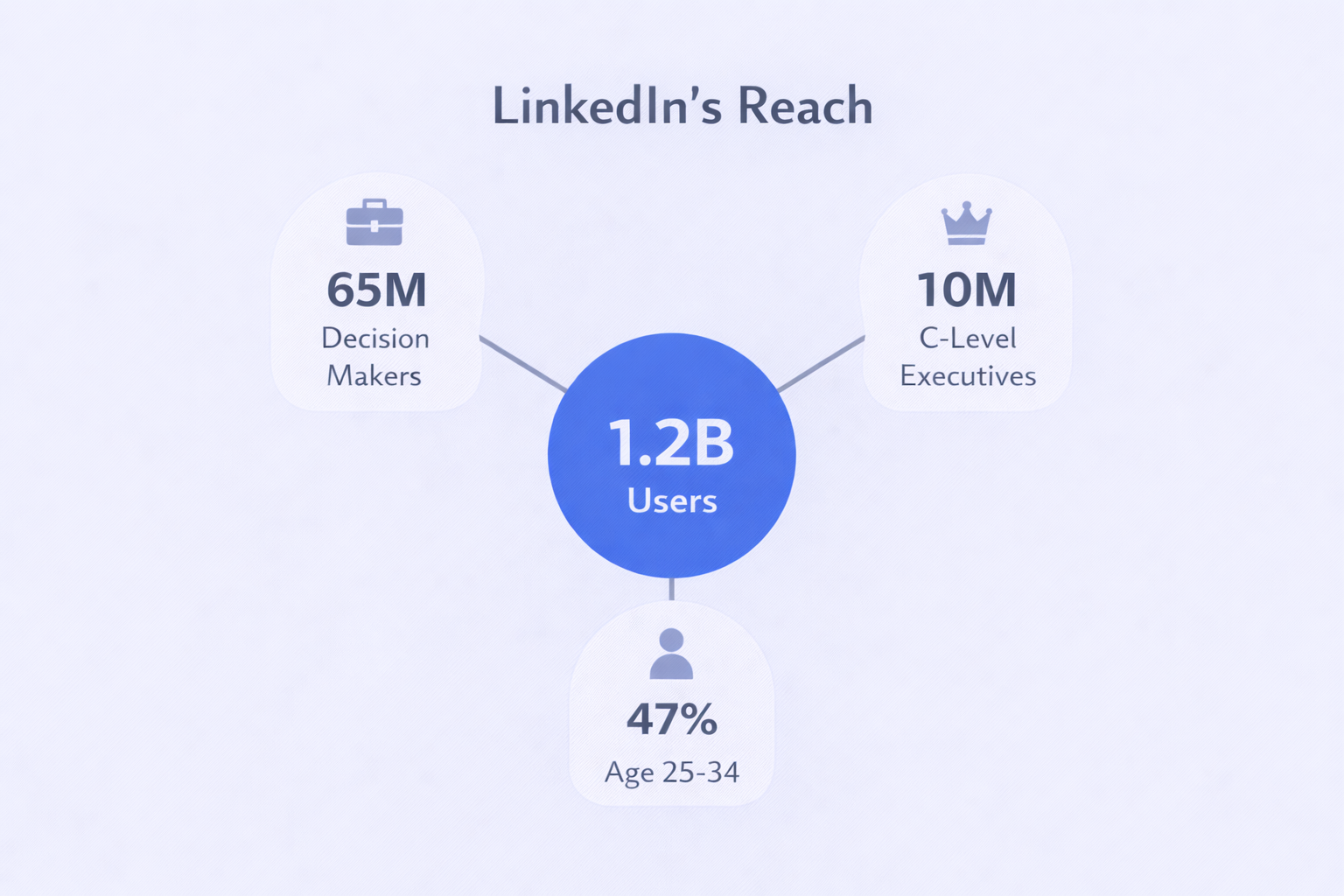
- 1.2 billion LinkedIn users growing by 2-3 new members per second – 91% of recruiters hunting for talent on platform daily making it single most powerful tool for professional networking
- 65 million decision-makers active on LinkedIn including 10 million C-level executives – 47.3% aged 25-34 (mid-career sweet spot), 53% earning over $100K annually creating premium talent pools
- LinkedIn messenger: 10.3-16.8% response rate vs cold email 5.1% – literally double the performance making platform essential for modern recruitment outreach and candidate engagement
- 88% of connection acceptances within 7 days, 21% occurring in first hour – timing matters for catching prospects during active sessions Tuesday-Thursday 9 AM-4 PM for maximum impact
- Personalized messages: 72% lift in replies, 9.36% response vs 5.44% without – volume without personalization creating inbox fatigue, winning formula combining outbound with profile visits and content engagement
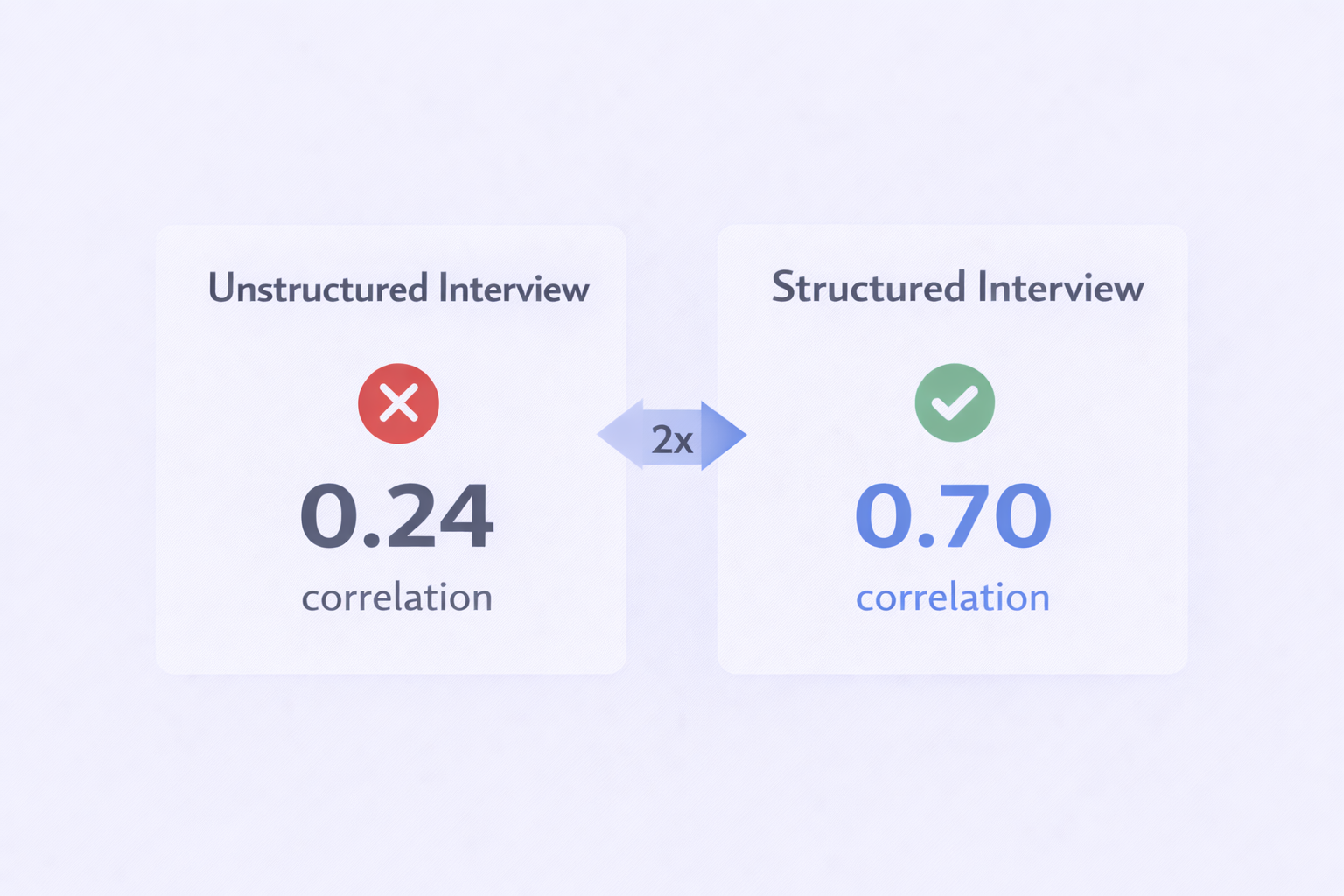
- Unstructured interviews: 0.24 correlation with job performance (worthless) – structured interviews 0.55-0.70 correlation (twice as predictive), eliminating bias and surfacing real competency when standardized
- Structured methods: 36% improvement in quality-of-hire, 28% faster time-to-productivity – companies using structured interviews consistently outperforming those relying on traditional resume screening and conversations
- 85% of talent leaders claim prioritizing skills over degrees – reality check: only 0.14% of 2024 hires actually impacted by removing degree requirements showing disconnect between stated priorities and actions
- Skills-based hiring reduces mis-hires by 26-50% when truly committed – skills assessments 5x more predictive than education credentials alone, 81% of companies using pre-employment testing (up from 56% in 2022)
- Failed hire costs 30-213% of annual salary – sales roles averaging $150K OTE seeing turnover within 6 months exceeding $200,000 including recruitment costs, training, lost productivity, opportunity cost
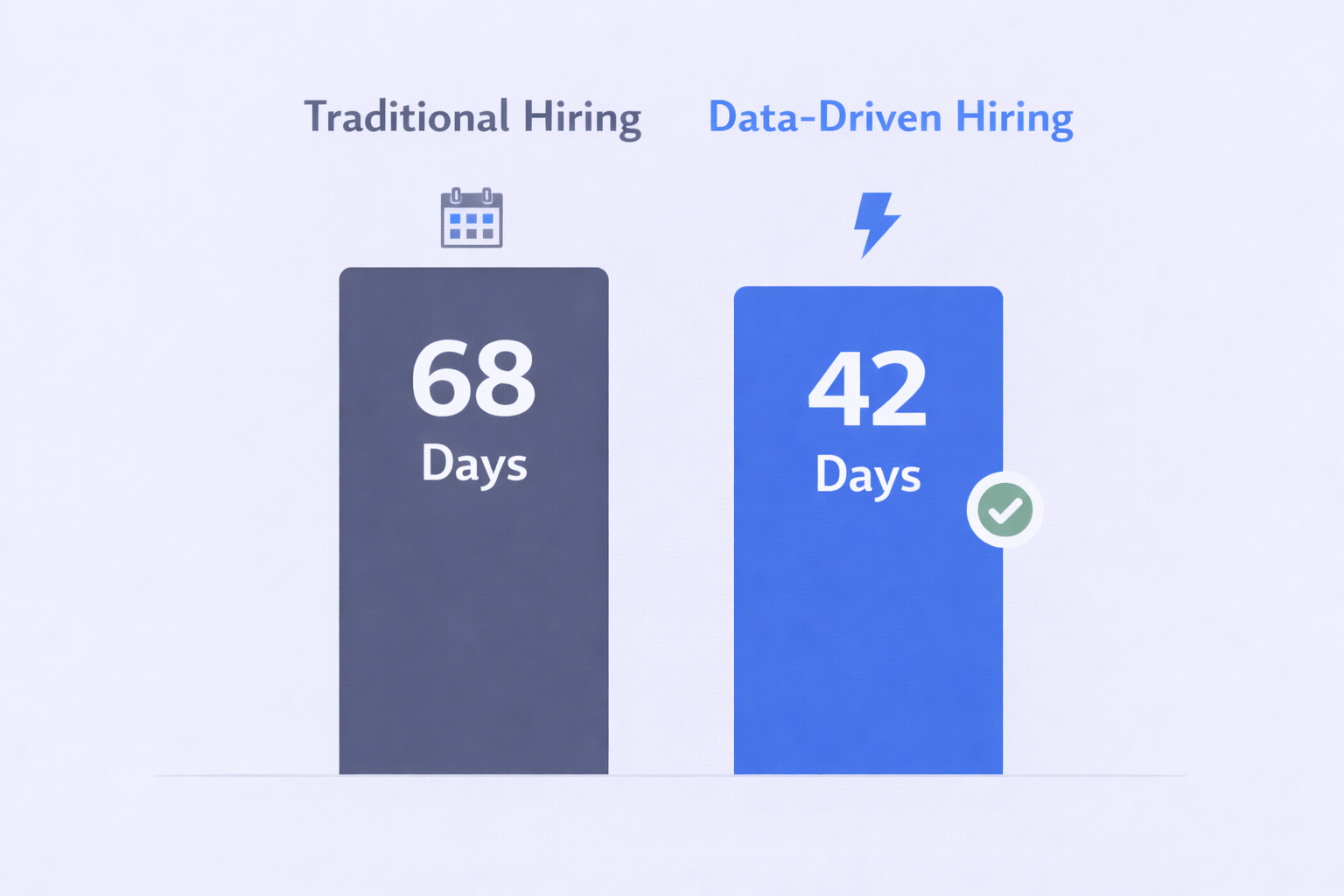
- Average hiring process stretched to 68.5 days in 2025 (up from 42 days in 2023) – every additional day increasing drop-off risk with 60% dropping due to complex application processes
- 66% of candidates accept offers primarily due to positive candidate experience – while 42% decline specifically due to negative interview interactions, 79% would reapply after rejection if received constructive feedback
- 80% of hiring managers admit to ghosting candidates – while 44% of candidates now ghost employers during hiring process showing power dynamics shift requiring companies to actively sell themselves to top talent
Hiring the right people shouldn’t feel like gambling.
Yet 70% of organizations struggle to find qualified talent, even in a cooling economy. The difference between companies that build rockstar teams and those stuck in endless hiring cycles? They rely on data, not gut feelings.
Recruitment and selection are two sides of the same coin. Recruitment attracts a pool of candidates—think job posts, networking, and LinkedIn outreach. Selection filters that pool down to the perfect hire through structured interviews, skills tests, and background checks.
When done right, this process cuts turnover by 36% and slashes time-to-productivity by 28%. When done wrong? You’re looking at costs between $115,000 per failed hire in sales roles alone.
The stakes are high, but the playbook is clear. Let’s break down exactly what the data tells us about building better teams in 2025.
📊 LinkedIn Outbound Gets You Better Candidates, Faster
Stop losing top talent to competitors who respond first.
While you’re waiting for applications to trickle in, smart companies are using LinkedIn outbound to reach decisio
LinkedIn Networking Statistics
LinkedIn isn’t just a digital resume anymore—it’s the hiring battleground where 91% of recruiters hunt for talent daily.
With 1.2 billion users (and growing by 2-3 new members per second), the platform has become the single most powerful tool for professional networking and talent acquisition.
The Numbers That Matter
65 million decision-makers are active on LinkedIn right now. That includes 10 million C-level executives who could be your next hire—or your competitor’s if you’re too slow.
Here’s what makes LinkedIn essential for modern recruitment:
- 47.3% of users are aged 25-34—the sweet spot for mid-career talent
- 53% earn over $100,000 annually—premium talent pools
- 57-73% access LinkedIn via mobile—your outreach needs to work on smartphones
Response Rates That Actually Work
Cold email gets a 5.1% response rate on average. LinkedIn messenger? 10.3% to 16.8%—literally double the performance.
But here’s where it gets interesting: 88% of connection acceptances happen within 7 days, with 21% occurring in the first hour. This means timing matters—catch prospects during active sessions (Tuesday-Thursday, 9 AM to 4 PM) for maximum impact.
Personalized messages drive a 72% lift in replies compared to generic templates. The data is clear: 9.36% response rate with personalization versus 5.44% without.
For B2B prospecting, LinkedIn delivers 80% of high-quality leads from social channels. No other platform comes close.
Content That Converts
Visual content dominates LinkedIn engagement:
- Multi-image carousels: 6.6% engagement rate
- Document posts (PDFs/slides): 6.1% engagement
- Video content: 40% year-over-year growth, with 60-second clips retaining 87% of viewers
Smart recruiters aren’t just posting job listings—they’re sharing value-driven content that positions them as industry leaders, making top candidates actually want to work with them.
AI Changes Everything
37% of organizations are testing or using generative AI for hiring tasks like drafting outreach and summarizing candidate profiles. Recruiters using AI tools save 20% of their workweek—time they reinvest into relationship building.
But there’s a catch: 71% of decision-makers ignore irrelevant outreach. Volume without personalization = inbox fatigue. The winning formula? Combine LinkedIn outbound with profile visits and content engagement for 11.87% reply rates.
⚡ Traditional Recruiting Wastes 68 Days Per Hire
LinkedIn outbound cuts that to 14 days—with better quality matches.
Stop waiting for the “perfect candidate” to apply. Our targeting system finds them, our campaigns engage them, and our scaling methods book meetings automatically.
What Smart Companies Actually Do
The hiring landscape has evolved beyond “post and pray” recruiting. Here’s what separates elite hiring teams from the rest:
Structured Interviews Win (Every Time)
Unstructured interviews have a 0.24 correlation with job performance—basically worthless. You might as well flip a coin.
Structured interviews? 0.55 to 0.70 correlation—twice as predictive. When every candidate answers the same job-relevant questions on a standardized rubric, you eliminate bias and surface real competency.
Companies using structured methods see a 36% improvement in quality-of-hire and 28% faster time-to-productivity.
Skills Beat Degrees
85% of talent leaders claim they prioritize skills over formal degrees. Reality check: only 0.14% of 2024 hires were actually impacted by removing degree requirements.
But when companies truly commit to skills-based hiring, they see 26-50% reductions in mis-hires. Skills assessments are 5x more predictive than education credentials alone.
81% of companies now use some form of pre-employment testing (up from 56% in 2022). For roles requiring research and persistence, simulated prospecting tasks reveal more than any resume.
The Real Cost of Bad Hires
A failed hire costs between 30% and 213% of annual salary. For sales roles averaging $150,000 OTE, a turnover within six months can exceed $200,000 when you factor in:
- Recruitment costs
- Training investment
- Lost productivity
- Opportunity cost of empty territory
The median tenure for sales development roles is just 1.5 to 1.9 years—but peak productivity hits between years 2-3. This creates a strategic crisis: you’re constantly training people who leave right when they become valuable.
67% voluntary turnover in tech sales roles makes selection precision absolutely critical.
Candidate Experience Is Your Brand
66% of candidates accept offers primarily because of positive candidate experience. 42% decline specifically due to negative interview interactions.
The hiring process has stretched to an average of 68.5 days in 2025 (up from 42 days in 2023). Every additional day increases drop-off risk.
Candidates’ biggest frustrations:
- 76% want feedback but rarely get it
- 74% expect salary transparency early in the process
- 60% drop out due to complex application processes
- 47% reject companies using impersonal AI without human touchpoints
Here’s the kicker: 79% of candidates would reapply to companies that rejected them—if they received constructive feedback. Your rejection process is part of your employer brand.
Modern Selection Tools That Work
87% of companies now use AI screening tools, cutting time-to-review by 75%. But AI can’t replace human judgment—it just surfaces the best candidates faster.
The winning combination uses:
- Skills assessments (0.40-0.50 correlation) for role-specific competencies
- Cognitive ability tests (0.51 correlation) for learning speed
- Structured behavioral interviews (0.55-0.70 correlation) for cultural fit
Companies combining these methods consistently outperform those relying on traditional resume screening and unstructured conversations.
Accepting Job Offers
80% of hiring managers admit to ghosting candidates. 44% of candidates now ghost employers during the hiring process—turnabout is fair play.
The shift in power dynamics means companies must actively sell themselves to top talent. The candidate experience isn’t just about being nice—it’s about competitive advantage.
53% of candidates report being misled about salary during the hiring process. 47% want salary details before applying. Transparency isn’t optional anymore—it’s table stakes.

🎯 Stop Hoping the Right Candidates Apply
LinkedIn outbound finds them for you—15-25% response rates guaranteed.
We handle targeting, campaign design, and scaling so you can focus on closing great hires. No more empty pipelines or ghosted applications.
What Is Recruitment and Selection?
Recruitment is the positive process of attracting a diverse pool of qualified candidates through job posts, referrals, and outbound prospecting.
Selection is the filtering phase—using resume screening, skills tests, background checks, and structured interviews to identify the single best fit.
Together, they form the complete talent acquisition lifecycle.
What Is Selection in Recruitment?
Selection is the critical narrowing process. You start with hundreds of applicants and systematically filter down to one quality hire through:
- Resume screening
- Skills assessments
- Phone screens
- Structured interviews
- Background verification
Done right, selection minimizes hiring risk and maximizes role fit.
Benefits of Recruitment and Selection
A refined recruitment and selection process delivers:
Lower Turnover: Finding the right job fit reduces early attrition and saves $115,000 per prevented mis-hire.
Higher Productivity: Structured selection identifies candidates who hit quota faster—28% reduction in time-to-productivity.
Cost Savings: Every prevented bad hire saves between 30-213% of annual salary.
Brand Reputation: 79% of candidates will recommend companies with positive processes—even after rejection.
What Is the Purpose of Recruitment and Selection?
The purpose is simple: provide your organization with the human capital needed to achieve business objectives.
By systematically identifying talent that aligns with role requirements and company values, you ensure operational stability and minimize the financial risks of workforce churn.
The best companies treat recruitment as a branding exercise and selection as a risk-mitigation strategy. Both are essential for scaling sustainable teams in competitive markets.
Conclusion
The recruitment and selection landscape of 2025 rewards precision over volume.
Companies that combine data-driven selection methods with human-centric candidate experiences are building teams that actually stick around. The key insights:
- LinkedIn outreach delivers 2x better response rates than traditional recruiting
- Structured interviews are twice as predictive as unstructured conversations
- Skills-based hiring reduces mis-hires by 26-50%
- Candidate experience directly impacts offer acceptance (66% cite it as primary reason)
The organizations winning the talent war aren’t posting more job listings—they’re systematically targeting the right people, using data to make better decisions, and creating experiences that top candidates actually want.
Your next great hire is out there. The question is whether you’ll find them first—or watch them join a competitor who moved faster.
🚀 Ready to Scale Your Outreach?
Your profile photo is just the start. We design complete LinkedIn prospecting campaigns that fill your calendar with qualified meetings—using proven systems that work.
7-day Free Trial |No Credit Card Needed.
FAQs
What is recruitment and selection?
What is selection in recruitment?
What are the benefits of recruitment and selection?
What is the purpose of recruitment and selection?
How does a better LinkedIn photo help with outreach and lead generation?
- blog
- Statistics
- Recruitment and Selection Statistics 2026