
The Reality of Recruitment Bias Statistics
Let’s talk numbers. Because that’s where the truth lives.
Name Bias: The 50% Callback Gap That Won’t Go Away
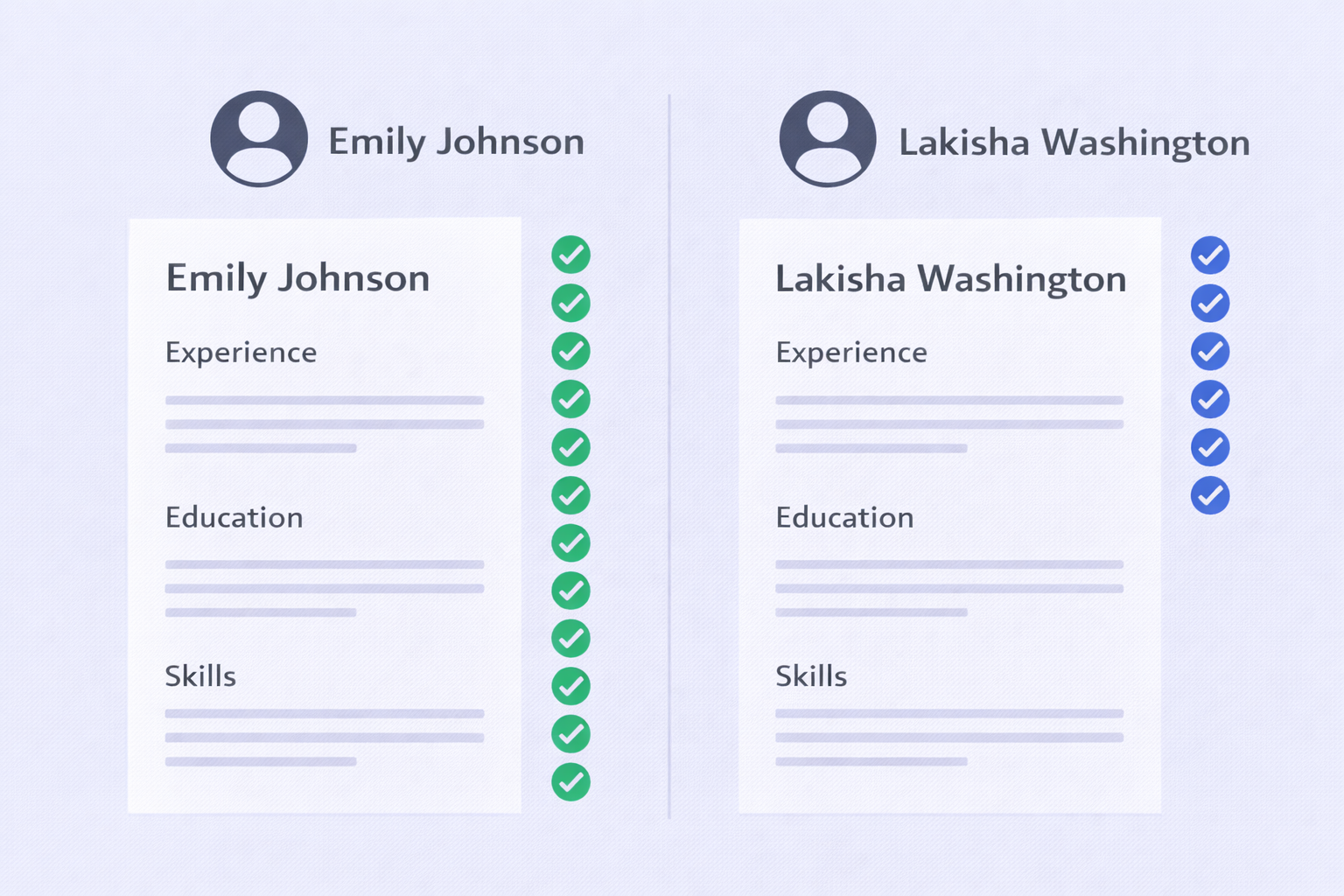
When researchers sent out identical resumes with different names, candidates with “white-sounding” names like Greg or Emily received 50% more callbacks than those with names like Jamal or Lakisha.
This isn’t ancient history. This is 2025.
The gap has narrowed since 2003—by about 41%—but that still means qualified candidates are being ignored before anyone even reads their resume. Before they get a chance to prove themselves. Before anyone knows if they’re the perfect fit.
And here’s the kicker: Hispanic candidates only see a 29% passthrough rate in initial screening. That’s 7 out of 10 qualified people never making it past round one.
Gender Disparity: When Men Get 2.4x More Outreach
Women make up 47% of the American workforce. But when recruiters are actively hunting for talent, men receive 2.4 times more outreach messages.
In engineering? That jumps to 4 times more likely for men to get that LinkedIn message or email outreach.
Think about that. A woman engineer with the exact same skills is being ignored 75% of the time. Not because she’s not qualified. But because the hiring process is starting with a massive blind spot.
And it gets worse once women actually land interviews. 42% of women report facing gender-biased questions during interviews. Questions about childcare. Marriage status. Things that have zero to do with the job.
When identical resumes were submitted—one with “John” and one with “Jennifer”—John was rated as significantly more competent and hireable. Same credentials. Same experience. Different name. Different outcome.
Age Discrimination: The Double Squeeze
Here’s where it gets really messy. Both ends of the age spectrum are getting crushed.
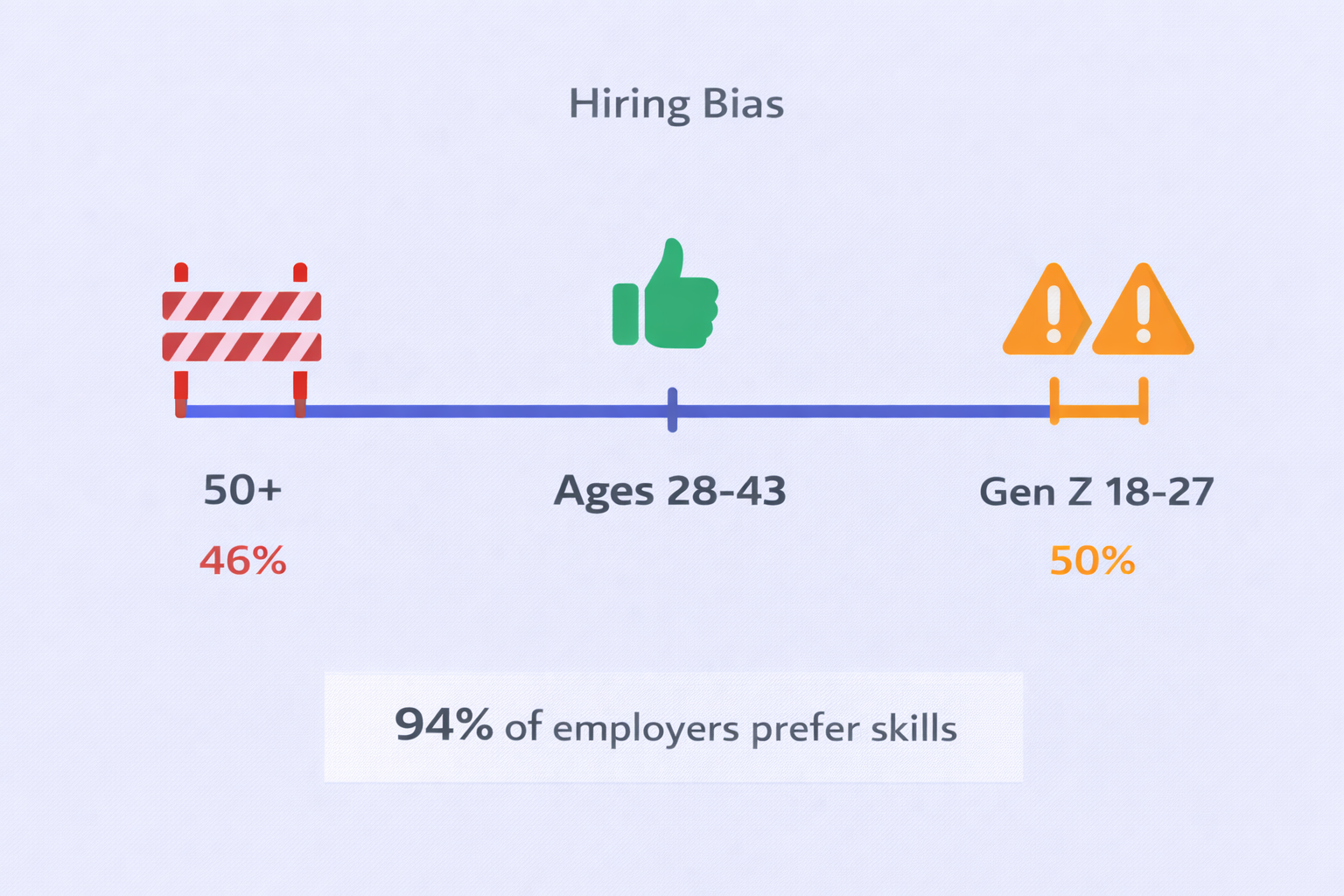
Workers over 40 are 46% less likely to get an interview than younger candidates with identical qualifications. Nearly 42% of hiring managers admit they consider age when reviewing resumes. And 33% specifically express concerns about hiring older applicants.
Why? They assume older workers want more money. That they’re not “tech-savvy.” That they won’t stick around.
But here’s the twist: Gen Z is facing the same skepticism. Nearly half of hiring managers believe it’s in the company’s best interest to avoid Gen Z hires. They’re labeled as lacking “professional readiness” and communication skills.
So if you’re too young, you’re inexperienced. Too old, you’re inflexible. The sweet spot keeps getting narrower.
Neurodiversity and Disability: The 48% Who Feel Excluded
Neurodivergent candidates—people with ADHD, autism, dyslexia—represent a massive talent pool. But 48% feel the recruitment process is unfairly biased against them.
Why? Because interviews reward specific social behaviors. Eye contact. Quick verbal responses. “Enthusiastic” body language. Things that have nothing to do with job performance but everything to do with neurotypical standards.
31% of people with physical disabilities fear they won’t even be considered if they disclose their condition. So they hide it. And then they’re judged unfairly anyway because they can’t “perform” in ways that match outdated expectations.
Organizations with formal neurodiversity programs report 30% higher productivity and innovation. Yet most companies haven’t adopted these practices. They’re leaving money—and talent—on the table.
The Financial Cost of Bias Hiring
Let’s talk money. Because that’s what ultimately matters to organizations.
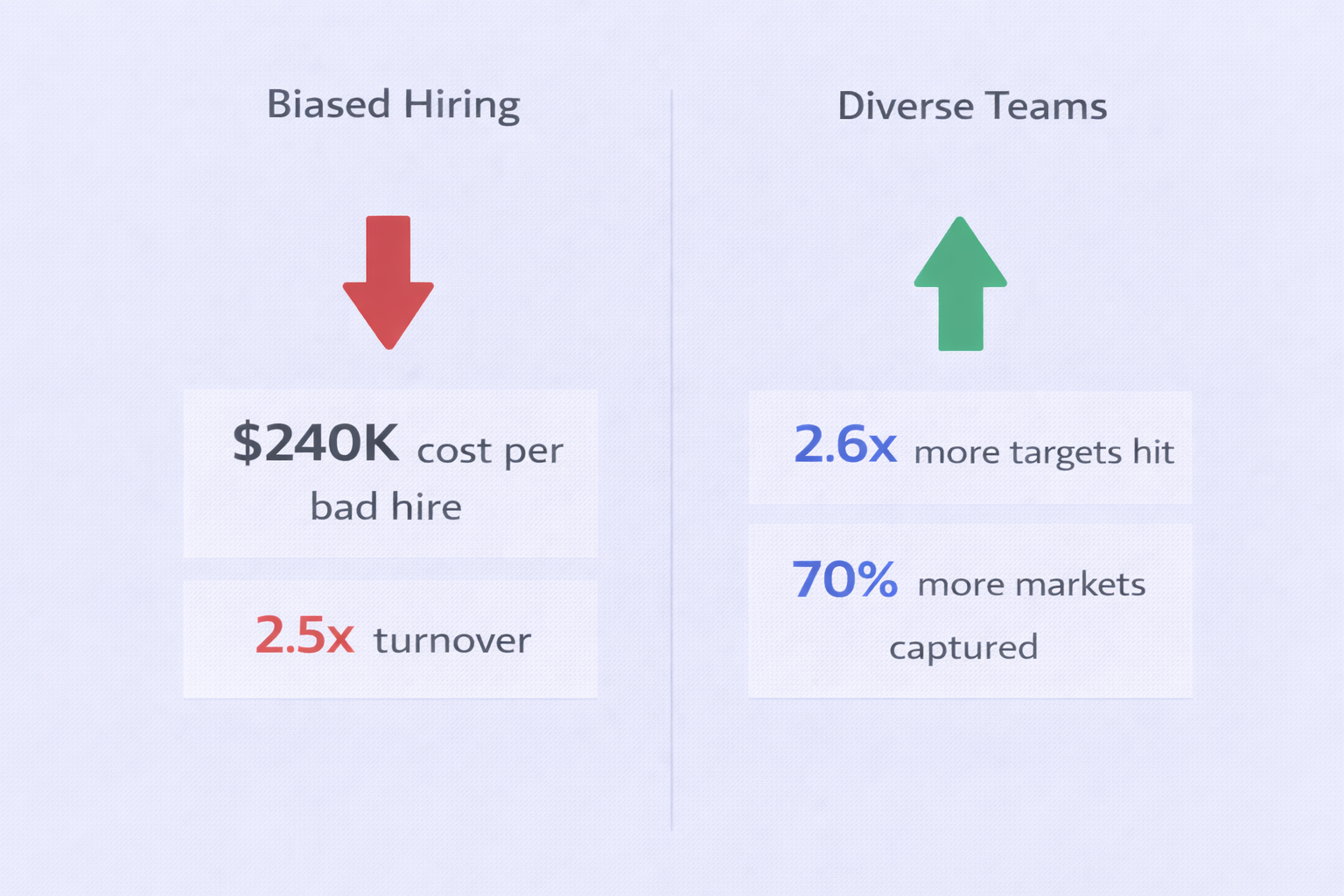
The average cost-per-hire is around $4,700. But the total cost of a bad hire can reach $240,000 when you factor in lost productivity, training resources, and the time wasted restarting the search.
And here’s what most people miss: bias hiring doesn’t just cost you money on bad hires. It costs you money by excluding the best candidates.
Organizations with strong diversity practices hit their financial targets 2.6 times more often than their less-diverse competitors. Companies in the top quartile for ethnic diversity are 39% more profitable.
Why? Because diverse teams capture 70% more new markets. They bring different perspectives. Different networks. Different ways of solving problems that homogeneous teams never see.
Meanwhile, companies with biased hiring cultures experience 2.5 times higher turnover and watch their best people walk out the door because the culture doesn’t support them.
Real Impact on Teams and Market Reach
Let’s bring this home with real numbers:
- 94% of employers believe skills-based hiring predicts job performance better than resumes alone
- 91% of organizations missed quota in 2024—partly due to poor pipeline quality
- Teams with strong diversity initiatives see a 19% boost in innovation-driven revenue
- 22% lower turnover in inclusive cultures versus biased ones
- 52% of candidates are ghosted after interviews, with underrepresented groups being 67% more likely to experience this
Every ghosted candidate tells other people. Every bad experience spreads. Your employer brand takes a hit. And suddenly, top talent won’t respond to your outreach because they’ve heard the stories.
How to Actually Reduce Recruitment Bias
Alright. Enough doom and gloom. Let’s talk solutions.
Use Structured Interviews
The single most effective intervention is structured interviews. Ask every candidate the same questions. Score them against the same rubric. Use the STAR method (Situation, Task, Action, Result) to evaluate behaviors instead of “vibes.”
This removes affinity bias—the tendency to hire people who remind you of yourself. It forces you to evaluate skills instead of “cultural fit,” which is often code for “people like us.”
Implement Blind Screening
Remove names, photos, addresses, and schools from initial resume reviews. Focus purely on skills and experience.
This simple change can dramatically improve callback rates for underrepresented candidates. It forces you to look at what people can do instead of where they came from or what their name sounds like.
Switch to Skills-Based Assessments
Stop requiring degrees for roles that don’t need them. 94% of employers say skills-based assessments predict job performance better than credentials.
Give candidates a chance to prove themselves through work samples, technical tests, or real projects. You’ll be surprised who rises to the top when you’re measuring actual ability instead of pedigree.
Audit Your AI Tools
If you’re using AI for screening, demand transparency. Ask your vendor:
- What data was used to train the model?
- Has it been audited for bias?
- What’s the demographic breakdown of accepted versus rejected candidates?
By early 2025, it’s estimated that 75% of large enterprises will adopt AI hiring tools with built-in bias mitigation. Be in that group.
Expand Your Sourcing Channels
Stop recruiting from the same three universities. Stop posting on the same job boards. Stop looking in the same places.
If you want different results, you need different inputs. Tap into professional communities. Partner with organizations focused on underrepresented talent. Use alternative sourcing methods that reach people traditional channels miss.
Conclusion
The data is clear. Recruitment bias is real. It’s measurable. And it’s costing organizations money, talent, and market opportunity.
50% callback gaps based on names. 2.4 times more outreach for men. 46% fewer interviews for older workers. 48% of neurodivergent candidates feeling excluded. 99% of Fortune 500 companies using AI that often amplifies bias.
These aren’t small problems. They’re systemic barriers that prevent great people from getting opportunities they deserve.
But here’s the thing: you can fix this.
Structured interviews work. Blind screening works. Skills-based hiring works. Audited AI can actually reduce bias when it’s done right.
The question isn’t whether you can build a more diverse, more effective team. The question is whether you’re willing to look at your own process honestly enough to see where it’s broken.
Because the cost of not fixing it? That’s the real stat you can’t afford to ignore.

