
The Candidate Experience Crisis
Here’s a sobering recruitment consultant statistic: only 26% of job seekers in North America report having a “great” hiring experience.
The breakdown is even more troubling:
- 65% of candidates don’t receive consistent updates during the hiring process
- 40% are completely “ghosted” after second or third-round interviews
- 47% believe AI chatbots make the process feel cold and transactional
- 33% abandon applications that require one-way video interviews
The business impact? 66% of candidates accept offers primarily because of positive recruitment interactions, while 36% reject offers based on negative interview experiences. Even worse, 13% of candidates with “terrible” experiences won’t engage with that company’s products again—turning a hiring failure into lost revenue.
For consultants using outreach tools, this highlights the importance of pipeline management and consistent communication throughout the candidate journey.
AI and Automation: The Hybrid Model
Artificial intelligence has fundamentally transformed recruitment workflows, but not in the way many predicted.
99% of hiring managers use AI in at least one part of their recruitment process. The focus is primarily on “top of funnel” automation:
- Resume screening: AI analyzes thousands of CVs in seconds, identifying keywords and skills that match job descriptions
- Interview scheduling: Automated calendaring reduces back-and-forth, letting candidates select their own slots
- Chatbots: 55% of organizations use AI-powered chatbots for initial candidate queries and instant updates
But there’s a significant concern: 40% of talent specialists fear over-automation will make processes too impersonal, potentially missing “outlier” candidates who don’t fit strict algorithmic profiles.
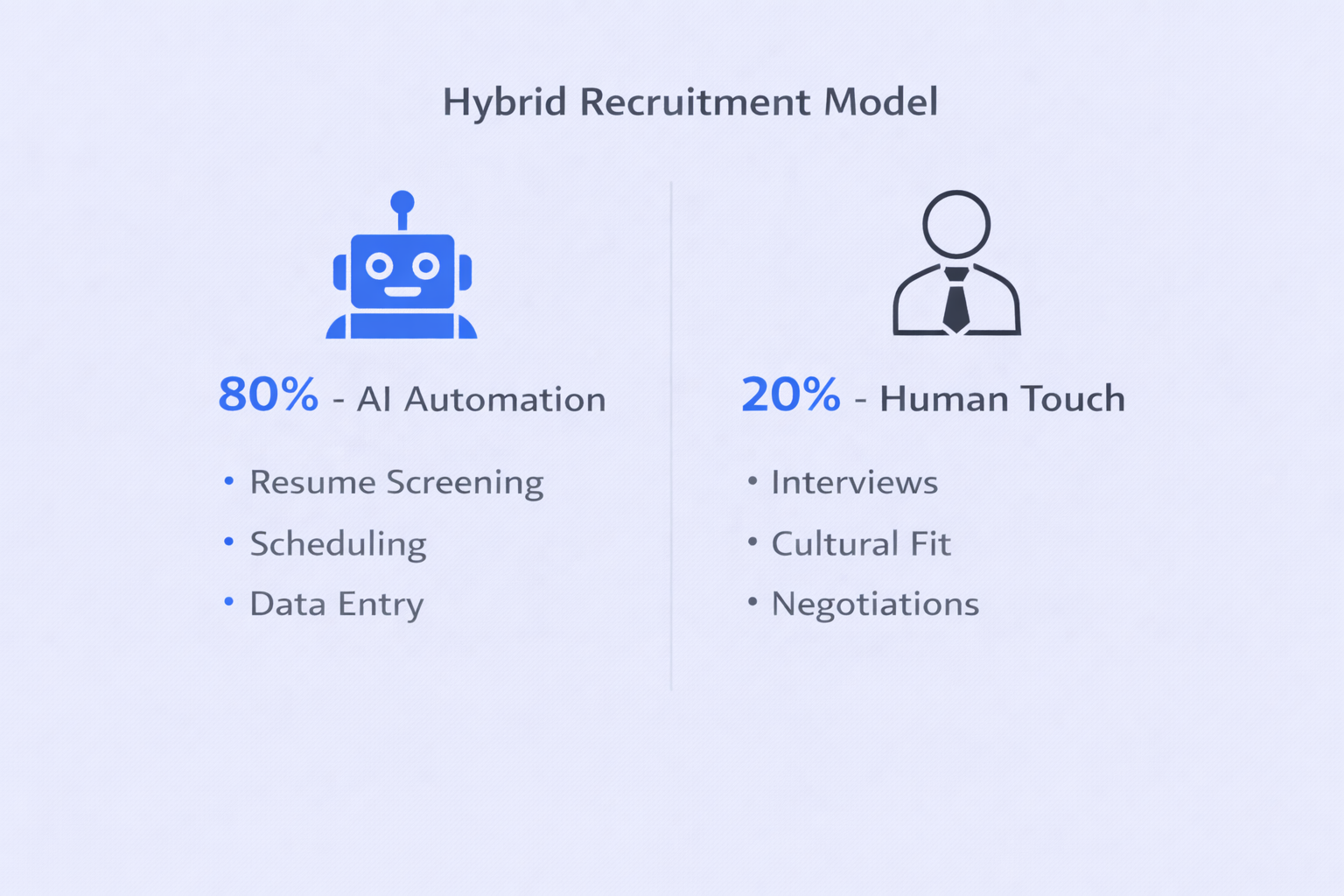
The solution? A hybrid model where AI handles 80% of administrative tasks—data entry, scheduling, initial screening—while humans focus on the remaining 20% that requires empathy, negotiation, and cultural assessment. This approach saves recruiters 4-7 hours weekly while maintaining the human touch that candidates value.
Elite Talent Markets: Data Science and MBA Hiring
Recruitment consultants operating in specialized talent markets face unique pressures and opportunities.
The Data Science Boom: The global data science market is projected to reach $178.5 billion by 2025, with job growth of 34% through 2034—eight times the national average. Entry-level data scientists now command $85,000-$110,000, while senior professionals earn $180,000-$250,000.
What’s changed? 70% of data science postings now require specialized degrees (up from just 47% in 2024), and 57% seek “versatile professionals” who can bridge technical execution with business strategy. This means consultants need deep technical knowledge to properly assess candidates.
The MBA Market Reality: Employment data from top MBA class graduates provides insight into white-collar hiring trends. At Yale School of Management:
- 2022: 96.1% received offers, 93.3% had accepted job offer within 3 months
- 2023: 91.5% received offers, 88.4% accepted
- 2024: 84.8% received offers, 81.2% accepted
- 2025: 82.1% received offers, 79.9% accepted
Despite a 14-percentage-point drop in placement rates since 2022, median salaries have held strong at $175,000, suggesting employers are more selective but still paying premium rates for top talent.
For consultants targeting these recent graduates, understanding market dynamics is crucial for realistic candidate expectations.
Government Employment Tracking: MoSPI Recruitment
To understand macro-level trends, we need to look at how governments track employment data.
In India, the Ministry of Statistics and Programme Implementation plays a crucial role through MoSPI recruitment of specialized staff. The Ministry regularly hires Field Investigators, Junior Consultants, and Young Professionals to conduct the Periodic Labour Force Survey (PLFS)—the primary source for national employment statistics.
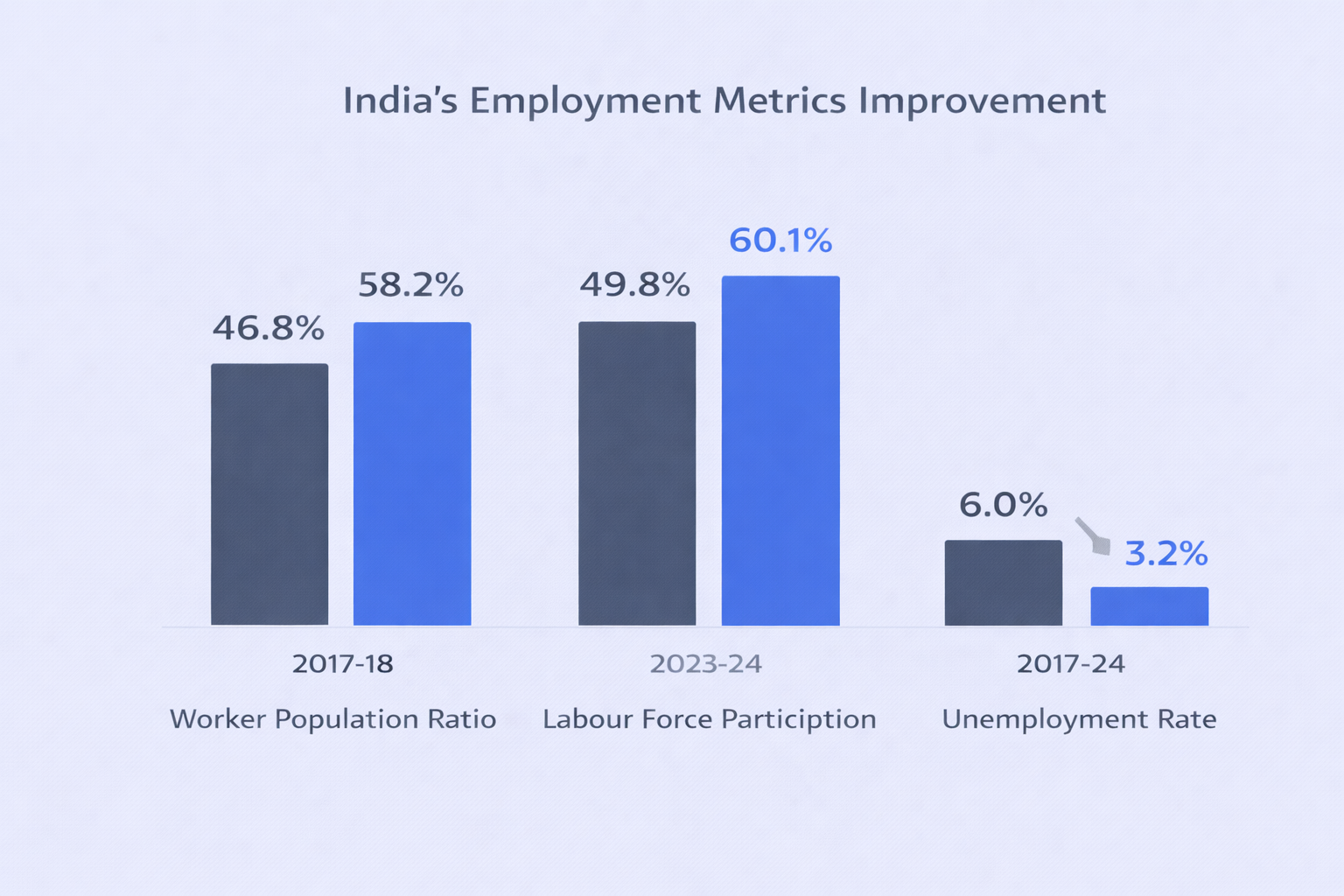
Recent PLFS 2024 data shows remarkable improvements in India’s labor market over seven years:
- Worker Population Ratio: Increased from 46.8% (2017-18) to 58.2% (2023-24)
- Labour Force Participation Rate: Rose to 60.1%
- Unemployment Rate: Declined from 6.0% to just 3.2%
Perhaps most significant: female labor force participation surged from 23.3% to 41.7%, highlighting shifting societal dynamics as economic necessity and increased education challenge traditional barriers.
These macro trends inform recruitment consultants about overall labor availability and regional employment patterns.
Class Employment: The Geographic Divide
The recruitment landscape is heavily influenced by class employment patterns—the distinction between knowledge workers and traditional working-class roles.
The Creative Class Concentration: Professionals in computer science, engineering, business, and management roles cluster in specific metros. In leading U.S. cities, the creative class makes up over 50% of the workforce, while in lagging metros they account for less than 25%.
San Jose, California leads with 55.8% of adults holding college degrees. For LinkedIn users and professional recruiters, this geographic concentration creates high-velocity hiring environments where top candidates are off the market within 2-3 weeks.
The Working Class Reality: Conversely, the working class constitutes over 60% of the U.S. labor force—approximately 93 million people. They’re primarily employed in service (78%), construction (13%), and manufacturing (8%).
The wage gap is substantial: workers without college degrees earn $35,000-$44,000 annually, while bachelor’s degree holders earn $74,000. This disparity is compounded by race and gender, with Black and Hispanic working-class individuals earning $40,000 compared to $50,000 for white workers.
For recruitment consultants in these sectors, the focus shifts to high-volume hiring and benefits addressing basic economic precarity—flexible scheduling, childcare support, and transportation assistance.
Skills-Based Hiring: The Future of Recruitment
The most significant shift in recruitment consultant statistics? The move away from degree requirements toward skills-based evaluation.
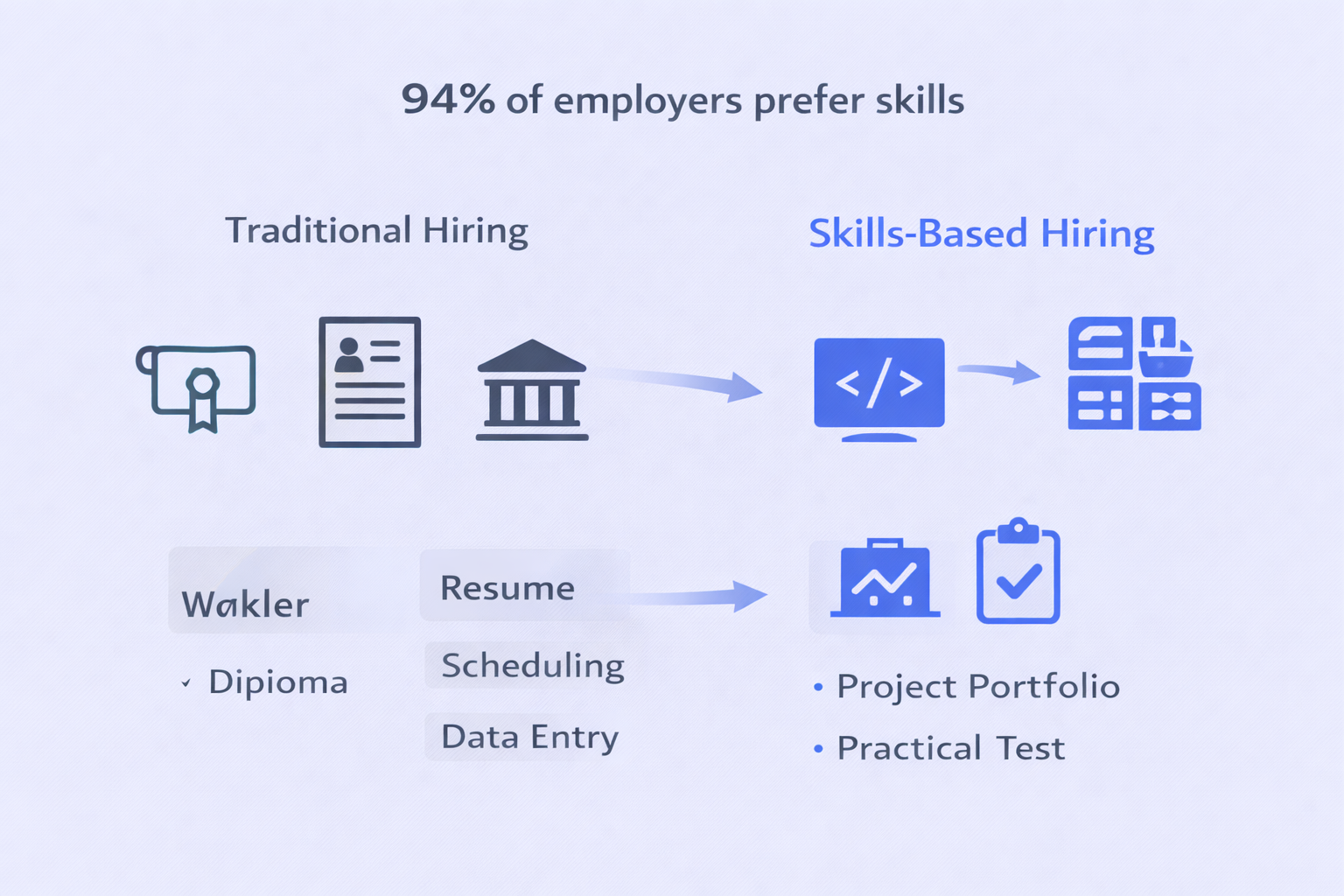
94% of employers now believe practical abilities are better predictors of job performance than university credentials. This philosophical shift is driven by documented failures: 60% of business leaders doubt their hiring decisions within six months of recruitment.
What does skills-based hiring look like in practice?
- Practical assessments and work samples during interviews
- Focus on demonstrable competencies over educational pedigree
- Structured evaluation frameworks that reduce bias
- Wider talent pools including self-taught professionals and career changers
For consultants, this requires developing new assessment methodologies and the ability to evaluate candidates beyond traditional credentials. It also means using prospecting tools that can identify candidates based on skills and achievements rather than just job titles.
Over 21% of IT recruiters worldwide expect challenges recruiting AI and machine learning specialists in 2025—a shortage that skills-based hiring aims to address by expanding the candidate pool beyond traditional CS degrees.
Cold Outreach Statistics for Recruitment
For those selling to recruitment consultants or conducting candidate outreach, understanding cold communication benchmarks is essential.
Email Performance in 2025:
- Average cold email open rate: 27.7% (down from 36% previously)
- Average reply rate: 5.1% across B2B industries
- Decision-makers in HR/recruitment: 8.5% reply rate (above average)
The key to success? Multi-point personalization. Emails referencing specific recent hires, industry challenges, or mutual connections can increase reply rates by up to 142%.
Length matters too. “Half-paragraph” emails (under 100 characters in subject line) consistently outperform longer, detailed pitches. For recruitment consultants looking for alternatives to traditional email databases, focusing on verified, high-intent contacts is crucial to maintaining sender reputation while scaling outreach.
Conclusion
The recruitment consultant statistics for 2025 paint a picture of an industry in rapid transformation.
The transactional recruiter is being replaced by the consultative talent advisor—a professional who combines data literacy, technological savvy, candidate-first culture, and skills-based evaluation to navigate an increasingly complex labor market.
Success in modern recruitment requires:
Mastering AI tools while maintaining the human touch that candidates value. Using predictive analytics to identify candidates most likely to accept and succeed long-term. Prioritizing transparent communication to avoid the ghosting epidemic damaging employer brands. Shifting from credential worship to measurable practical abilities that expand talent pools.
For organizations, the message is clear: hiring is no longer an administrative function—it’s a mission-critical business process where the right consultant can mean the difference between 52 days of vacancy or 2 weeks to hire, between 5% response rates or 25%, between another costly mis-hire or a team member who drives revenue for years.
The recruitment industry remains resilient, tech-hungry, and essential. Understanding these statistics isn’t just about benchmarking—it’s about recognizing where the smartest money and attention is flowing in the global war for talent.