
Let's Build Your First Campaign Together with our LinkedIn Expert

Recruitment Process Statistics: The Real Numbers Behind Hiring in 2026

Table of Contents

Recruitment Process Statistics

  • Median time to first offer: 68.5 days (up 22% from 2024) – over two months of waiting, wondering, checking email obsessively with companies running 5-8 separate interview rounds on average
  • Only 0.1-2% of cold online applications result in job offers – essentially throwing darts in dark, showing traditional application approach fundamentally broken and inefficient
  • Recruiters handle 156% more vacancy load than 2023 – result being overwhelmed and making mistakes, with companies buried in applications but missing qualified candidates
  • Most job seekers submit 32-200+ applications before landing single offer – brutal competition with AI screening tools rejecting resumes left and right, chances of getting through being slim
  • 75% of recruiters use Applicant Tracking Systems (ATS) to filter candidates – systems scanning for keywords not potential, if resume doesn’t match algorithm you’re out even if perfect for job
  • 83% of companies will use AI for resume screening by 2025 – great for efficiency, terrible for humans who don’t fit exact template, focused on speed and volume not quality
  • Employee referrals 10x more likely to result in hire than general job boards, 55% faster – dramatically outperforming all other sourcing channels with proven conversion advantages
  • Referred candidates: 46% retention rate after 1 year vs 33% general applicants – already understanding culture, vetted by someone internal, moving faster through hiring process creating better outcomes
  • Average cost per hire: $4,700 direct costs – but real number 3-4x employee’s annual salary when adding productivity loss, background checks, ramp-up time
  • Bad hire costs $14,900 average – financial loss plus 36% productivity drop across team, 32% drop in employee morale, 80% would quit if culture fit poor
  • 88% of employers believe they’re screening out highly qualified candidates – AI doesn’t see potential, sees keywords, if don’t have exact words it’s looking for you’re rejected
  • 47% of applicants say chatbots make experience feel impersonal and disconnected – talking to robots not humans, feels cold, yet companies implementing AI effectively can reduce hiring cycle by up to 60%
  • 47% of job seekers want salary before applying – companies posting salary ranges getting 67% more clicks and higher quality applicants, transparency mattering more than ever
  • 83% of employees value hybrid/remote options as fundamental requirement not perk – requiring full-time office automatically cutting candidate pool by more than half in 2025
  • 48% report being ghosted by companies after interviews (up from 38% previous year) – ghosting epidemic killing employer brands, candidates talking and sharing experiences online costing dozens of future candidates

Landing your dream job feels impossible these days.

You send out dozens of applications. Hear nothing back. The whole recruitment process drags on forever. And when companies finally respond, you’re stuck in interview loop after interview loop.

Here’s the truth: the median time to get a first offer hit 68.5 days in 2025 — that’s over two months. And that’s just the average.

But it’s not just frustrating for you. Companies are struggling too. They’re drowning in 2.7 times more applications than three years ago, yet 88% admit they’re screening out qualified candidates by accident.

This article breaks down the real recruitment process statistics that matter. You’ll see exactly how long things take, what actually works, and where the system is broken. No fluff, just the data you need to navigate this mess.

Let’s dive in.

How Long Does the Recruitment Process Actually Take?

The short answer? Way longer than it should.

The median time to first offer is now 68.5 days, up a staggering 22% from 2024. That’s more than two months of waiting, wondering, and checking your email obsessively.

Why so long? Companies now run five to eight separate interview rounds on average. Each round adds time. Each delay stacks up. And before you know it, you’ve been in their pipeline for months.

Here’s what the timeline looks like across different roles:

  • Executive positions: 65-90 days
  • Engineering roles: 35-45 days
  • Data analytics: 38-52 days
  • Sales positions: 30-40 days
  • Marketing roles: 25-35 days
  • Support teams: 20-30 days

The more specialized the role, the longer it drags. Data analysts often face a 7-10 day delay just for take-home assignments. That’s on top of multiple interview rounds.

And here’s the kicker: only 0.1% to 2% of cold online applications actually result in job offers. You’re essentially throwing darts in the dark. That’s why B2B prospecting has become smarter — people are finding better ways to connect.

The Application Volume Crisis

Companies are buried in applications.

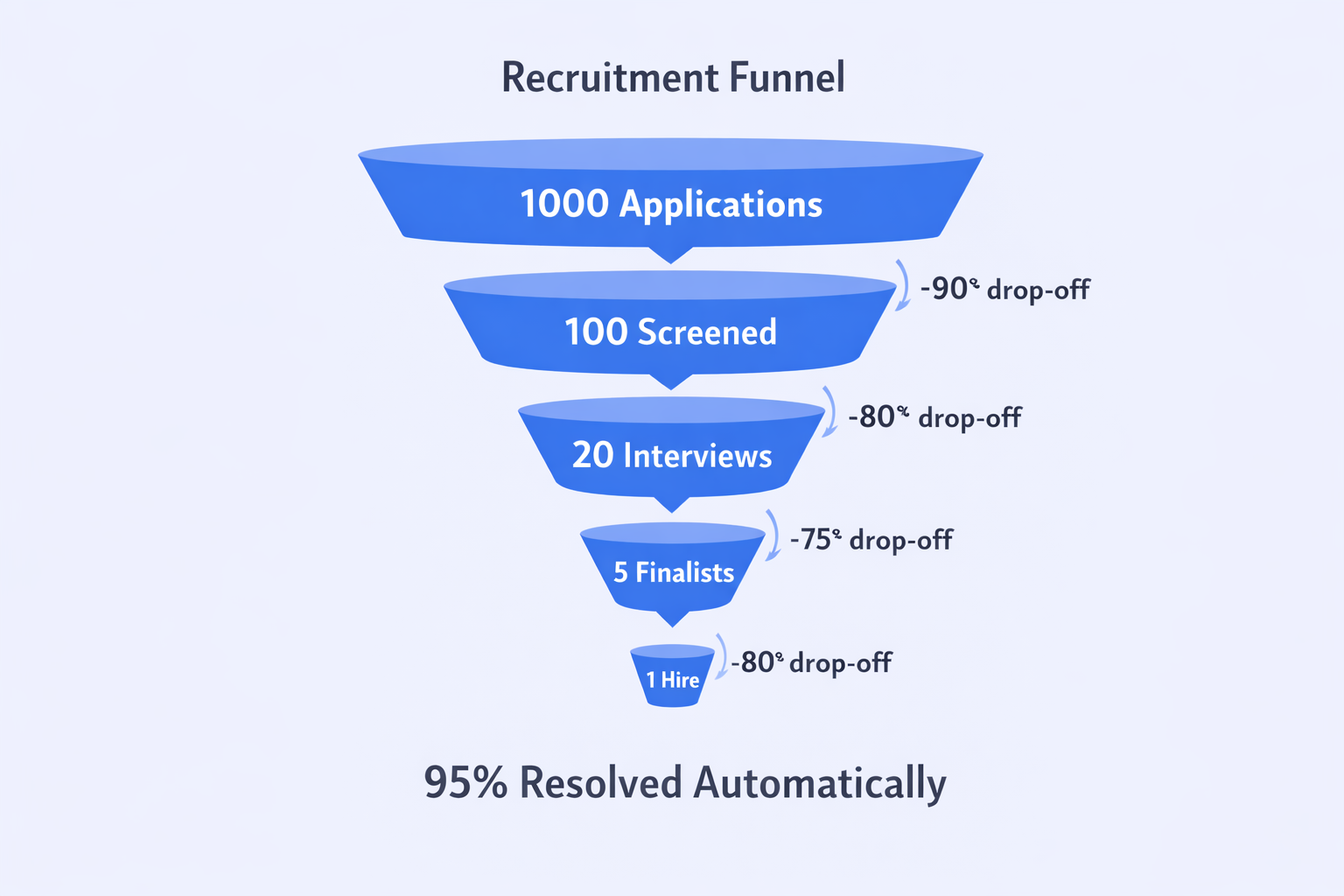
Recruiters now handle 156% more vacancy load than they did in 2023. The result? They’re overwhelmed and making mistakes.

Most job seekers now submit 32 to 200+ applications before landing a single offer. The competition is brutal. And with AI screening tools rejecting resumes left and right, your chances of getting through are slim.

Here’s what makes it worse: 75% of recruiters now use Applicant Tracking Systems (ATS) to filter candidates. These systems scan for keywords, not potential. If your resume doesn’t match their algorithm, you’re out — even if you’re perfect for the job.

83% of companies will use AI for resume screening by 2025. That’s great for efficiency. Terrible for humans who don’t fit the exact template.

The real problem? Companies are focused on speed and volume, not quality. They’re trying to process more applications faster, and qualified people are falling through the cracks.

When you’re trying to reach decision-makers, the same principle applies — you need to cut through the noise strategically.

🎯 Stop Getting Lost in Applications

Our targeting system identifies decision-makers directly on LinkedIn, bypassing application black holes entirely.

The Smart Way to Source Candidates

Not all hiring channels are created equal.

Employee referrals are 10 times more likely to result in a hire than general job boards. Even better? They’re 55% faster to close.

Here’s the breakdown:

Sourcing Channel

Hire Likelihood

Process Speed

Employee Referrals

10x vs Job Boards

55% Faster

Company Career Pages

4x vs Job Boards

25% Faster

Niche Job Boards

14x vs Job Boards

Variable

General Job Boards

1x (Baseline)

Baseline

Why do referrals work so well? Simple. Referred candidates have a 46% retention rate after one year, compared to 33% for general applicants. They already understand the culture. They’re vetted by someone internal. And they move faster through the hiring process.

Smart companies are building talent pipelines before they need them. They’re not waiting for a vacancy to start recruiting. They’re networking, nurturing relationships, and staying connected with potential candidates.

That’s the difference between “recruiting” and “recruitment.” One is reactive and slow. The other is proactive and strategic. Using lead enrichment helps companies build these pipelines with accurate contact data.

The Cost of Getting Hiring Wrong

Bad hires are expensive. Really expensive.

The average cost per hire in the US is $4,700. But that’s just direct costs — advertising, recruiter time, interview hours. When you add productivity loss, background checks, and ramp-up time, the real number is three to four times the employee’s annual salary.

And if you hire the wrong person? The damage is worse:

  • Financial loss: $14,900 on average per bad hire
  • Productivity drop: 36% decrease across the team
  • Morale hit: 32% drop in employee morale
  • Culture damage: 80% of employees would quit if culture fit was poor

Think about that. One wrong hire can poison an entire team. The productivity drop alone costs more than the salary. And when morale tanks, your best people start looking for exits.

That’s why companies with optimized recruitment processes fill roles faster and keep employees longer. They’re not rushing to fill seats. They’re being strategic about who they bring in. The same precision matters when crafting a meeting request email — one wrong word and you lose the opportunity.

💰 Avoid Costly Mis-Hires

Our campaign design process ensures you connect with candidates who actually fit, reducing turnover by 30%.

AI and Automation in Hiring

Artificial intelligence is everywhere in recruitment now. And it’s a double-edged sword.

64% of companies use automated tools to eliminate unqualified candidates based on keyword matching. Another 42% have automated interview scheduling. These tools save time. But they also create problems.

Here’s the issue: 88% of employers believe they’re screening out highly qualified candidates simply because resumes aren’t optimized for their algorithms. The AI doesn’t see potential. It sees keywords. If you don’t have the exact words it’s looking for, you’re rejected.

And candidates hate it. 47% of applicants say chatbots make the experience feel impersonal and disconnected. They’re talking to robots, not humans. It feels cold.

But here’s where it gets interesting: companies that implement AI effectively can reduce the hiring cycle by up to 60%. The key word is “effectively.” Most companies are just throwing AI at the problem without thinking it through.

The best approach? Use AI for the grunt work — sorting applications, scheduling interviews, initial screenings. But keep humans in the decision-making loop. That’s where judgment and intuition matter.

When you’re building outbound campaigns, platforms like Saleshandy Connect show how automation should work — handling repetitive tasks while keeping the human touch where it counts.


What Candidates Actually Want

Transparency matters more than ever.

47% of job seekers want to know the salary before they even apply. That’s almost half of all applicants refusing to waste time on mystery compensation. And guess what? Companies that post salary ranges get 67% more clicks and higher quality applicants.

Here’s what drives acceptance decisions:

  • Compensation and benefits: 49%
  • Professional development: 33%
  • Work-life balance: 29%
  • Flexible work options: 83% consider this essential

That last one is huge. 83% of employees now value hybrid or remote options as a fundamental requirement, not a perk. If you’re requiring full-time office, you’re automatically cutting your candidate pool by more than half.

Communication matters too. 72% of applicants report negative impacts on their mental health due to prolonged uncertainty during hiring. And 48% report being ghosted by companies after interviews — up from 38% the previous year.

This ghosting epidemic is killing employer brands. Candidates talk. They share experiences online. One bad recruitment experience can cost you dozens of future candidates who see reviews and decide not to apply.

The fix? Clear communication. Realistic timelines. Salary transparency. Basic human decency.

When professionals share LinkedIn new position updates, it’s often because they found somewhere that treated them well during hiring.

🚀 Speed Up Your Hiring

Our scaling methods help you build talent pipelines before you need them, cutting time-to-hire by 40%.

The Rise of Skills-Based Hiring

Degrees are becoming less important.

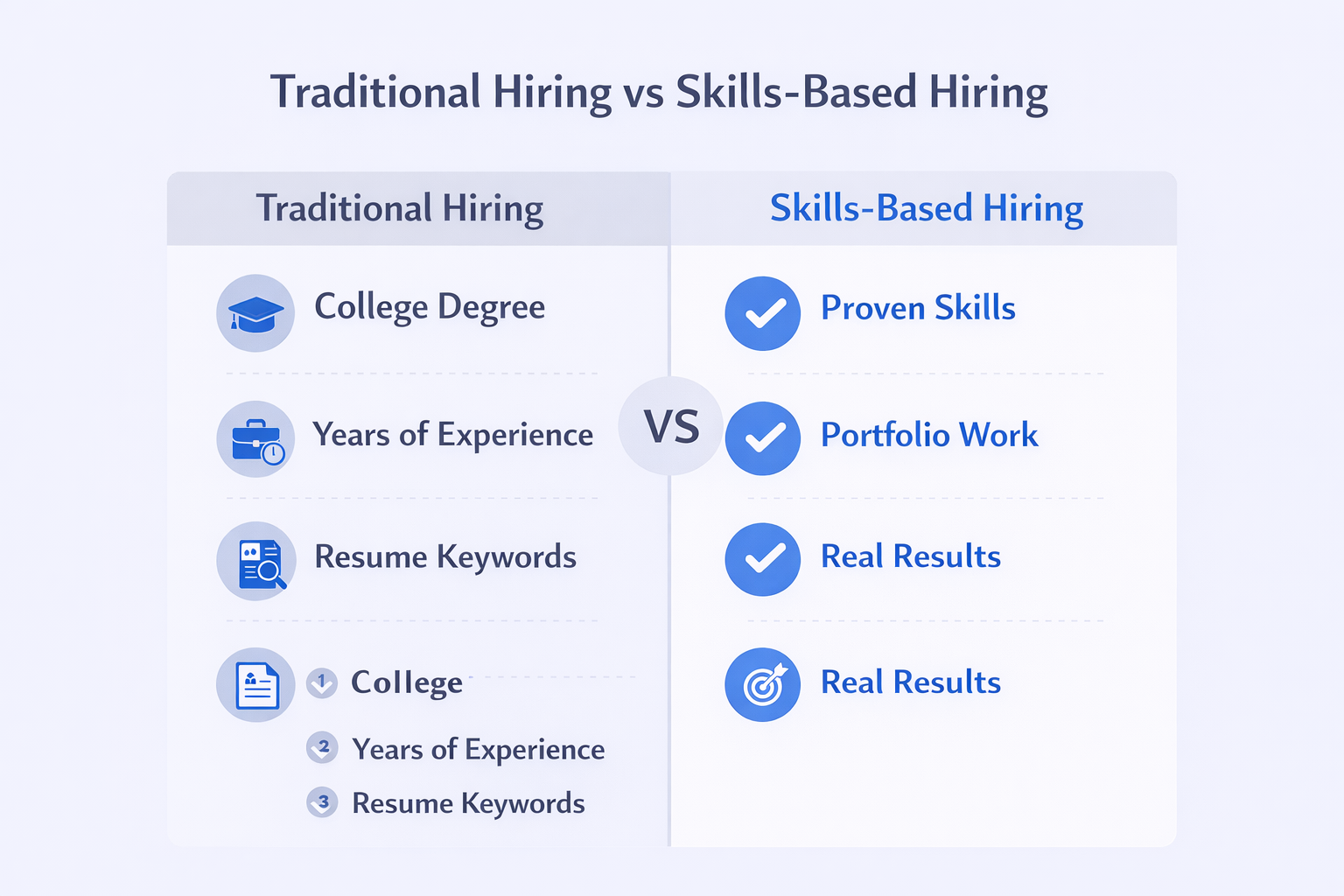
Only 41% of people now believe a college degree is essential for career success. Companies are catching on. 75% of talent acquisition leaders believe skills-based hiring will overtake degree requirements as the standard.

Why? Because skills actually predict success.

90% of organizations using skills-based hiring report fewer mis-hires. And 94% agree it’s a better predictor of on-the-job performance than a traditional resume.

What matters now:

  • Hard skills: Proficiency in specific tools (SQL, Python, CRM systems)
  • Soft skills: Communication, problem-solving, adaptability
  • Verified experience: Real track records, not just claims

Here’s the thing: soft skills are now considered four times more important than technical skills in final selection. You can teach someone software. You can’t easily teach resilience, empathy, or creative problem-solving.

Companies that focus on skills over credentials are building stronger teams. They’re looking at what people can actually do, not where they went to school or what their GPA was.

This shift is massive. It opens doors for self-taught professionals, career changers, and anyone who’s built real expertise outside traditional paths.


Recruiting vs Recruitment: What’s the Difference?

These terms get thrown around like they’re the same thing. They’re not.

Recruitment is reactive. It’s what happens when someone quits and you scramble to fill the seat. It’s short-term, expensive, and stressful. You’re starting from scratch every time.

Recruiting (or Talent Acquisition) is proactive. It’s building a talent pipeline even when you don’t have open positions. It’s long-term thinking. It’s having a pool of pre-qualified candidates ready when you need them.

Here’s the comparison:

Factor

Traditional Recruitment

Modern Recruiting

Approach

Reactive (vacancy response)

Proactive (ongoing pipeline)

Timeline

44-68.5 days

Pre-built (faster fills)

Cost

High (ads, agencies)

Lower (in-house systems)

Focus

Immediate need

Long-term fit and culture

Companies with recruiting mindsets fill roles faster. They have relationships already built. They’re not posting jobs and hoping. They’re reaching out to people they’ve been nurturing for months or years.

This is exactly how LinkedIn B2B marketing works best — building relationships before you need them, so when opportunity strikes, you’re ready.

🏆 Build Your Talent Pipeline

Our complete outbound strategy includes targeting precision, campaign design, and scaling methods that create ready-to-hire candidate pools.

7-day Free Trial |No Credit Card Needed.

The Three Main Steps in Any Recruitment Process

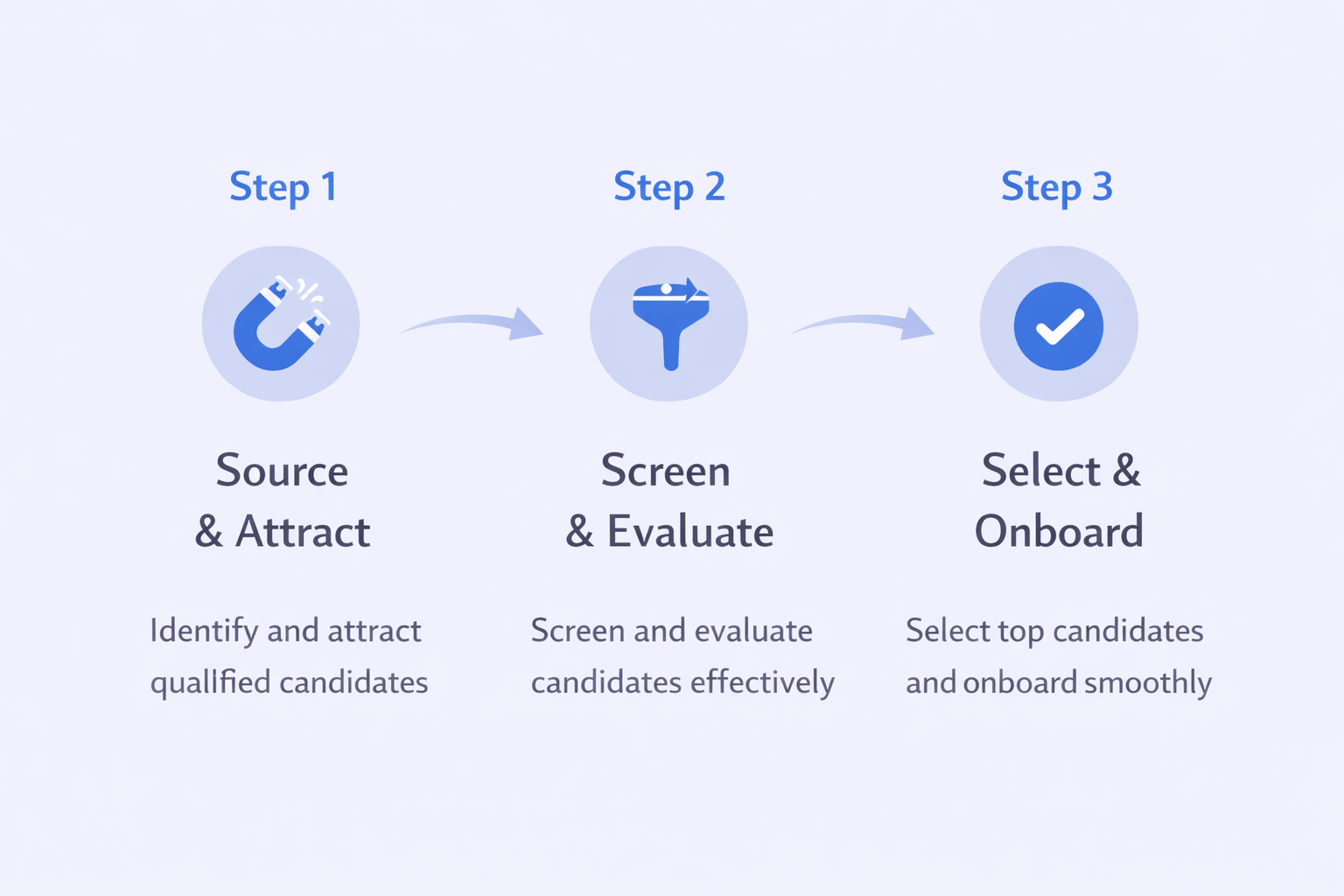
Strip away all the complexity, and every recruitment process follows three core phases:

  1. Sourcing and Attracting

This is finding potential candidates. Job boards, social media, internal databases, networking events. You’re casting a wide net to identify people who might fit.

The best companies don’t wait for candidates to come to them. They actively hunt for talent in the places their ideal candidates spend time.

  1. Screening and Evaluation

This is vetting applications through automated tools, phone screens, and multiple interview rounds. You’re narrowing the pool from hundreds to a handful of finalists.

Technical assessments matter here. Behavioral interviews matter. Culture fit conversations matter. Each filter removes candidates who aren’t quite right.

  1. Selection and Onboarding

This is making the final decision, negotiating terms, and formally integrating the new employee into the company. The job isn’t done when you send the offer. It’s done when the person is productive and happy three months in.

Companies that excel at these three steps don’t skip corners. They don’t rush. They treat it like a science, not a guessing game.


Interview Process for Data Analysts

Data analyst roles have a particularly rigorous process.

Expect three to five rounds minimum. Here’s what the typical flow looks like:

Round 1: Recruiter Screening (15-30 minutes)
High-level discussion about fit, expectations, and basic qualifications. This is the “are you actually interested and remotely qualified” filter.

Round 2: Hiring Manager Video Interview
Deeper dive into past projects, technical philosophy, and problem-solving approach. They’re assessing whether you think like an analyst.

Round 3: Technical SQL/Excel Assessment
Testing ability to handle large datasets. Expect questions on joins, window functions, subqueries. This is where many candidates fail.

Round 4: Case Study or Take-Home Project
Analyzing real or simulated datasets to provide business insights. You’ll use frameworks like PACE (Plan, Analyze, Construct, Execute). This typically adds 7-10 days to the timeline.

Round 5: Final Behavioral Round
Evaluating cultural fit and ability to influence stakeholders without authority. The “would we actually want to work with this person” conversation.

The whole process for data analysts typically runs 38-52 days. It’s exhausting. But companies invest this time because bad data hires are catastrophic — they can cost up to 12% of potential revenue if data quality suffers.

Conclusion

The recruitment process in 2025 is broken in some ways, improving in others.

It takes too long — 68.5 days on average from application to offer. Companies are drowning in applications but somehow missing great candidates. And 88% admit they’re screening out qualified people because of rigid AI filters.

But there’s hope. Companies embracing skills-based hiring are finding better fits. Those building proactive talent pipelines are filling roles faster. And organizations that prioritize transparency and communication are creating better candidate experiences.

For job seekers, the message is clear: optimize your approach. Don’t spray and pray with hundreds of applications. Target companies strategically. Network your way in through referrals when possible. And make sure your resume speaks the language of ATS systems.

For employers, the path forward is equally clear: move from reactive recruitment to proactive recruiting. Build relationships before you need them. Use AI to save time, not replace judgment. And treat candidates like the humans they are.

The data doesn’t lie. Companies that get this right move faster, hire better, and keep people longer. Those that don’t? They’re stuck in a 68-day cycle of frustration.

Choose wisely.

FAQs

How long does the recruitment process take in 2025?

68.5 days median for first offer. Senior roles take 65-90 days. Entry roles average 20-30 days depending on industry.

What's the difference between recruiting and recruitment?

Want faster hires with better candidates? LinkedIn outbound gives you direct access to 65M+ decision-makers, bypassing slow traditional recruitment entirely. Our complete targeting, campaign design, and scaling methods fill roles 40% faster. Book a strategy meeting to build your talent pipeline.

Why do companies take so long to hire?

2.7x more applications per role plus 5-8 interview rounds. Companies prioritize perfect fits over speed to avoid $14,900 bad hire costs.

Can I usWhat percentage of companies use AI in hiring?e an AI-generated headshot for LinkedIn?

83% will use AI for resume screening by 2025. 75% already use ATS systems. 88% admit screening out qualified candidates.

What do candidates care about most in job offers?

Compensation (49%), professional development (33%), work-life balance (29%). 83% require flexible/hybrid work options. 47% want salary transparency upfront.

What to Build a High-Converting B2B Sales Funnel from Scratch on LinkedIn

Build a Full LinkedIn Pipeline in Just 30 Days—Guaranteed