
- blog
- Statistics
- SaaS Statistics You Need to Know to Dominate Your Market in 2025
Table of Contents
SaaS Statistics You Need to Know to Dominate Your Market
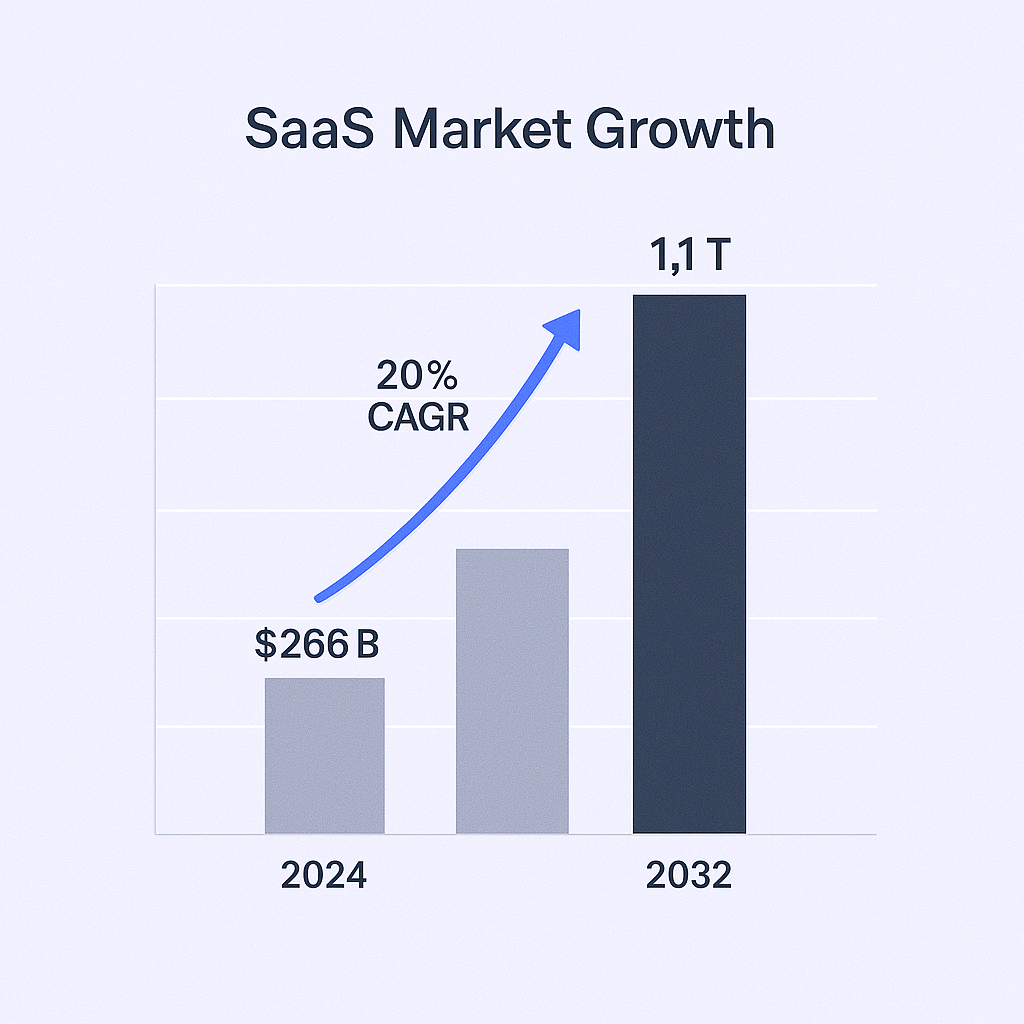
- Global SaaS market reached over $266 billion in 2024 – projected to hit more than $1.1 trillion by 2032
- SaaS market growing at around 20% compound annual growth rate – meaning the market doubles every 3.5 years
- United States hosts more than 17,000 SaaS companies – out of over 30,800 globally
- End-user spending on public cloud services projected to hit $723.4 billion in 2025 – with SaaS dominating as the largest segment
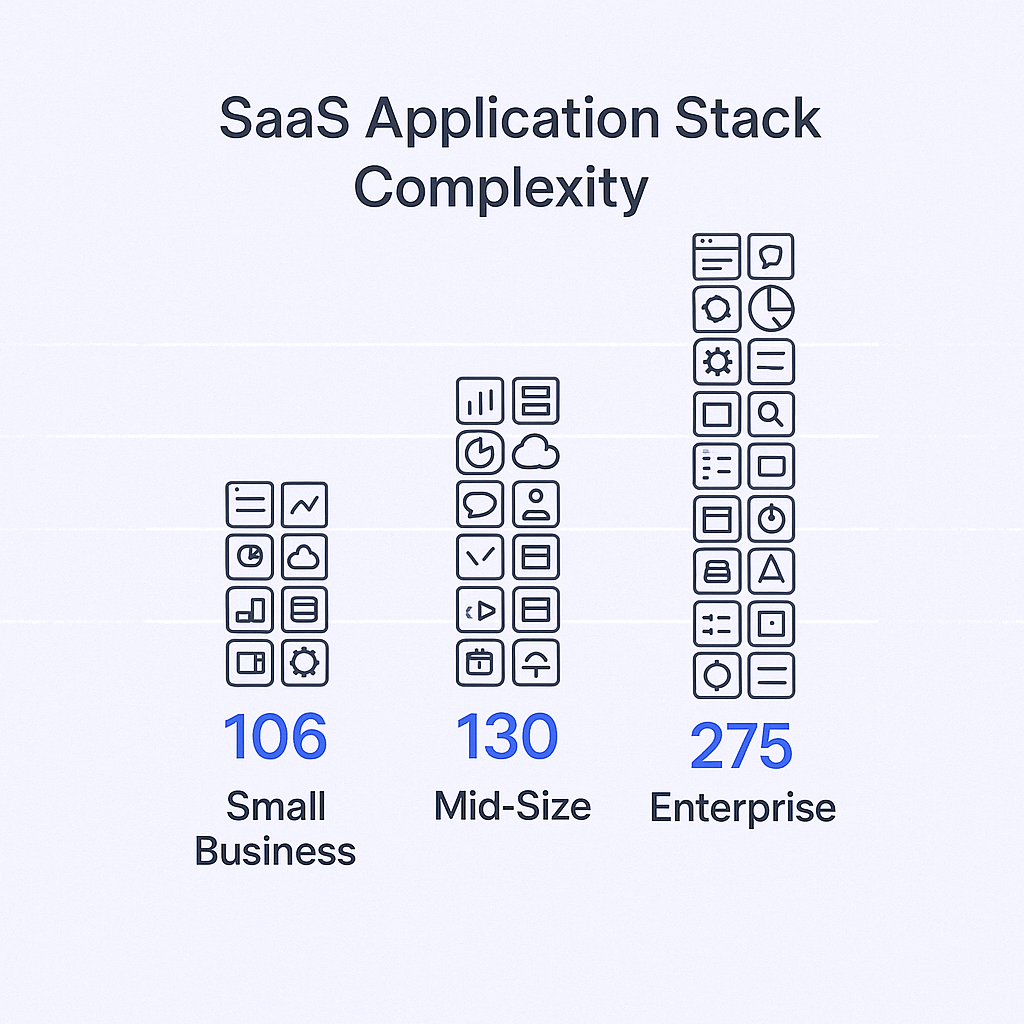
- Average organization uses around 130 different SaaS applications – to run daily operations
- Large enterprises with 1,000+ employees use an average of 275 apps – showing massive SaaS stack complexity
- Average quota attainment across B2B sales organizations is 47% – though healthy organizations see about 80% of reps reaching quota
- It takes an average of 5-7 touchpoints to close a deal – with completely cold prospects requiring 20-50 touches
- 48% of salespeople give up after the first attempt and never follow up – creating a massive competitive advantage for persistent sellers
- Average cold email open rate in 2025 is 27.7% – with average reply rate of 5.1%
- 76% of buyers are more likely to purchase from brands that provide personalized experiences – with personalized campaigns boosting sales by up to 15%
- Sales reps using social selling are 51% more likely to achieve quotas – generating 45% more sales opportunities than peers who don’t
- Healthy annual churn rate for SaaS is 5-7% – while smaller companies under $10M revenue often exceed 20% churn
- Average B2B SaaS Customer Acquisition Cost (CAC) is $205-$341 – with some analyses including broader expenses reaching $702
- Healthy Lifetime Value to CAC ratio should be at least 3:1 – for every $1 spent acquiring a customer, expect at least $3 back for sustainable growth
The Software-as-a-Service industry isn’t just growing—it’s exploding. With businesses scrambling to find their place in this trillion-dollar market, understanding the latest saas statistics isn’t optional anymore. It’s your competitive edge.
Whether you’re launching a new SaaS product, scaling an existing platform, or trying to understand where your company fits in the bigger picture, these numbers will change how you think about the saas market. We’ve cut through the noise to bring you the most actionable data points that can actually impact your business decisions.
Let’s dive into the numbers that are reshaping how saas companies operate, compete, and win in today’s digital economy.
How We Collected This Data
Before we jump into the statistics, let’s be clear about where these numbers come from. We don’t believe in throwing around random figures—every statistic in this article comes from reputable sources that industry leaders trust.
We’ve analyzed reports from industry-defining firms like Gartner, Forrester, and Statista to bring you the most credible insights. These organizations are the gold standard in market analysis. Gartner’s “Magic Quadrant” reports are trusted tools used by C-level executives globally to evaluate and select technology vendors, while Statista builds its insights by aggregating data from over 18,000 credible sources.
The statistics you’re about to read aren’t just interesting—they’re credible, defensible, and ready for you to use in your strategic planning.
50 SaaS Statistics You Need to Know
The Market Opportunity That’s Too Big to Ignore
The first thing you need to understand is the sheer scale of opportunity in the saas industry. This isn’t just another tech trend—it’s a fundamental shift in how businesses operate.
The Numbers Speak for Themselves:
- The global saas market reached over $266 billion in 2024 and is projected to hit more than $1.1 trillion by 2032
- This represents a compound annual growth rate of around 20%—meaning the market doubles every 3.5 years
- The United States alone hosts more than 17,000 SaaS companies out of over 30,800 globally
Â
Â

📊 Reach 17,000+ SaaS Decision-Makers
LinkedIn outbound targets verified executives in this booming market with laser-focused campaigns that convert.
What does this explosive growth mean for your business? More companies, more departments, and more potential customers are entering your addressable market every single year.
Cloud is the New Foundation:
- End-user spending on public cloud services is projected to hit $723.4 billion in 2025
- SaaS dominates as the largest segment of cloud spending
- This shift represents the new foundation of business technology
However, this growth creates challenges too. With over 30,000 saas companies competing for attention, the market is incredibly noisy. Generic outreach and one-size-fits-all approaches no longer work. Success now requires specialization and targeted strategies.
Inside the Modern SaaS-Powered Business
Understanding your market means understanding how your potential customers operate. Today’s businesses run entirely on SaaS, creating unique opportunities for smart companies.
SaaS Stack Reality:
- The average organization uses around 130 different saas applications to run daily operations
- Large enterprises with 1,000+ employees use an average of 275 apps
- Even after post-pandemic rationalization, most companies still use 106-112 apps
Â

Â
Quota Attainment Truth:
- Average quota attainment across B2B sales organizations: 47%
- This doesn’t mean half of reps are failing—quotas are often set aggressively
- Healthy sales organizations see about 80% of reps reaching their quota
The Persistence Advantage:
- It takes an average of 5-7 touchpoints to close a deal
- For completely cold prospects: 20-50 touches may be required
- 48% of salespeople give up after the first attempt and never follow up
This data reveals your biggest competitive advantage: persistence. While nearly half of your competitors quit after one attempt, those who implement structured, multi-touch follow-up sequences statistically outperform the average.
Outreach That Actually Works
The era of “spray and pray” is dead. Success in 2025 requires precision, personalization, and value-driven approaches.
Cold Email Reality Check:
- Average cold email open rate in 2025: 27.7%
- Average reply rate: 5.1%
- For SaaS and software industries: 0.5% reply rates are common
These numbers aren’t meant to discourage you—they set realistic baselines. A 5% reply rate isn’t failure; it’s average. This context proves that success is about quality over quantity.
The Personalization Imperative:
- 76% of buyers are more likely to purchase from brands that provide personalized experiences
- Personalized campaigns can boost sales by up to 15%
- Artificial intelligence AI-powered personalization can increase reply rates by 35%
Social Selling Impact:
- Sales reps using social selling are 51% more likely to achieve quotas
- They generate 45% more sales opportunities than peers who don’t
- In computer software, social selling influences about half of all revenue
The convergence is clear: generic outreach fails while value-driven, personalized engagement wins. Your role isn’t just about setting meetings—it’s about building relationships and providing standalone value before asking for anything.

🚀 35% Higher Reply Rates Guaranteed
Our AI-powered LinkedIn outbound delivers hyper-personalized campaigns to qualified SaaS prospects at scale.
The AI Revolution in Sales
The most successful sales professionals aren’t being replaced by technology—they’re being augmented by it. Embracing artificial intelligence AI tools is the fastest way to boost efficiency and results.
Technology as a Revenue Driver:
- Companies using sales analytics tools are 50% more likely to exceed targets
- Top-tier sales engagement platforms deliver 3.3x ROI and 12% higher close rates
- Better CRM practices can increase profits by 25-95% through improved retention
AI for Smarter Work:
- AI-powered lead scoring can increase conversion rates by 30%
- Improves lead qualification accuracy by 40%
- 98% of sales teams agree AI helps prioritize leads more effectively
Automation Benefits:
- AI-driven forecasting achieves 90% accuracy or higher
- Sales automation saves the average knowledge worker 5 hours per week
- 80% of B2B sales engagements will happen via digital channels by 2025
This data shows AI isn’t replacing salespeople—it’s creating “super reps.” Technology handles the science of sales (data entry, prioritization, forecasting) while humans focus on the art (relationship building, creative problem-solving, storytelling).
The Economics of SaaS Success
Understanding the financial metrics behind successful saas companies makes you a more strategic professional. Not all deals are created equal—the best focus on customers who stick around and expand.
The Churn Challenge:
- Healthy annual churn rate for SaaS: 5-7%
- Smaller companies (under $10M revenue): Often exceed 20% churn
- Customer fit is critical—bad-fit customers hurt more than they help
Customer Acquisition Costs:
- Average B2B SaaS Customer Acquisition Cost (CAC): $205-$341
- Some analyses including broader expenses: $702
- Every new customer represents a significant investment
The Golden Ratio:
- Healthy Lifetime Value to CAC ratio: At least 3:1
- For every $1 spent acquiring a customer, expect at least $3 back
- This ratio determines long-term business sustainability
Key SaaS Financial Health Metrics |
Customer Lifetime Value (LTV): Total revenue from a customer over their relationship |
Customer Acquisition Cost (CAC): Total cost to acquire one customer |
The Golden Ratio: LTV should be at least 3x CAC for sustainable growth |
Â
Industry-Specific Insights
Different sectors show unique saas stats patterns that can inform your strategy:
Market Penetration by Industry:
- Financial services lead in SaaS adoption at 87%
- Healthcare and education follow at 78% and 82% respectively
- Manufacturing lags but is rapidly catching up at 65%
Spending Patterns:
- Marketing technology represents the fastest-growing SaaS category
- HR and collaboration tools show consistent year-over-year growth
- Security and compliance saas apps see increased investment across all sectors
Regional Differences:
- North America accounts for 60% of global saas market revenue
- Europe represents 25% with strong growth in UK and Germany
- Asia-Pacific shows the highest growth rates at 35% annually
Future Trends Shaping the Market
Looking ahead, several trends will define the next phase of SaaS evolution:
Vertical SaaS Domination:
- Industry-specific solutions growing 3x faster than horizontal platforms
- Specialized tools command 40% higher pricing premiums
- Market consolidation expected in oversaturated categories
AI Integration Acceleration:
- 95% of new saas applications will include AI features by 2026
- AI-powered automation reduces operational costs by 30-50%
- Artificial intelligence AI becomes table stakes, not differentiator
Customer Success Evolution:
- Proactive customer success reduces churn by 67%
- Self-service adoption increases retention by 23%
- Community-driven support models show 45% higher satisfaction scores
Conclusion
The saas statistics paint a clear picture: we’re in the middle of a historic transformation. The global saas market is exploding with a 20% annual growth rate, creating unprecedented opportunities for those who understand how to seize them.
Here’s what the data tells us about winning in this environment:
Specialize to Stand Out: With 30,000+ competitors and overwhelming market noise, generalists get lost. Pick your niche and dominate it.
Target the Real Decision Makers: 70% of SaaS budgets are controlled by department heads, not IT. Your outreach strategy must reflect this reality.
Master the Art of Persistence: It takes 5-7 touches to close deals, yet nearly half of your competitors give up after one attempt. Disciplined follow-up is your competitive advantage.
Personalize Everything: With reply rates in single digits, generic outreach is digital death. Value-first, personalized approaches aren’t optional—they’re survival.
Embrace AI Augmentation: Use technology to automate administrative tasks and gain data-driven insights, freeing you to focus on relationship building and creative problem-solving.
Focus on Quality Deals: Understanding metrics like LTV:CAC ratios helps you identify customers who will drive long-term success rather than just short-term revenue.
The saas companies that will thrive are those that combine these data-driven insights with exceptional execution. The market opportunity is massive, but so is the competition. Success belongs to those who can turn statistics into strategy and insights into action.
The numbers don’t lie—the SaaS revolution is here, and it’s accelerating. The question isn’t whether you’ll participate, but whether you’ll lead or follow.
🚀 Advanced LinkedIn Targeting
Strategic demographic segmentation delivers personalized campaigns with systematic scaling approaches
7-day Free Trial |No Credit Card Needed.
Frequently Asked Questions
What is the current size of the global SaaS market?
How many SaaS applications does the average company use?
What's the average sales cycle for SaaS products?
How effective is cold email for SaaS sales?
What's the typical churn rate for SaaS companies?
Turn SaaS Stats Into Leads
Use LinkedIn outbound to reach 30,000+ SaaS decision-makers with precision targeting and proven campaigns.
Segmentation That Actually Converts
LinkedIn outbound targets precise demographics with strategic campaign design and scaling methods