Let’s be real — cold email outreach isn’t what it used to be. Open rates are dropping, inboxes are saturated, and the old spray-and-pray approach is officially dead.
But here’s the thing: AI has completely changed the game. When you pair the right workflow with smart automation, scaling your email outreach by 10x doesn’t have to mean burning your sender reputation or landing in spam folders.
Here’s how bad the manual grind is: sales reps currently spend only 28% of their week actually selling. The rest is eaten up by manual research, data entry, and repetitive follow-ups that drain time and energy.
The teams winning right now aren’t sending more emails — they’re sending smarter emails, to the right people, at exactly the right moment. That’s what AI-driven workflow optimization makes possible.
Email marketing still delivers an average ROI of $36 to $45 for every $1 spent. Yet 87% of sales teams have adopted some form of AI, while only 6% are achieving elite-level results. This guide is your roadmap to closing that gap — fast.
Whether you’re just starting to scale or already running sequences and want better returns, here’s exactly how AI workflow optimization transforms your cold email outreach ROI from unpredictable to consistent.
Scaling Email Outreach: AI Workflow Optimization
The Technical Foundation: Build Before You Blast
Hard truth first: a brilliant email sent from a poorly configured domain will never reach anyone. Around 17% of cold emails never reach the recipient — not because the copy is bad, but because the infrastructure failed before the message even left the server.
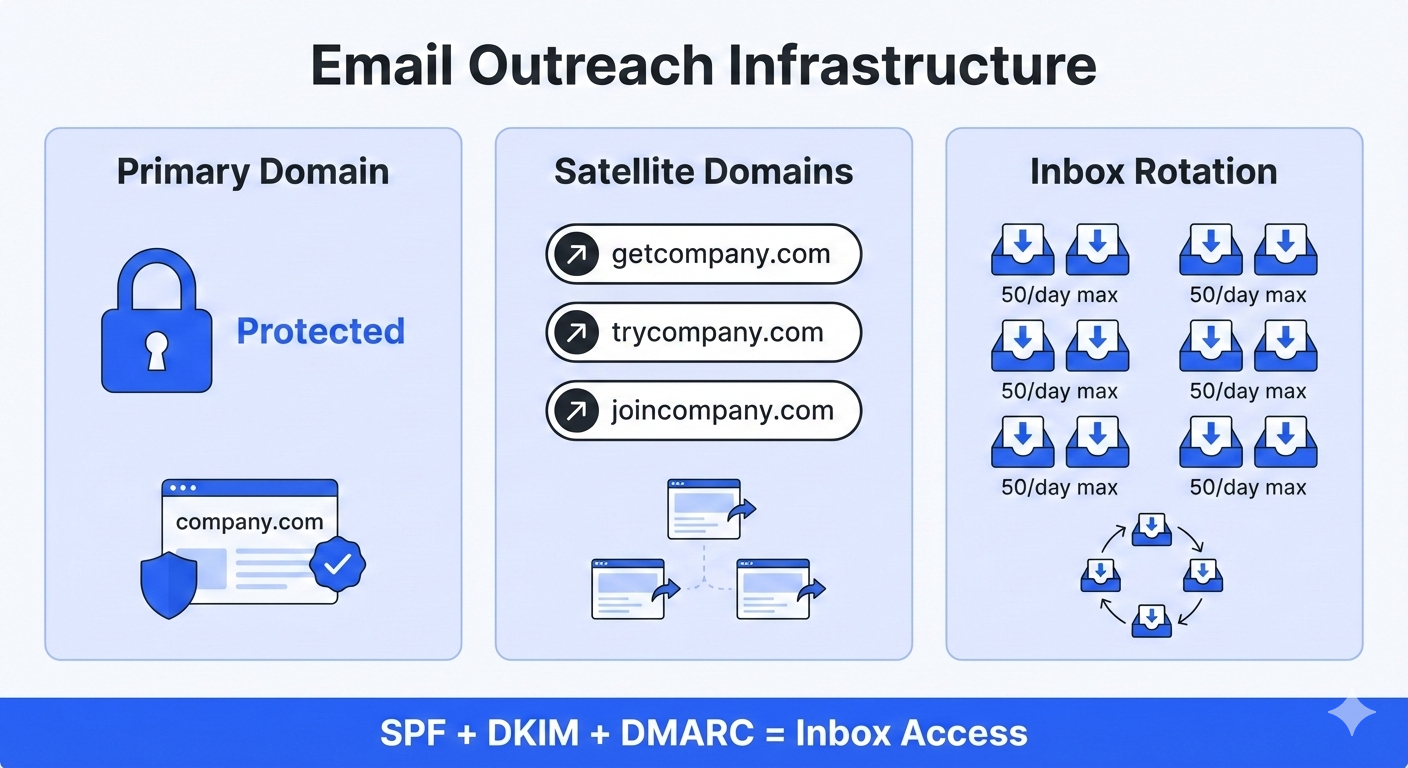
The most important move before you scale? Protect your primary domain. Use secondary “satellite” domains exclusively for prospecting (getcompany.com, trycompany.com). This prevents reputation bleed — where spam flags on your outreach domain end up blocking your real business emails like invoices or support tickets.
Then comes inbox rotation. Instead of blasting 500 emails from a single address, spread your volume across 10 inboxes on 5 different domains. Keep daily sends below 50 per inbox. This mimics human behavior and avoids rate-limiting triggers from Gmail and Outlook.
And yes — full SPF, DKIM, and DMARC authentication is non-negotiable. These are the entry tickets to the primary inbox. Skip them and your email deliverability tanks before your campaign even launches.
Infrastructure Component | Recommendation | Impact on Performance |
Domain Setup | 3–4 satellite domains per admin account | Protects primary domain reputation |
Inbox Distribution | Max 50 emails per day per inbox | Mimics human behavior, avoids filters |
Authentication (SPF/DKIM/DMARC) | Full configuration required | Essential for Gmail/Outlook inbox bypass |
BIMI Implementation | Verified brand logos in inbox | Increases trust and open rates |
How AI Agents Find Better Prospects — Faster
Once the infrastructure is solid, the real power of AI kicks in: autonomous prospecting at scale. Traditional outreach skips lower-tier accounts because there isn’t enough bandwidth to research them. That’s a massive revenue opportunity left on the table.
Modern AI agents scan the market 24/7 for high-intent buying signals that humans would never catch in time. This goes way beyond basic firmographic filters like company size or industry.
We’re talking about real-time trigger signals: a Series B announcement, a new executive hired, a competitor’s product discontinued. These are the highest-relevance moments for outreach — and AI identifies them automatically and fires the right sequence instantly.
The practical result? AI lead generation tools reclaim 1.5 to 5 hours per week per person. Your team transitions from data researcher to strategic orchestrator — reviewing AI-generated research dossiers instead of building prospect lists from scratch.
See how this fits into your complete lead generation strategy for B2B teams.
Prospecting Signal | AI Agent Action | Conversion Impact |
New Executive Hire | Triggers ‘New Leader’ value proposition | 3x higher response likelihood |
Funding Announcement | Highlights scalability and resource needs | Drives immediate relevance |
Technographic Change | References shift in their tech stack | Positions solution as better fit |
Website Intent Data | Identifies companies visiting pricing page | Real-time engagement with hot leads |
The Psychology of Personalization: Why Generic Templates Are Dead
Prospects receive hundreds of cold emails every week. They spot a template in under a second — and they’re gone. The only way to cut through the noise is hyper-relevance.
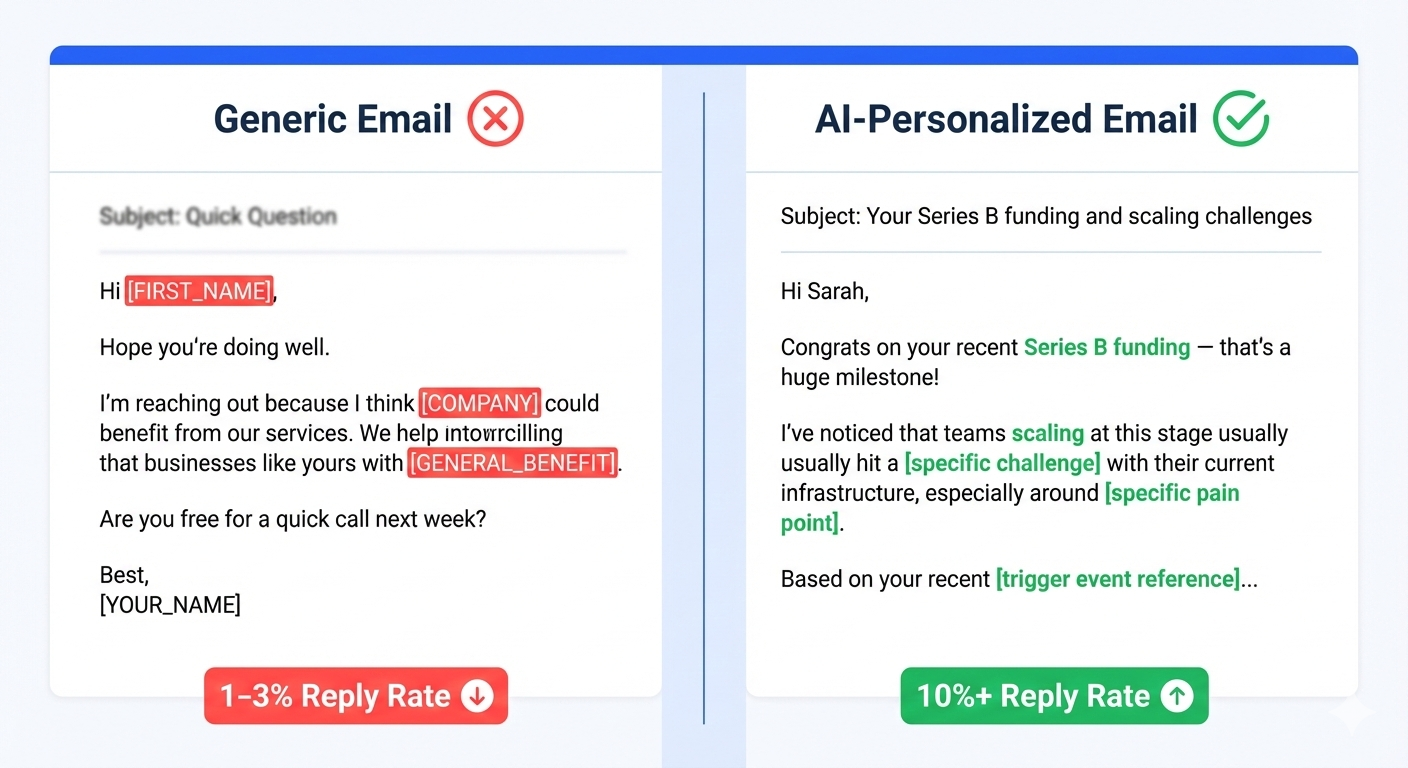
The best AI sales tools use Large Language Models to write emails that reference specific context — a recent blog post, a company milestone, a pain point tied to a known industry shift. Not generic. Not robotic. Actually useful to the person reading it.
The formula that consistently works: under 80 words, one clear question or CTA, and personalization based on context — not compliments. Instead of “I love your content,” try “I noticed your team just expanded into enterprise accounts — companies at that stage typically run into [specific problem]. Worth a quick chat?”
The data confirms it: personalized email bodies boost response rates by 32
to generic messages. AI makes this level of quality consistent even at hundreds of sends per day.
This is the backbone of any high-performing outreach automation system — relevance at scale, not volume for volume’s sake.
blue #2A5AF8 accent strip at top. Modern SaaS flat-design, no photography.
Messaging Factor | Average Performance | AI-Optimized Performance |
Personalization | Name & company tokens only | Contextual signals: job changes, triggers, pain points |
Word Count | 150+ words | Under 80 words |
CTA Strategy | High-friction (30-min demo ask) | Low-friction (interest-based question) |
Reply Rate | 1% to 3% | 10.7%+ for elite performers |
The Warm-Up Process: Don’t Skip This Step
New email accounts don’t have trust — and providers like Gmail and Outlook know it. Blasting 100 cold emails from a brand-new domain on day one is a guaranteed path to the spam folder.
The warm-up process gradually builds sender reputation by simulating real inbox activity — opens, replies, marking messages as “not spam.” Done right, inbox placement rates improve from 54% to over 93% in just two weeks. That improvement matters more than any subject line tweak you could make.
You have two options:
Manual DIY setup takes 4–6 weeks and requires daily DNS monitoring. Cost-effective for smaller operations, but hard to manage across 5+ accounts simultaneously.
Pre-warmed mailboxes are ready in 0–1 weeks. The provider handles everything. Ideal for teams that need to scale fast or are managing multiple campaigns at once.
For teams running serious outreach automation at scale, pre-warmed mailboxes are almost always worth the investment in saved time alone.
Feature | Manual Setup (DIY) | Pre-Warmed Mailboxes |
Setup Time | 4 to 6 Weeks | 0 to 1 Week |
Technical Effort | High — DNS, daily monitoring required | Low — provider handles all setup |
Scalability | Difficult to manage 5+ accounts | Easily scale to 100+ accounts |
Cost | Low (excluding your labor time) | Higher upfront subscription cost |
Performance Analytics: Stop Tracking Vanity Metrics
“Set it and forget it” campaign strategy is dead. The teams winning in 2025 and 2026 run real-time optimization loops — testing, learning, adjusting, and scaling what works.
Advanced platforms now use machine learning to automatically test subject line variations, optimal send times, and follow-up cadences. No more manual A/B testing guesses. The system surfaces what works for each audience segment and doubles down on it.
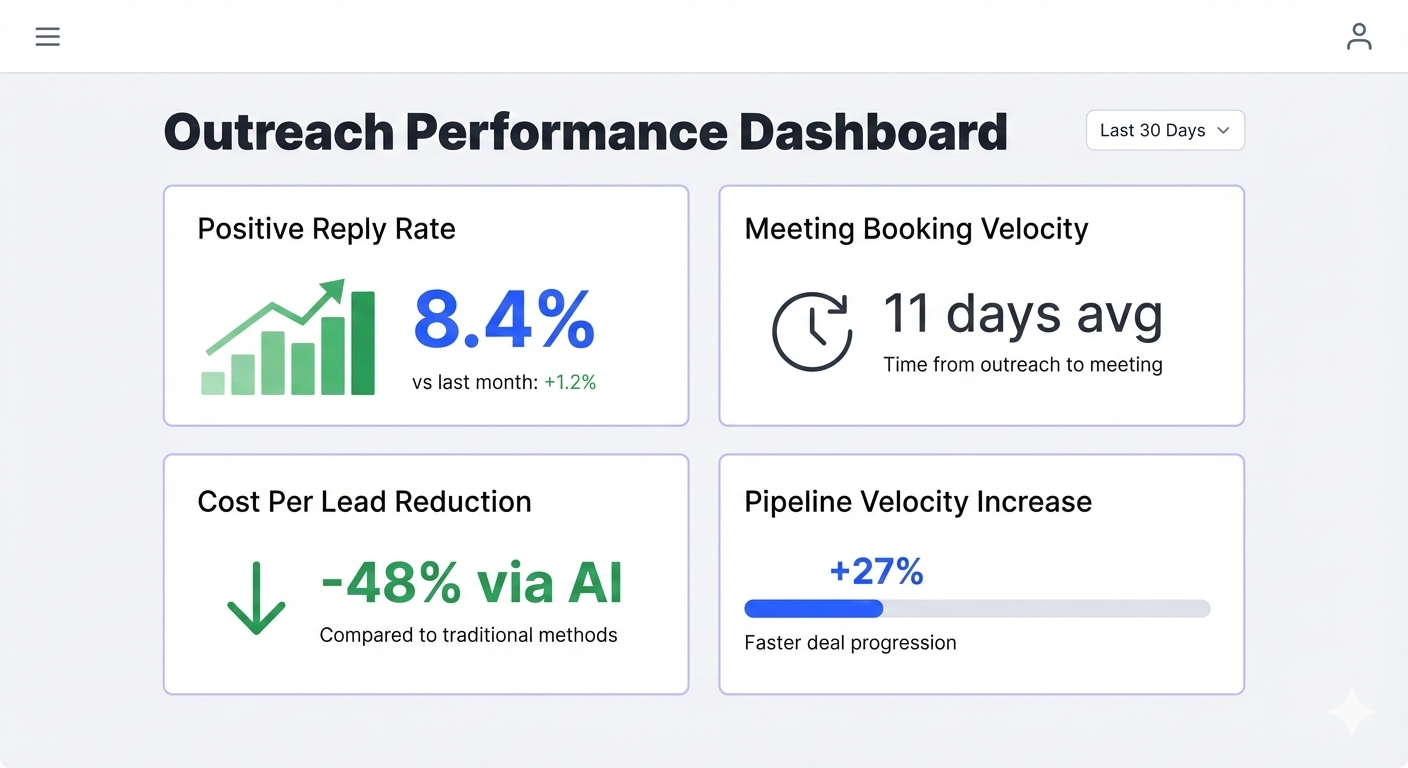
The mindset shift that matters most: stop obsessing over open rates and start tracking revenue metrics. What actually matters is positive reply rate (target: 5–10%+), meeting booking velocity (goal: under 14 days from first touch), and cost per lead (AI typically reduces this by 50%).
One stat that often gets overlooked: opportunities that include live meetings close 32 days faster on average. Your goal isn’t replies — it’s meetings. Build your entire sequence strategy around that.
See how this connects to your broader AI sales automation stack and workflow.