The Reality Check: Can You Actually Do This?
Let’s address the elephant in the room.
You might be thinking: “I’m not a 20-year veteran. How can I position myself as a fractional chief sales leader?”
Here’s the truth most people miss: The fractional market is segmented.
A Series C company preparing for IPO needs a battle-tested executive with deep board experience. But a seed-stage startup? They need someone who understands modern tools, can build their first outbound motion, and knows how to set up LinkedIn automation tools that actually work.
The data backs this up: 30% of fractional professionals earn under $50,000 annually due to poor positioning. The top tier? They’re clearing $300,000+ by niching down ruthlessly.
Instead of positioning yourself as a generalist “Fractional CSO,” go specific:
- “First Outbound Engine Builder”
- “Founder-to-Sales-Team Transition Specialist”
- “LinkedIn Prospecting System Architect”
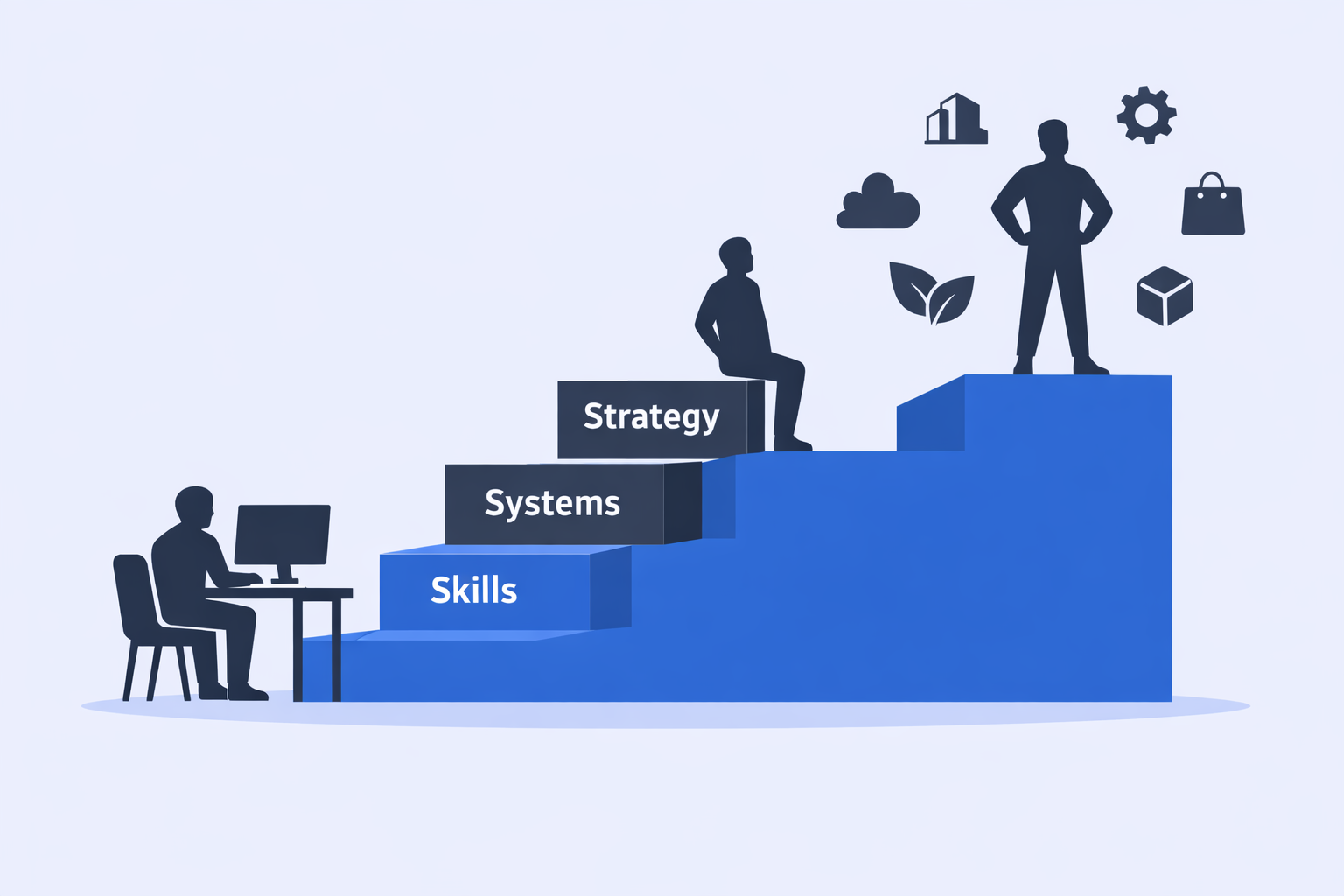
Your recent, hands-on experience with modern sales tech is an advantage, not a weakness. Older executives often lack expertise in AI-driven personalization, automated sequencing, and advanced LinkedIn search techniques that drive today’s pipelines.
Setting Up Your Business Foundation (The Legal Stuff That Actually Matters)
Skip this section and you’ll regret it later.
Choose Your Entity: LLC vs. Sole Proprietorship
Bottom line: Form an LLC.
Here’s why it’s non-negotiable:
Liability protection. You’re giving high-stakes strategic advice. If a client implements your recommendation and revenue tanks, or a data breach happens on your watch, you need a shield between the business and your personal assets. A sole proprietorship leaves your home and savings exposed.
Tax optimization. Once your profit hits around $80,000-$100,000, you can elect S-Corp taxation. This lets you pay yourself a reasonable salary and take the rest as distributions, potentially saving thousands in self-employment taxes.
Commercial credibility. Corporate clients with procurement departments often require vendors to be incorporated entities. “Smith Growth Partners, LLC” signals permanence. “John Smith, Consultant” doesn’t.
Get the Right Insurance
Professional Liability (E&O) is mandatory. This protects you when clients claim your advice caused financial damage. Policies typically run $1,200-$2,500 annually.
General Liability covers physical risks like office visit accidents. Many client contracts require it even if you work remotely.
Cyber Liability protects against data breaches. As you manage sensitive CRM data, this coverage is becoming essential.
Lock Down Your Contracts
Your engagement contract is your business rulebook.
Scope of Work must be granular. Don’t write “manage the sales team.” Specify: “Lead one weekly forecast call, conduct bi-weekly 1:1s with up to 4 reps, deliver one monthly performance report.”
This clarity lets you bill for additional work when clients inevitably ask for “just one more thing.”
Termination clauses should allow 30-day written notice from either party. This reduces client perceived risk and lets you fire toxic clients.
Non-solicitation and non-compete clauses prevent clients from poaching your subcontractors and stop you from working for direct competitors simultaneously.
Packaging Your Services (How to Price Like a Pro)
Most new fractional CSOs make the same mistake: hourly billing.
Don’t charge hourly. It punishes efficiency and caps your earning potential. Clients scrutinize every hour, creating friction.
Here’s the pricing hierarchy that works:
The Monthly Retainer (Your Foundation)
Range: $8,000 to $12,000 per month
This covers 10-15 hours weekly of strategic work. The client pays a fixed fee for defined deliverables and access. You get predictable cash flow. They get consistent support without the $535,000 fulltime hire commitment.
Key advantage: You’re incentivized to build systems that run smoothly, not to log hours.
Project-Based Fees (Your Upsells)
Range: $10,000 to $50,000 per project
Perfect for distinct initiatives like:
- Sales playbook creation
- CRM migration and setup
- Hiring and training the first 3 reps
Advantage: High margins with clear start/end dates.
Disadvantage: Creates feast-or-famine revenue cycles.
Productize Your Offering
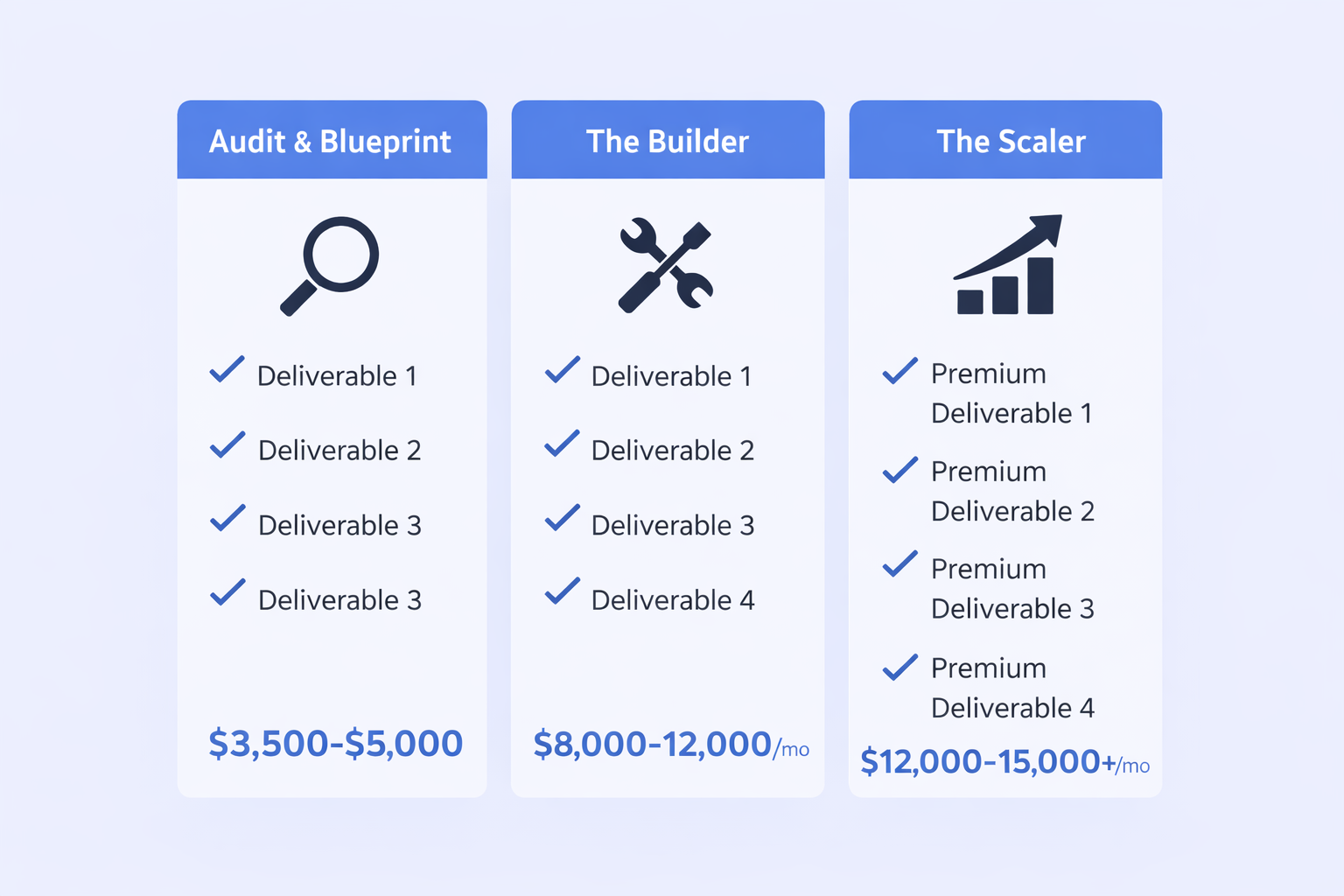
Smart fractional CSOs create service tiers that simplify selling:
Tier 1: The Audit & Blueprint
Target: Stalled SMBs or post-seed startups
Deliverables: CRM audit, team assessment, gap analysis, 12-month roadmap
Pricing: $3,500-$5,000 (one-time)
Tier 2: The Builder
Target: Series A startups in growth phase
Deliverables: Playbook implementation, tech stack setup, hiring first reps, weekly pipeline reviews
Pricing: $8,000-$12,000/month (retainer)
Tier 3: The Scaler
Target: Series B / Mid-market companies
Deliverables: RevOps strategy, territory planning, board representation, VP/Director mentoring
Pricing: $12,000-$15,000+/month (retainer)
Pro tip: Lead with Tier 1 as a low-friction entry point that naturally expands into Tier 2 long-term engagements.
Your First 90 Days: The Value Delivery Framework
Clients need to see results immediately to justify the retainer.
A standardized “First 90 Days” plan is your most powerful sales asset. It demonstrates process mastery and eliminates buyer uncertainty.
Phase 1: Discovery & Diagnosis (Days 1-30)
Goal: Audit and stabilize.
Interview stakeholders, review historical sales data, shadow calls, audit the tech stack. Identify the top 3 friction points preventing business growth.
Deliverable: A “State of Sales” diagnostic report plus one quick win. Fix a broken lead routing rule, clean up CRM data, or implement a missing dashboard. Build trust immediately.
Phase 2: Strategy & Architecture (Days 31-60)
Goal: Build the engine.
Design the sales process, define pipeline stages, restructure compensation plans, configure dashboards for visibility.
Deliverable: A validated sales playbook and a CRM that reflects operational reality.
Phase 3: Execution & Optimization (Days 61-90)
Goal: Drive adoption.
Train the team on the new methodology, run weekly cadence calls, hold reps accountable to new KPIs.
Deliverable: 90-day performance review and forward-looking quarterly plan. This is typically when engagements renew for longer terms.
The psychology is simple: If clients see tangible improvements in 90 days, they’ll keep you for 12+ months.
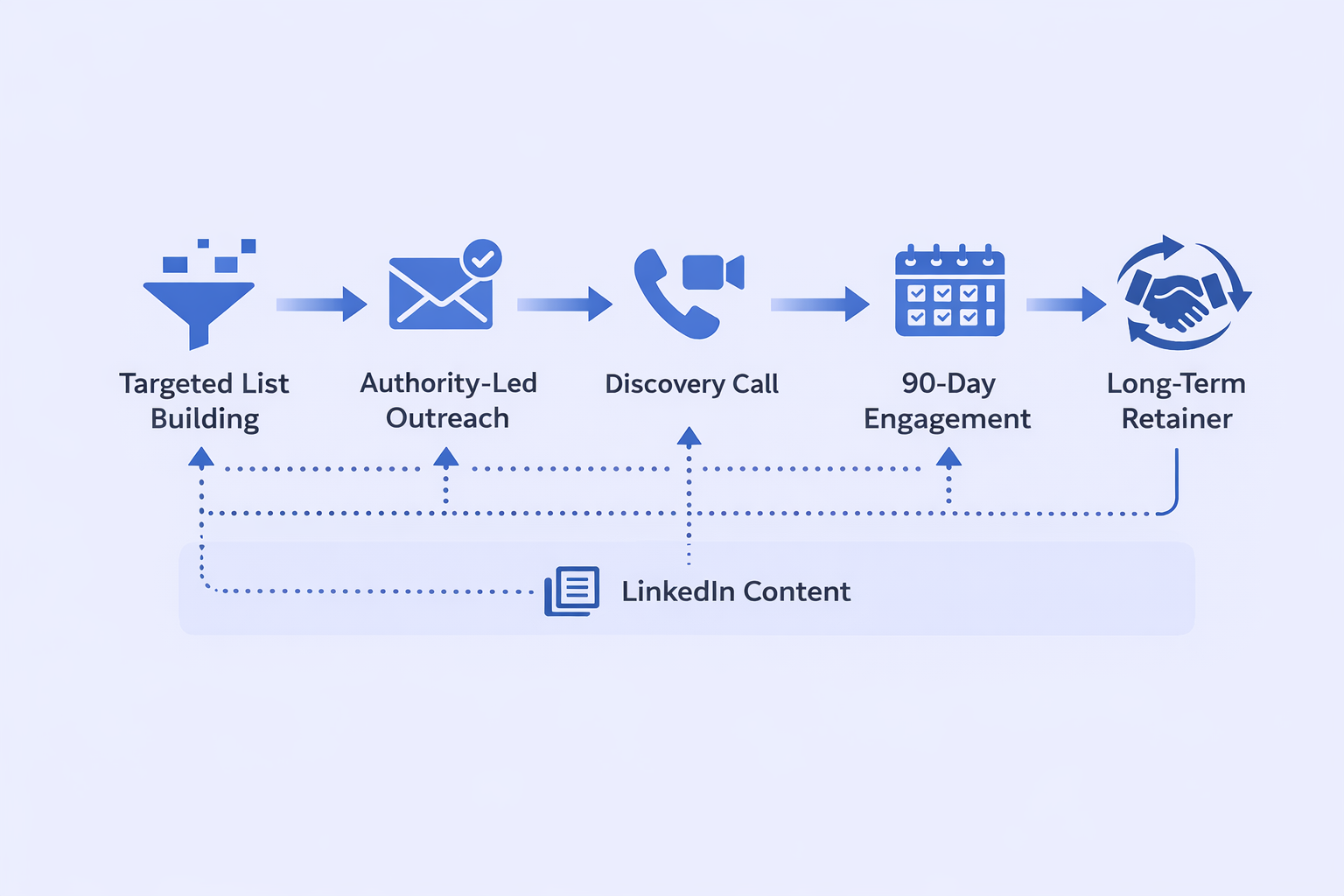
Building Authority on LinkedIn
While outbound generates immediate conversations, inbound builds long-term enterprise value.
Your headline is a value proposition, not a job title. Replace “Fractional CSO” with “Fractional CSO for B2B SaaS | Scaling Seed to Series A | Building Your First Sales Engine.”
Your About section should read like a sales letter. Address founder pain points directly. Make it about them, not you.
Content Strategy That Converts
Post 3-4 times weekly with tactical “how-to” advice that demonstrates expertise:
- “How I fixed a compensation plan that was incentivizing churn”
- “The 3 metrics I track to predict revenue (that aren’t revenue)”
- “Why you shouldn’t hire a VP of Sales until you have $2M ARR”
This content acts as a lead magnet, drawing in founders experiencing these exact problems. Many successful fractional CSOs report that LinkedIn growth hacking strategies generate 40-60% of their inbound opportunities.
Managing Your Fractional Portfolio (Without Burning Out)
Landing clients is step one. Retaining them requires operational discipline.
Your Tech Stack
Internal CRM: Use HubSpot Free or Pipedrive to manage your own deal flow and renewals.
Project management: Asana, Trello, or Monday.com to track deliverables across multiple clients. Each client gets their own board where the 90-day plan lives.
Call intelligence: Request access to client tools like Gong or Chorus. Review calls asynchronously at 2x speed to provide coaching without attending every live call.
Scheduling: Calendly for block-booking. Dedicate specific days to specific clients (Mondays/Wednesdays for Client A, Tuesdays/Thursdays for Client B) to minimize context-switching costs.
Capacity Management
Realistic capacity for solo operators: 3-4 full retainer clients
The math: 3 clients × 10 hours/week = 30 delivery hours. This leaves 10-15 hours for business development and deep work.
Revenue potential: 3 clients × $10,000/month = $30,000 monthly ($360,000 annually). This significantly exceeds most full-time roles while compensating for the lack of benefits.
Enforce scope ruthlessly. When clients ask for “just one more meeting,” weigh it against impact on other clients. Regular account reviews help realign expectations or upsell to higher tiers when needs grow.
The Future: Where This Market Is Heading
The fractional sales market will continue expanding and specializing.
Vertical specialization is coming. Generalist “Fractional CSOs” will struggle against specialists like “Fractional CSOs for HealthTech” or “AI Startup Sales Leaders.” Deep domain expertise reduces ramp time and increases value.
AI integration will separate winners from losers. The fractional CSO of tomorrow is an “AI Architect”—setting up AI agents for outbound, AI coaching for reps, automated forecasting. The ability to deploy these tools will be a key differentiator.
Hybrid models are emerging. We’re seeing “Fractional Revenue Pods”—a Fractional CSO bundled with a Fractional RevOps specialist and Fractional SDR Manager as a complete department-in-a-box solution.
The companies finding alternatives to Sales Navigator and building modern prospecting stacks are the ones investing in fractional expertise over bloated internal teams.
Conclusion
The corporate executive career path is dying.
68% year-over-year growth in fractional demand isn’t a fluke. It’s the market telling us that agility, specialized expertise, and capital efficiency have replaced the “lifer” executive model.
For sales professionals feeling the ceiling of their current role, the fractional CSO path offers compelling economics: $30,000+ monthly revenue, portfolio diversification across multiple companies, and freedom from single-employer constraints.
The legal foundation is straightforward. The pricing model is proven. The demand is documented.
The only remaining variable is execution.
If you’ve been building sales systems, closing deals, and wondering how to turn that expertise into a scalable business—the roadmap is right in front of you.
The question isn’t whether this model works.
The question is: Will you build it?

