🎉Find Prospects and Send Cold Emails & LinkedIn Outbound | All in One Place

Online Shopping Trends Statistics 2025: Latest Data & Insights That Matter

Table of Contents

Online Shopping Trends Statistics

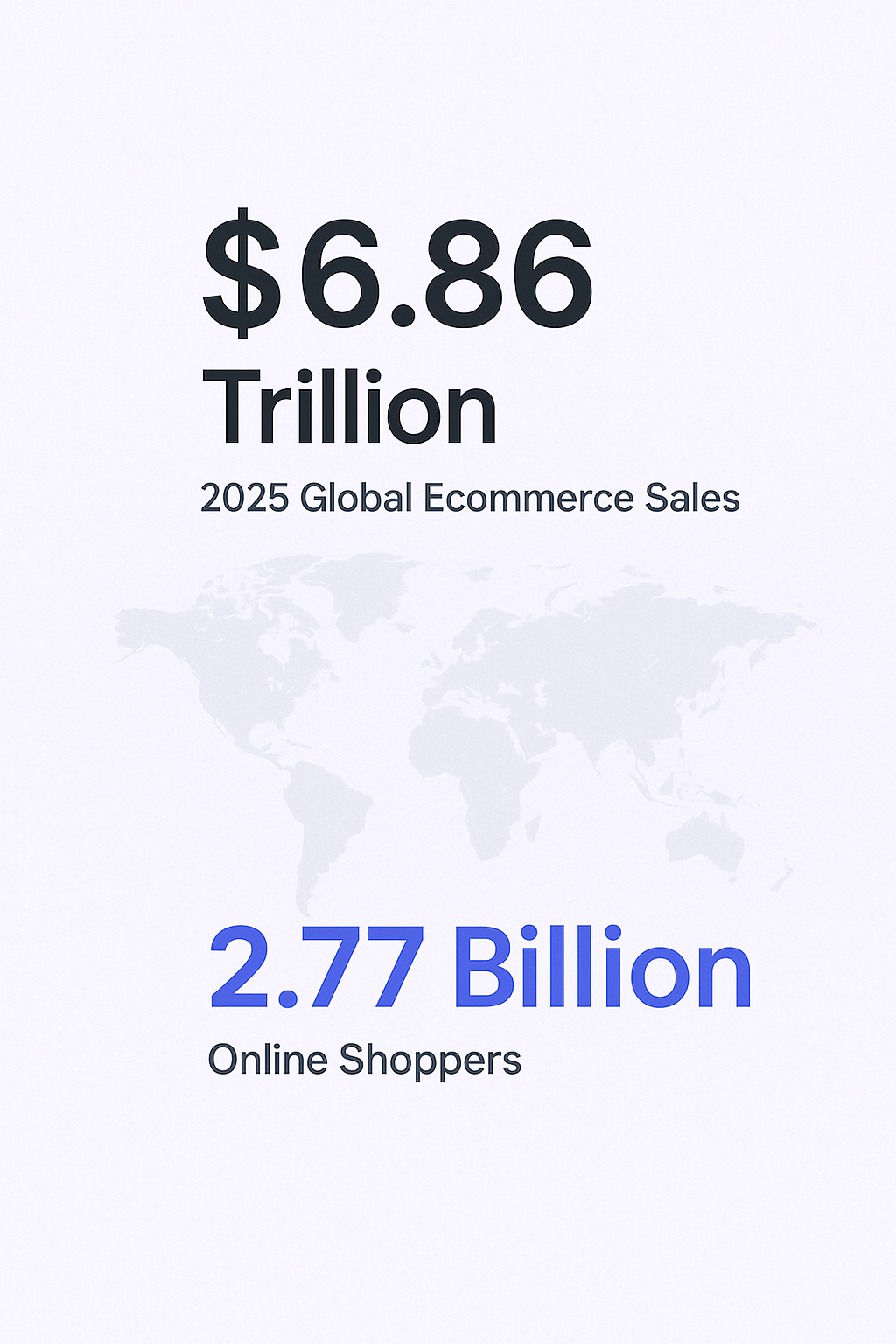
  • Global ecommerce sales will hit $6.86 trillion in 2025 – continuing massive growth trajectory
  • 2.77 billion people shop online worldwide – representing 33% of the global population
  • 21% of all retail purchases happen online – more than one-fifth of total retail activity
  • Mobile commerce accounts for 60%+ of ecommerce sales – smartphones dominate online shopping
  • Average cart abandonment rate sits at 70% – reaching 84-85.65% on mobile devices
  • Global ecommerce projected to generate $10 trillion annually by 2033 – with some predictions showing 95% of all purchases will be ecommerce-driven by 2040
  • Gen Z controls 40% of all consumer spending – with 85% discovering new products through social media
  • 96% of Gen Z make at least one smartphone purchase monthly – showing extreme mobile shopping adoption
  • Mobile conversion rates average just 0.55% – significantly lower than desktop, revealing the “Mobile Paradox”
  • 58% of U.S. shoppers have purchased after discovering products on social media – proving social commerce effectiveness
  • 71.2% of TikTok users have made purchases after seeing items in their feed – demonstrating the platform’s shopping power
  • 48% of cart abandonment is caused by unexpected extra costs (shipping, taxes, fees) – the top friction point
  • Digital wallets account for 37-50% of ecommerce transactions – with PayPal holding 45% global market share
  • AR features increase conversion rates by up to 94% compared to static images, and reduce product returns by 40%
  • 92% of U.S. online shoppers consider security critical when making purchase decisions, with 88% trusting online reviews as much as personal recommendations

The digital shopping landscape has transformed beyond recognition. What started as a convenience has become the backbone of global retail, reshaping how billions of people discover, evaluate, and purchase products.

If you’re trying to understand where the market is heading, you’re in the right place. These online shopping trends statistics reveal the forces driving ecommerce growth and the behaviors that define today’s digital consumers.

Important Online Shopping Statistics

Let’s start with the numbers that matter most:

  • Global ecommerce sales will hit $6.86 trillion in 2025
  • 2.77 billion people shop online worldwide (33% of global population)
  • 21% of all retail purchases happen online
  • Mobile commerce accounts for 60%+ of ecommerce sales
  • Average cart abandonment rate sits at 70%
  • Ecommerce conversion rates
  • range from 2.5% to 3.35%


These figures paint a clear picture: online shopping isn’t just growing—it’s dominating. The sheer scale represents both massive opportunity and intense competition.

🎯 Selling to Ecommerce Decision-Makers?

Reach CMOs, VPs, and founders in retail with precision LinkedIn targeting and proven campaigns

General Online Shopping Statistics

The ecommerce engine shows no signs of slowing down. Global ecommerce is projected to grow at 8.6% in 2025, driven primarily by existing customers spending more rather than new shopper acquisition.

Here’s what’s particularly interesting: while ecommerce sales grow at 8.6%, new online shoppers only increase by 2.2%. This gap reveals a critical shift—the market is maturing from customer acquisition to customer value optimization.

By 2033, ecommerce will generate $10 trillion annually. Looking even further ahead, some projections suggest 95% of all purchases will be ecommerce-driven by 2040.

The United States remains a powerhouse, with online shopping expected to reach $1.29 trillion in 2025 and climb to $2.5 trillion by 2030.

Global E-Commerce Trends by Country

Different regions show varying adoption patterns and growth trajectories:

United States: Nearly 285 million online shoppers by 2025, representing one of the world’s most mature digital markets.

Asia-Pacific: Continues to lead in mobile-first shopping behaviors, with several countries seeing mobile commerce exceed 70% of total ecommerce.

Europe: Strong growth in cross-border shopping, with consumers increasingly comfortable purchasing from international retailers.

The annual growth rate varies significantly by region, with emerging markets often showing double-digit growth while mature markets focus on increasing transaction values.

Top Leading E-Commerce Stores

The ecommerce landscape is dominated by several key players, though the competitive dynamics continue to evolve:

Amazon maintains its position as the global leader, though its market share varies significantly by region and product category.

Social commerce platforms are emerging as serious contenders, with TikTok, Instagram, and Facebook collectively driving billions in sales.

Specialized marketplaces continue to thrive in specific verticals, from fashion to electronics to groceries.

The rise of direct-to-consumer brands has also reshaped the competitive landscape, with many companies building substantial businesses by selling directly through their own platforms.

Demographic Insights on Online Shoppers

Understanding who shops online—and how they behave—is crucial for anyone operating in digital commerce.
 

💼 Know Your B2B Buyer Personas?

We target retail executives by role, company size, and buying intent with data-driven LinkedIn outreach

Generation Z: The Digital Natives

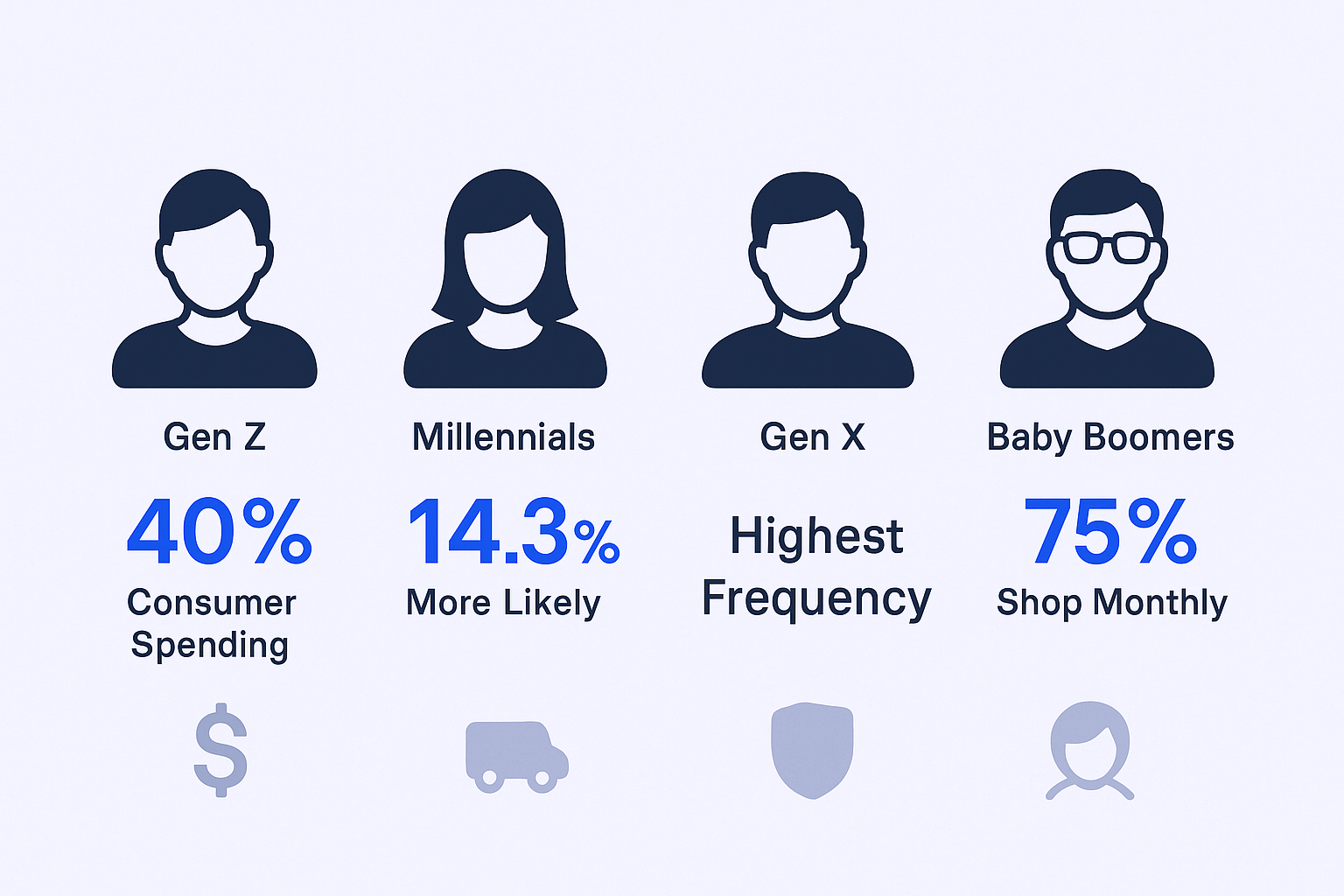
Gen Z controls 40% of all consumer spending and their influence continues to grow. 85% discover new products through social media, making platforms like TikTok and Instagram essential discovery channels.

96% of Gen Z make at least one smartphone purchase monthly, and 66% wait for discounts before buying. They’re also driving the secondhand economy, with 42% actively participating in resale shopping.

Millennials: The Power Shoppers

Millennials represent the core of modern ecommerce. They’re 14.3% more likely than other generations to do most of their shopping online and are the only demographic that explicitly prefers digital over in-store experiences.

65% of U.S. millennials have shopped for groceries online, and they’ve been early adopters of Buy Now, Pay Later services.

Gen X and Baby Boomers: The Consistent Buyers

Gen X shows the highest frequency of online shopping, with many making purchases daily or weekly. 75% of U.S. Baby Boomers shop online at least monthly, proving that people shop online across all age groups.

Income-Level Impact

High-income households (>$100k) are 12.3% more likely to shop online than middle-income counterparts. They prefer established payment methods: 34% use PayPal, 31% use credit cards.

Lower-income households show more price sensitivity and caution, being more likely to perceive digital transaction risks.

Frequency of Online Shopping

Shopping frequency varies dramatically by demographic and product category:

  • Daily shoppers: Primarily Gen X consumers making routine purchases
  • Weekly shoppers: Mix of all demographics, often for groceries and household items
  • Monthly shoppers: Most common pattern across all age groups
  • Occasional shoppers: Typically for big-ticket items or seasonal needs

72% of women make online purchases at least monthly, compared to 68% of men. However, men show slightly higher preference for browsing online (53% vs 44%).

Mobile Shopping Trends

Mobile commerce represents the future of online retail. Mobile commerce will generate $2.51 trillion in 2025, with smartphones driving more than 60% of all ecommerce transactions.
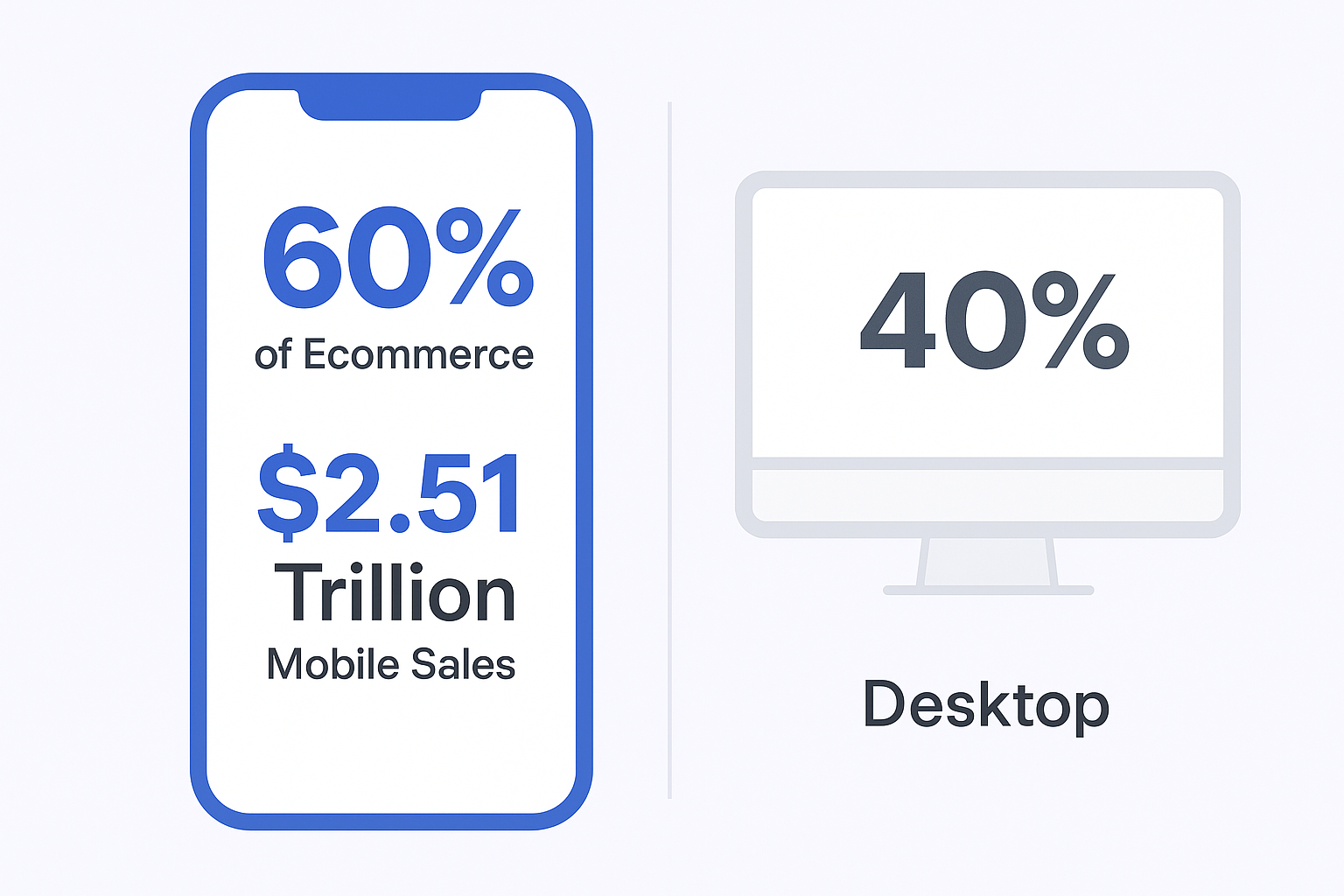


70% of shoppers identify their smartphone as their primary device for online shopping. 74% of consumers are more likely to return to businesses with mobile-friendly sites.

However, there’s a significant challenge: mobile conversion rates average just 0.55%, substantially lower than desktop. Mobile cart abandonment reaches 84-85.65%, indicating massive friction in the mobile shopping experience.

This “Mobile Paradox” represents both a major challenge and opportunity—high traffic and intent, but poor conversion performance.

📊 Selling Ecommerce Solutions or Services?

Stop cold outreach. Start warm conversations with qualified retail leaders through strategic LinkedIn campaigns

The Role of Social Media Platforms

Social media has evolved from marketing channel to full commerce ecosystem. 58% of U.S. shoppers have purchased after discovering products on social media.

Platform-Specific Shopping Numbers:

  • Facebook: 69.4 million U.S. social buyers
  • Instagram: 47.5 million U.S. social buyers
  • TikTok: 37.8 million U.S. social buyers

71.2% of TikTok users have made purchases after seeing items in their feed. Active social media users are increasingly becoming active shoppers, with seamless in-app purchasing reducing friction.

Cart Abandonment Rates and Solutions

Cart abandonment remains ecommerce’s biggest challenge. The global average abandonment rate is 70%, with mobile reaching 84%.

Primary Abandonment Reasons:

  • 48%: Unexpected extra costs (shipping, taxes, fees)
  • 25%: Forced account creation
  • 22%: Delivery times too long

Effective Recovery Strategies:

  • Abandoned cart emails: 45% average open rate
  • Discount offers: Persuade 54% to complete purchase
  • Exit-intent popups: Recover 53% of abandoning visitors

The key is addressing friction points proactively rather than reactively.

Impact of Technology on Online Shopping

Emerging technologies are reshaping the shopping experience:

AI and Chatbots

47% of shoppers are open to purchasing via AI-powered chatbots. Retail sales facilitated by chatbots will reach $112 billion. Both Millennials and Gen Z prefer chat interfaces for customer support.

Augmented Reality (AR)

40% of U.S. consumers want AR features when shopping online. 90% of American shoppers either use or are open to using AR for purchase decisions.

AR delivers measurable business impact: 40% reduction in product returns and up to 94% increase in conversion rates compared to static images. 80% of retailers plan AR deployment by 2025.

Voice Commerce

The voice commerce market will reach $81.8 billion in 2025, supported by 8.4 billion voice assistant devices worldwide. 49% of U.S. consumers have used voice search for shopping activities.

Voice assistant users are 33% more likely to have made an online purchase in the past week compared to average consumers.

Online Shopping During Key Shopping Events

Peak shopping periods continue to drive massive sales volumes:

Black Friday and Cyber Monday remain the biggest shopping events globally, though their influence is spreading across longer timeframes.

Prime Day and similar retailer-specific events are creating new peak periods throughout the year.

Holiday shopping increasingly starts earlier, with many consumers beginning holiday purchases in October or even September.

Flash sales and limited-time offers drive urgency and higher conversion rates, particularly effective with younger demographics.

Popular Payment Methods in Online Shopping

Payment preferences reflect security concerns and convenience desires:

Digital Wallets Lead

Digital wallets account for 37-50% of ecommerce transactions. PayPal holds 45% global market share of online payments.

Buy Now, Pay Later Surges

BNPL usage grew 50%, primarily driven by Millennials. These services now represent 5-6% of all ecommerce transactions.

Payment Choice Matters

76% of U.S. consumers say paying with their preferred method significantly influences purchase decisions.

Security Concerns in Online Shopping

Security remains a top concern influencing purchase decisions:

🚀 Target Enterprise Ecommerce Buyers Fast

Our complete LinkedIn outbound engine: targeting, messaging, and scaling to fill your B2B pipeline

7-day Free Trial |No Credit Card Needed.

92% of U.S. online shoppers consider security critical when making purchase decisions. 81% believe online fraud is widespread.

91% of ecommerce merchants worry about AI-powered fraud, indicating the evolving threat landscape.

Trust Building Impact

83% of shoppers are more likely to buy from websites that openly discuss fraud prevention efforts. 75% refuse to purchase from companies they don’t trust with personal data.

Social Proof Power

88% of consumers trust online reviews as much as personal recommendations. The average consumer reads 10 reviews before purchasing.

User-generated content increases conversion rates by 161%. UGC-featuring ads achieve 4x higher click-through rates and 50% lower cost-per-click.

Conclusion

The online shopping trends statistics reveal a market in sophisticated transition. While growth continues at a healthy pace, the focus has shifted from acquiring new customers to maximizing value from existing ones.

Mobile commerce dominates traffic but struggles with conversion, creating opportunities for businesses that can solve the mobile experience challenge. Social platforms have become legitimate shopping destinations, not just discovery channels.

Technology adoption—from AI chatbots to AR experiences—is accelerating as businesses seek competitive advantages. Security and trust remain paramount, with transparency becoming a conversion driver rather than just a defensive necessity.

For businesses operating in this space, success requires understanding these nuanced behavioral patterns and technological shifts. The companies that can adapt to these trends while solving fundamental friction points will capture the largest share of this multi-trillion-dollar market.

FAQs

What percentage of shopping is done online?

21% of all global retail purchases happen online in 2025, with projections showing this will reach 23.9% by 2030 and potentially 95% by 2040.

Which generation shops online most?

Millennials lead online shopping frequency, being 14.3% more likely than other generations to do most shopping online. However, Gen Z drives 40% of consumer spending and heavily influences purchase trends.

What are the biggest online shopping trends?

Mobile-first shopping, social commerce integration, AI-powered personalization, AR product experiences, and flexible payment options including BNPL services dominate current trends.

How much will ecommerce grow in 2025?

Global ecommerce sales will grow 8.6% in 2025, reaching $6.86 trillion total. The U.S. market specifically will hit $1.29 trillion.

What drives cart abandonment?

Unexpected extra costs drive 48% of cart abandonment, followed by forced account creation (25%) and long delivery times (22%). Mobile abandonment rates reach 84% due to poor user experience.

Target Decision-Makers Behind These Numbers

While consumers browse ecommerce, reach B2B buyers directly with LinkedIn outbound campaigns

Segmentation That Actually Converts

LinkedIn outbound targets precise demographics with strategic campaign design and scaling methods

How to Build a High-Converting B2B Sales Funnel from Scratch on LinkedIn ​