
🎉Find Prospects and Send Cold Emails & LinkedIn Outbound | All in One Place

Sales Prospecting List: The Complete Guide to Building High-Converting Lists

Table of Contents

Sales prospecting feels like searching for a needle in a haystack. You’re sifting through endless contacts, sending emails into the void, and wondering why your response rates are flatlining. Here’s the truth: building an effective sales prospecting list isn’t about quantity—it’s about precision.
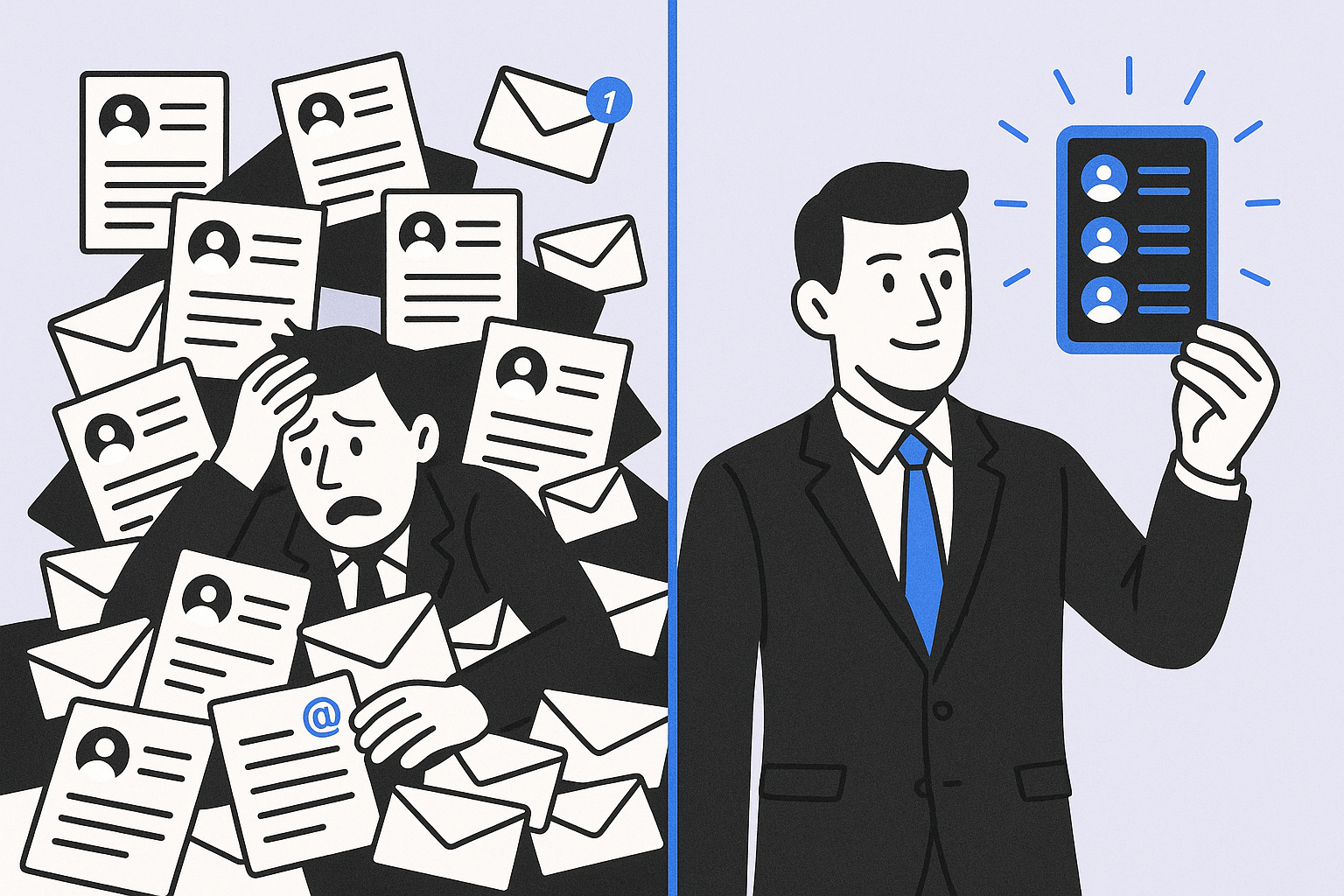


The difference between a mediocre prospecting list and a high-converting one can literally make or break your sales targets. While 40-42% of salespeople identify prospecting as the most challenging part of the entire sales process, those who master it control their pipeline destiny.

This guide breaks down everything you need to build prospecting lists that actually convert. No fluff, just actionable strategies that work in 2025.

What is Sales Prospecting?

Sales prospecting is the strategic process of identifying and connecting with potential customers to feed them into your sales funnel. Think of it as the foundation of your entire sales engine—without quality prospects, even the best salespeople struggle to hit their numbers.

But here’s where most people get confused: there’s a critical difference between prospects and leads.

A lead is anyone who shows some interest in your product—maybe they downloaded a whitepaper or visited your pricing page. A prospect is a lead that’s been rigorously vetted and qualified against specific criteria. Prospects align with your Ideal Customer Profile (ICP) and have the need, budget, and authority to actually buy.
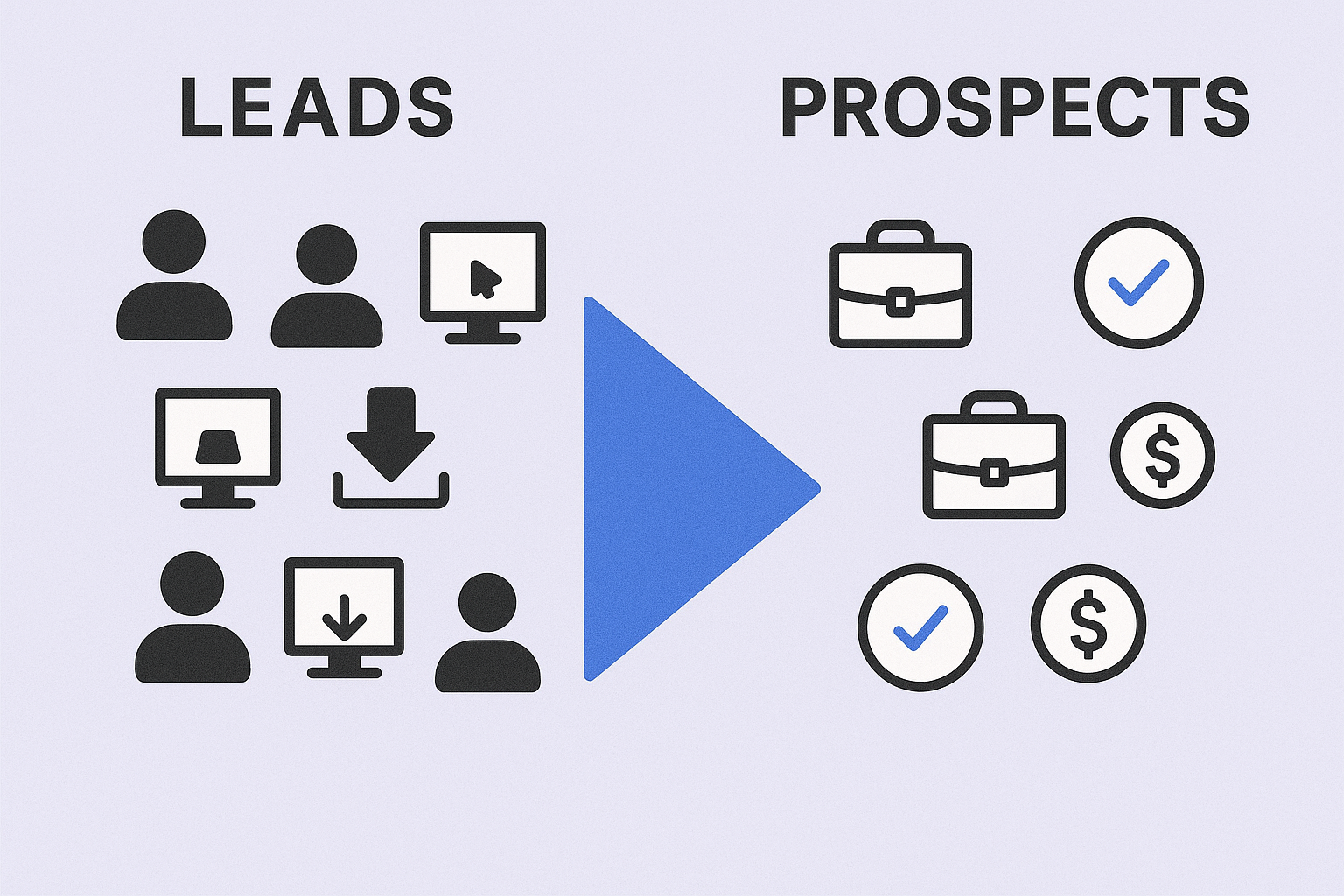


This distinction separates efficient sales teams from those spinning their wheels on unqualified contacts. Your prospecting list should contain only true prospects—people worth your valuable time.

What is the Importance of Sales Prospecting?

Prospecting isn’t just important—it’s the lifeblood of predictable revenue. Here’s why building quality prospecting lists should be your top priority:

Pipeline Control: Prospecting gives you complete control over lead generation. Instead of waiting for inbound leads to trickle in, you can analyze which sources perform best and focus your efforts where they’ll have maximum impact.

Revenue Predictability: Consider this sobering statistic—70% of B2B sales representatives missed their sales quota in 2024. A major contributor? Weak pipeline generation. Your prospecting activities today directly determine your revenue health next quarter.

Long-term Thinking: Since 80% of sales require at least five follow-up attempts and sales cycles keep getting longer, the work you put into building quality lists now pays dividends for months ahead. Your prospecting list becomes a leading indicator of future revenue.

Risk Diversification: A well-maintained prospecting list provides crucial buffer against market volatility. When one potential deal falls through, you have a robust pool of other opportunities to pursue.

The bottom line? Disciplined prospecting is what separates quota-crushing sales professionals from those constantly scrambling to fill their pipeline.

What Are the Different Types of Sales Prospecting?

💡 Struggling With Response Rates?

Our LinkedIn outbound engine delivers 3x better results with complete targeting and campaign design

Modern prospecting isn’t one-size-fits-all. The most successful sales teams build hybrid strategies combining multiple approaches:

Inbound Prospecting

Inbound prospecting is like setting up a powerful magnet. You create valuable content—blog posts, whitepapers, webinars—that attracts potential customers already seeking solutions. When these individuals engage and provide their information, they become inbound leads.

The advantage? Higher conversion rates. These leads self-identify their need and come pre-warmed to your brand.

The downside? Unpredictable lead flow and less control over volume.

Outbound Prospecting

Outbound is the sales equivalent of casting a targeted net. You proactively reach out to potential customers through cold calls, cold emails, and social media outreach.

The advantage? Complete control. You dictate outreach volume, test messaging quickly, and penetrate new markets strategically.

The challenge? Lower initial conversion rates and requires more persistence.

Hybrid Strategy: The Winning Approach

Smart sales organizations never rely on just one method. A hybrid model creates a resilient pipeline fed by both high-intent inbound leads and scalable outbound volume.

This approach hedges against the unpredictability of inbound while maximizing the quality benefits of prospects who come to you.

Sales Prospecting Process: A Clear Step-by-Step Breakdown

Building a high-conversion prospecting list requires a systematic approach. Here’s the three-phase blueprint that transforms raw market data into qualified opportunities:
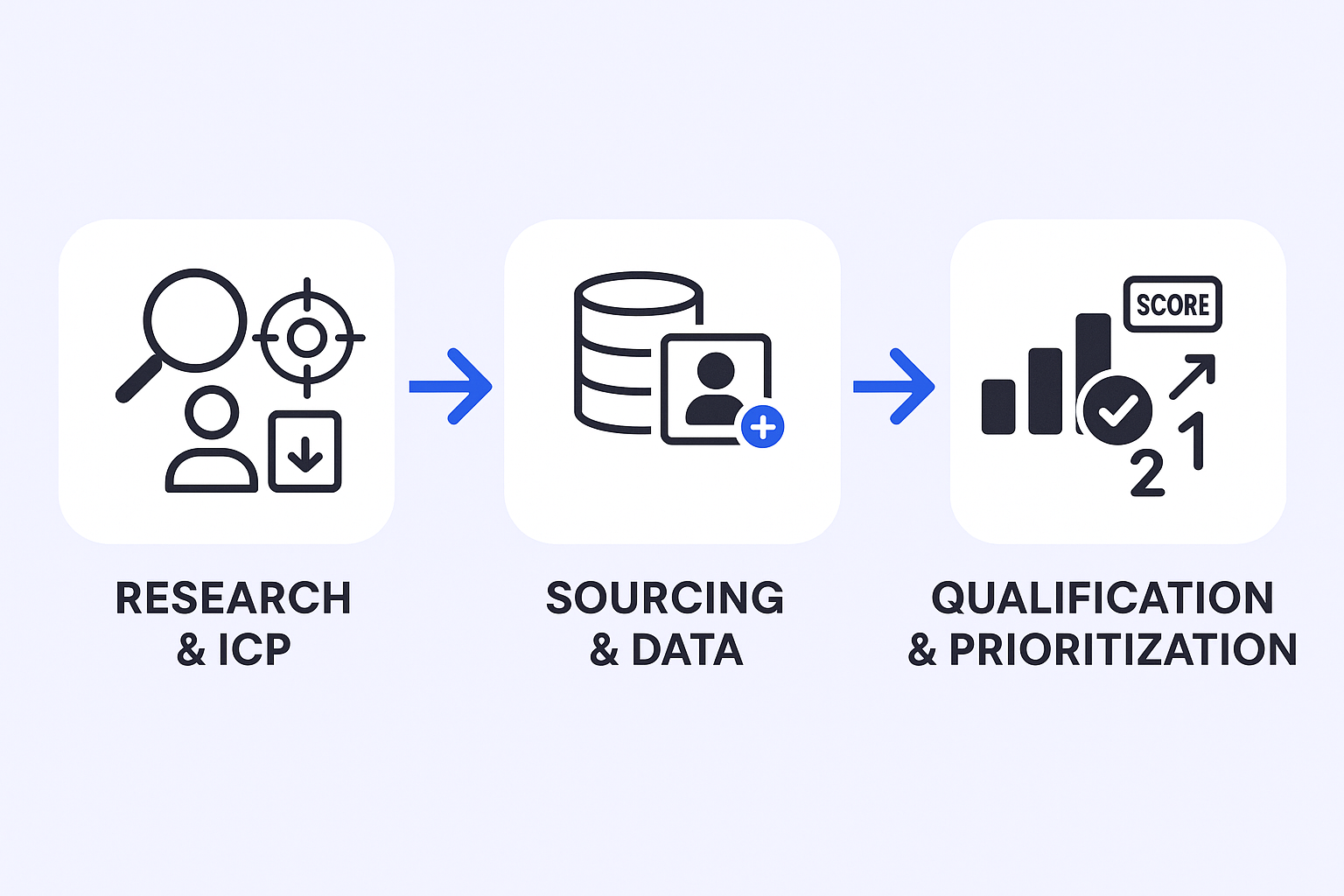


Phase 1: Foundational Research & ICP Definition

Everything starts with knowing exactly who to target. Your Ideal Customer Profile (ICP) is the strategic foundation of effective prospecting.

Go Beyond Basic Firmographics: Don’t stop at company size and industry. Build multi-dimensional ICPs that include:

  • Technographics: What technology stack do they use? Knowing they use a competitor’s product is a powerful qualifying signal.
  • Behavioral Data: What content do they consume? Which events do they attend? How active are they on social media?
  • Trigger Events: Recent funding rounds, executive changes, hiring sprees, or mergers signal potential buying windows.

Market Research is Non-Negotiable: Before adding a single name to your list, understand the broader market landscape. Investigate key industry challenges, trending topics, and competitive pressures. This research doesn’t just help with personalization—it’s fundamental to qualification itself.

Phase 2: Sourcing & Data Aggregation

With a crystal-clear ICP, you can now find companies and individuals who match it. Modern sourcing requires both quality and scale.

Leverage Intent Signals: The best prospects are those already researching solutions like yours. Intent data providers identify companies showing buying signals before they ever fill out a form.

Multi-Source Strategy: Don’t rely on a single database. Combine multiple contact sources and enrichment tools to build comprehensive prospect profiles with up-to-date information.

Quality Over Quantity: A smaller list of highly-qualified prospects always outperforms a massive list of mediocre contacts.

Phase 3: Rigorous Qualification & Prioritization

This is where many sales teams fail. Having prospects that match your ICP isn’t enough—they need to be worth your time right now.

Modern BANT Framework: The classic Budget, Authority, Need, Timeline framework still applies, but expand it for today’s complex buying process:

  • Business Goals: How does your solution align with their stated objectives?
  • Buying Group: With an average of 7+ stakeholders involved in B2B purchases, map out the decision-making team.
  • Competitive Landscape: What alternatives are they considering?

Lead Scoring: Implement automated scoring models in your CRM that rank prospects based on demographic fit and engagement level. This lets you prioritize the highest-probability opportunities.

Feedback Loop: Track why prospects get disqualified. If you consistently see “no budget” or “wrong authority,” your ICP needs refinement.

Top Sales Prospecting Strategies I Swear By

A perfect prospecting list is just potential energy. Converting it to actual revenue requires mastering the key outreach channels. Here are the strategies that work in 2025:

Email Prospecting Mastery

Email remains king in B2B sales—8 out of 10 prospects prefer email communication over other channels. But the rules have changed dramatically.

2024 Authentication Requirements: Google and Yahoo now require DKIM, SPF, and DMARC records for all senders. Without these, your domain gets blacklisted. You also need one-click unsubscribe links and must maintain spam complaint rates below 0.3%.

Personalization is Everything: Generic mass emails are dead. Personalized emails improve click-through rates by 14% and conversions by 10%. Research each prospect thoroughly before hitting send.

 🚀 Skip The Email Headaches

LinkedIn outbound bypasses spam filters entirely while reaching verified decision-makers directly

Subject Line Science: 35% of recipients decide to open based solely on the subject line. Keep it short, relevant, and intriguing.

The PAS Framework: Structure your email copy using Problem, Agitate, Solve:

  1. Problem: Identify a specific pain point relevant to the prospect
  2. Agitate: Emphasize the negative consequences of that problem
  3. Solve: Position your solution as the clear answer

Master the Follow-Up: Here’s the shocking truth—80% of sales require at least five follow-ups, yet 44% of sales reps give up after just one. Build persistent, value-driven email sequences that keep providing insights over time.

Modern Cold Calling

Cold calling isn’t dead—it’s evolved. 57% of C-suite buyers actually prefer phone contact, making it essential for reaching decision-makers.

Do Your Homework: 42% of sales reps feel they lack enough information before calling. Transform “cold” calls into warm conversations through research:

  • Review LinkedIn profiles and recent activity
  • Scan company news and press releases
  • Identify mutual connections for social proof

Master the First 60 Seconds:

  • Project confidence with statements, not questions
  • Use permission-based openers: “I know I’m calling out of the blue—do you have a minute?”
  • Use collaborative language (“we,” “us,” “our”) which increases success rates by 35%

B2B Social Selling

Social selling, especially on LinkedIn, is now core to B2B prospecting. The numbers don’t lie: 65% of social sellers successfully fill their pipeline compared to only 47% who don’t use social media.

LinkedIn Sales Navigator is Essential: Use advanced search filters to identify prospects matching your exact ICP. Set up alerts for trigger events like job changes or company updates.

Build Trust Before You Pitch: Social selling is about establishing credibility first:

  • Share valuable, relevant content consistently
  • Engage authentically with prospects’ posts
  • Participate in industry discussions
  • Position yourself as a trusted advisor, not just another vendor

The key principle: 78% of social sellers outsell peers who don’t use social media because they build relationships before making asks.

Best Sales Prospecting Software & Tools

In 2025, prospecting without modern tools is like navigating without GPS. The right tech stack automates manual work and provides intelligence that makes every outreach more effective.

The Three Pillars of Your Prospecting Stack

Contact Databases & Lead Enrichment: Platforms like ZoomInfo, Apollo.io, and UpLead provide vast B2B contact databases enriched with firmographics, technographics, and intent signals.

Sales Engagement Platforms (SEPs): Tools like Saleshandy, Snov.io, and Woodpecker automate multi-channel outreach sequences, managing email cadences and follow-ups at scale.

CRM Integration: Your CRM serves as the central nervous system, tracking every interaction and ensuring data flows seamlessly between all tools.

Tool Comparison: Market Leaders

For Enterprise Teams: ZoomInfo offers unmatched data depth with 321M+ contacts, advanced intent data, and AI-powered Copilot features. Expect to invest $15k-$19k annually.

For Growing Teams: Apollo.io provides an all-in-one platform combining 275M+ contacts with built-in engagement tools, starting at $49/user/month. It’s the sweet spot of features and affordability.

For Data Quality Focus: UpLead guarantees 95% data accuracy with real-time email verification, ideal for teams prioritizing quality over quantity at $74/user/month.

For European Compliance: Cognism excels in GDPR-compliant data with phone-verified mobile numbers, particularly strong for European and North American markets.

When choosing tools, consider your team size, budget, and specific needs. The key is seamless integration between platforms to ensure data flows efficiently.

Common Challenges in Sales Prospecting & How To Overcome Them

Even with perfect strategies and tools, prospecting presents consistent challenges. Here’s how to overcome the most common ones:

Challenge 1: Identifying High-Quality Leads

The Problem: Sales teams get overwhelmed filtering high-volume, low-quality leads from marketing or broad databases.

The Solution: Implement automated lead scoring in your CRM based on fit and engagement. Layer on intent data from providers like Bombora or 6sense to identify prospects actively researching solutions. Focus energy on buyers already in-market.

Challenge 2: Low Response Rates & Getting Past Gatekeepers

The Problem: Decision-makers are experts at ignoring generic outreach in our attention-deficit world.

The Solution: Hyper-personalization at scale. Research each prospect’s role, company initiatives, and social activity before any outreach. Craft messages that speak directly to their world. Focus on helping, not selling—offer valuable insights or solutions to problems you’ve identified.

🎯 LinkedIn Outbound Beats Cold Email

Get 15-25% response rates while bypassing spam filters with our complete done-for-you campaigns

Challenge 3: Effective Time Management

The Problem: Urgent daily tasks crowd out the important work of prospecting. Internal meetings and administrative work consume the day.

The Solution:

  • Time Blocking: Schedule non-negotiable prospecting time in your calendar
  • Pomodoro Technique: Work in focused 25-minute intervals to maintain concentration
  • Automation: Let your sales engagement platform handle repetitive tasks like follow-up scheduling and CRM logging

⚡ Get Your Time Back

We handle targeting, campaign design, and scaling so you focus on closing deals

7-day Free Trial |No Credit Card Needed.

Challenge 4: Handling Objections & Fear of Rejection

The Problem: Constant rejection erodes confidence and creates call reluctance, breaking the consistency habit that builds pipelines.

The Solution: Reframe prospecting as “starting conversations,” not “selling.” Use the LAER framework for objections:

  • Listen: Hear them completely without interrupting
  • Acknowledge: Validate their concern to build rapport
  • Explore: Ask open-ended questions to understand the real objection
  • Respond: Address the root concern with relevant solutions or social proof

Remember: 92% of reps give up after four “no’s”, but 80% of prospects say “no” four times before saying “yes”. Persistence wins.

Level Up Your Prospecting Game AI-powered email finding and automated sequences Start Free

How AI is Making Sales Prospecting Easy?

AI integration represents the biggest transformation in sales prospecting. Modern AI doesn’t just automate—it augments human capabilities with predictive intelligence.

AI Automates the Grunt Work

Automated Data Collection: AI scrapes websites, social platforms, and news sources to build comprehensive prospect profiles in seconds. What once took hours of manual research now happens automatically.

Predictive Lead Scoring: Moving beyond simple rules, AI analyzes historical sales data, customer behavior, and firmographics to identify subtle patterns that correlate with closed deals. It ranks new prospects based on statistical probability of conversion.

Unlocking Unstructured Data: 80% of enterprise data is unstructured—hidden in emails, call transcripts, and social comments. Natural Language Processing (NLP) analyzes this treasure trove for sentiment, urgency, and intent signals.

Hyper-Personalized Messaging at Scale

Generative AI solves the age-old quality vs. quantity dilemma in outreach:

Real Results: When one B2B SaaS company implemented NLP-optimized email tools, reply rates jumped from 3.4% to 11.2% in under 90 days.

Editors, Not Authors: Modern platforms let sales reps function as editors, reviewing and refining AI-generated copy instead of writing from scratch. This massively increases productivity while maintaining personalization.

Real-Time Optimization: AI analyzes email drafts in real-time, flagging weak calls-to-action or robotic phrasing before you hit send.

AI Features in Leading Platforms

ZoomInfo Copilot: Provides AI-guided recommendations on who to contact, when to engage, and what to say. Features include automated account summaries, buying group identification, and real-time breaking alerts.

Apollo.io AI: Leverages AI across lead scoring, natural language database searches, and personalized campaign creation. Analyzes engagement patterns to generate smart call lists prioritizing the most promising prospects.

The revolution here is predictive intelligence—AI analyzes millions of real-time intent signals to predict which accounts are in-market before they fill out forms. You transform from reactive hunter to proactive strategist.

Key Takeaways for Smarter Sales Prospecting

Building effective prospecting lists isn’t rocket science, but it requires discipline and the right approach:

Quality Always Beats Quantity: A smaller list of rigorously qualified prospects outperforms massive lists of mediocre contacts every time. Focus your energy where it matters most.

Consistency is King: Prospecting works when it’s systematic and persistent. Block time daily, follow your process religiously, and remember that most sales happen after multiple touchpoints.

Multi-Channel is Mandatory: Your prospects consume information across email, phone, and social platforms. Meet them where they are with coordinated, value-driven outreach.

Technology Enables, Strategy Wins: The best tools in the world can’t fix a weak ICP or poor messaging. Get your strategy right first, then leverage technology to scale what works.

AI Augments, Doesn’t Replace: Use AI to automate research and generate initial drafts, but human insight, creativity, and relationship-building remain irreplaceable.

The future belongs to sales professionals who combine intelligent technology with authentic relationship-building. Master both, and you’ll never struggle with pipeline again.

Transform Your Sales Prospecting Today Complete cold email solution for modern sales teams Get Started

FAQs

What's the difference between a prospect and a lead?

A lead is anyone who shows interest in your product. A prospect is a qualified lead that matches your ICP and has the need, budget, and authority to buy.

How many follow-ups should I send?

Most sales require 5+ follow-ups, but only send them if you're providing new value each time. Space them out appropriately and focus on helping, not just following up.

What's the best time to send cold emails?

Tuesday through Thursday, 8-10 AM or 1-3 PM in the prospect's timezone typically see the highest open rates. But test what works for your specific audience.

How do I handle large file sizes in email outreach?

Keep attachment sizes under most email providers' attachment limit of 25MB. For larger files, use cloud sharing links instead of direct attachments to avoid deliverability issues.

How do I improve my email deliverability?

Authenticate your domain with SPF, DKIM, and DMARC records. Keep file sizes reasonable, maintain clean lists, and monitor your sender reputation regularly.

LinkedIn Outbound That Actually Converts

Get 15-25% response rates with complete targeting, campaigns, and scaling done-for-you

Segmentation That Actually Converts

LinkedIn outbound targets precise demographics with strategic campaign design and scaling methods

How to Build a High-Converting B2B Sales Funnel from Scratch on LinkedIn ​