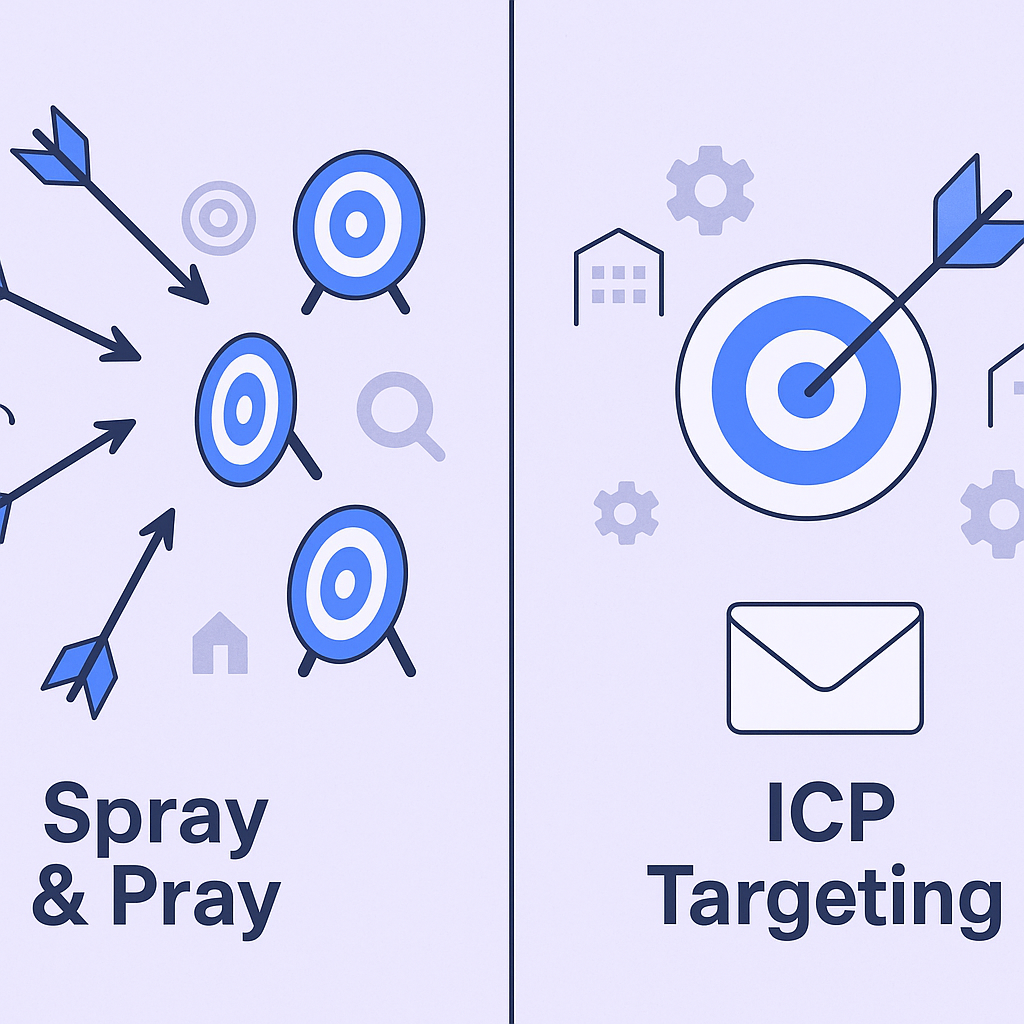
Companies leveraging both ICPs and buyer personas see a 73% improvement in lead conversion rates and a 171% increase in marketing ROI.
How to Create Your Ideal Customer Profile
Building an accurate ideal customer profile requires a systematic, data-driven approach. Follow these steps to create a profile that actually drives results:
Step 1: Analyze Your Best Customers
Start by identifying 10-15 of your “super users” – customers who represent the gold standard. Don’t just look at contract value. Consider multiple success factors:
- High Customer Lifetime Value (CLV): Which accounts generate the most revenue over time?
- Short Sales Cycle: Who moved from first contact to closed-won quickly?
- High Product Adoption: Which customers use your product extensively with high satisfaction scores?
- Low Support Load: Who requires minimal customer support, indicating strong product fit?
- Brand Advocacy: Which customers provide testimonials, referrals, and case studies?
Pro tip: A large enterprise client that took 18 months to close and drains support resources isn’t ideal, even with a big contract. Focus on profitability and efficiency, not just size.
Step 2: Find the Common Patterns
Analyze your super users to identify shared characteristics:
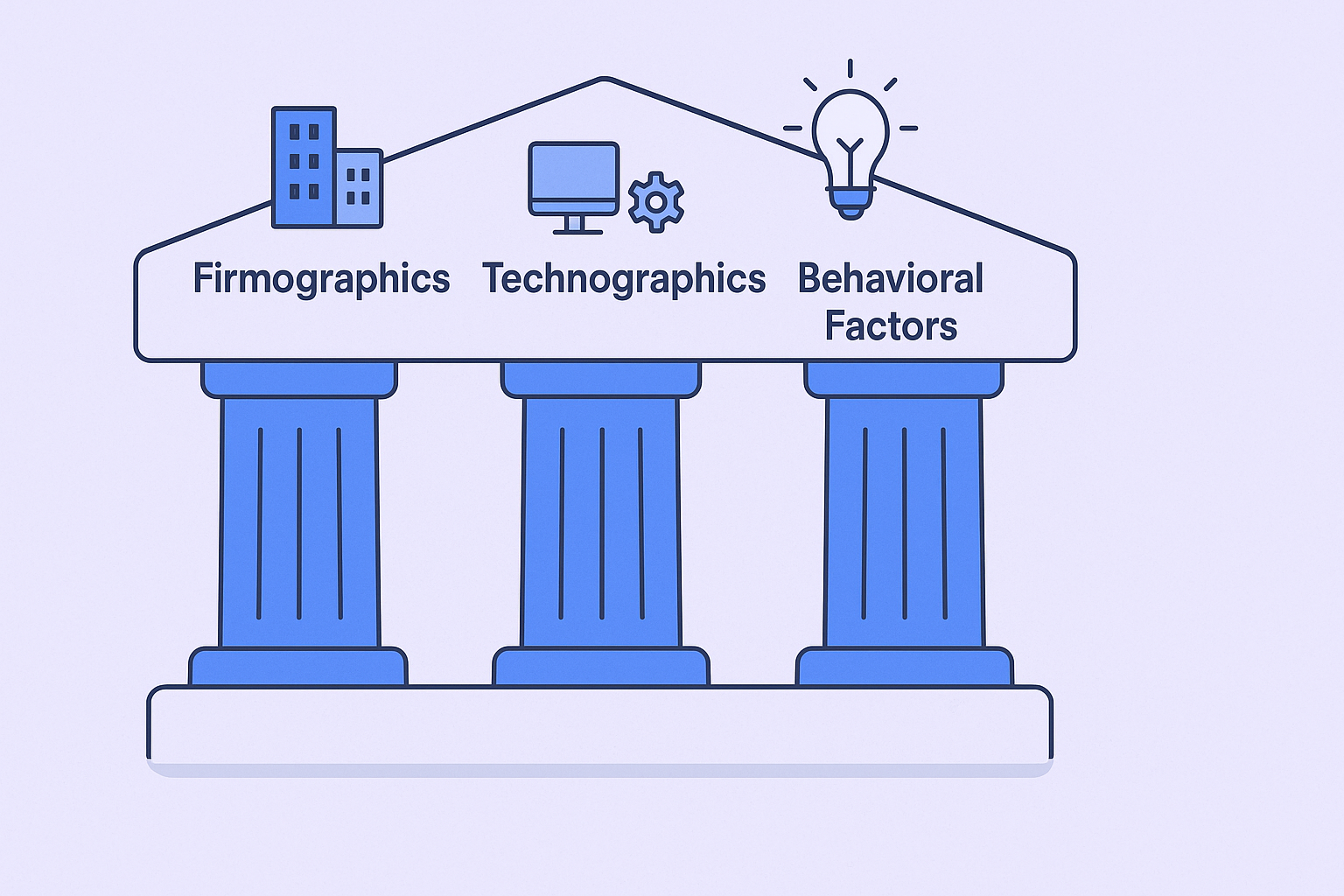
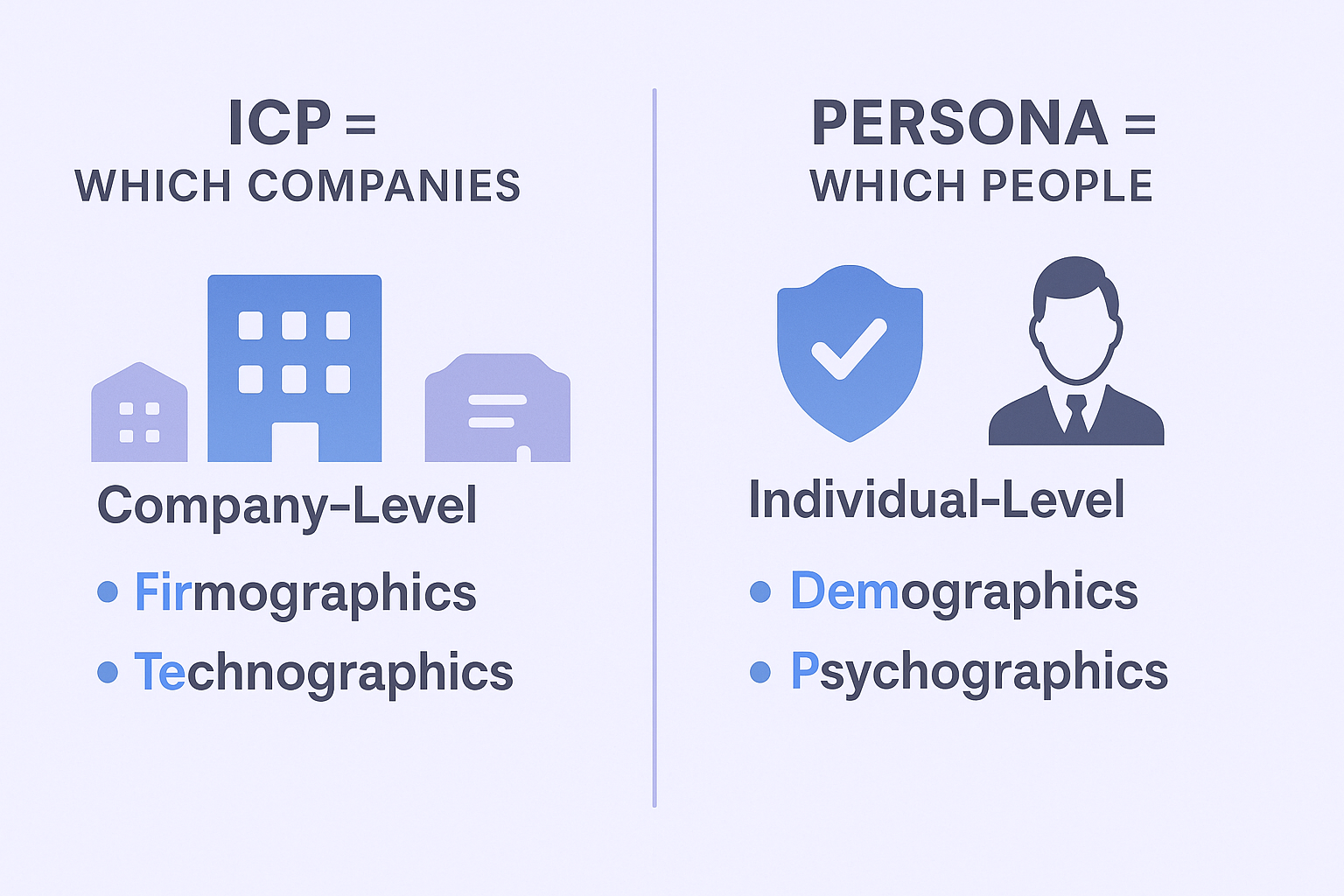
Firmographic Analysis:
- Industry concentration (Are 70% in SaaS? Healthcare? Manufacturing?)
- Company size clustering (Do most have 100-500 employees?)
- Geographic patterns (Concentrated in specific regions?)
- Growth stage similarities (Recently funded? Established enterprises?)
Technographic Analysis:
- Common technology stacks and platforms
- Similar integration requirements
- Comparable technical sophistication levels
Look for statistically significant patterns, not outliers. If 8 out of 10 top customers use Salesforce, that’s a strong technographic indicator.
Step 3: Gather Qualitative Insights
Numbers tell you what happened. Interviews tell you why. Conduct 15-30 minute conversations with your best customers:
Key Questions to Ask:
- “Before finding our solution, what was your primary business challenge?”
- “Walk me through your evaluation process. What made you choose us over competitors?”
- “Describe the moment you realized our product was delivering real value.”
- “How would you quantify the impact we’ve had on your business?”
Also interview your internal teams – sales, customer success, and support representatives who interact with customers daily. They often have insights about what makes certain customers successful.
Step 4: Identify Pain Points and Trigger Events
Synthesize your data to articulate the core problems you solve:
Pain Points Framework:
- What specific business challenges do your ideal customers face?
- How do these pain points manifest in their daily operations?
- What’s the cost of not solving these problems?
Trigger Events:
- New executive hires (especially in relevant departments)
- Funding announcements or financial milestones
- Regulatory changes affecting their industry
- Competitive pressures or market shifts
- Technology migrations or system updates
These trigger events are buying signals that help you prioritize outreach timing.
Step 5: Document and Test Your Profile
Create a one-page ideal customer profile document that becomes your organizational blueprint. Include:
- Clear firmographic and technographic criteria
- Primary pain points and strategic goals
- Trigger events and buying signals
- Disqualifying factors (equally important)
Validation is critical. Apply your new ideal customer profile to live campaigns and track performance:
- Do ICP-aligned leads convert at higher rates?
- Are sales cycles shorter for profile matches?
- Is customer satisfaction higher for ideal fits?
Use this data to continuously refine your profile. An ideal customer profile is a living document that evolves with your business and market.
How to Use Your Ideal Customer Profile for Marketing and Sales
A documented ideal customer profile is worthless sitting in a folder. Here’s how to activate it across your revenue organization:
Marketing Applications
Account-Based Marketing (ABM):
- Build target account lists using your ideal customer profile criteria
- Create hyper-personalized content addressing specific pain points
- Develop industry-specific case studies and whitepapers
- Run LinkedIn ads targeting companies matching your profile
Content Strategy:
- Craft blog posts addressing your ideal customer’s challenges
- Develop webinars on topics relevant to your target market
- Create downloadable resources for specific use cases
- Optimize website messaging for your ideal buyer’s language
Lead Scoring and Qualification:
- Weight leads higher when they match ideal customer profile criteria
- Automatically route high-fit leads to experienced sales reps
- Create different nurturing tracks based on profile alignment
Sales Team Activation
Prospecting and Lead Qualification:
- Focus outbound efforts exclusively on ideal customer profile matches
- Use profile criteria as qualification checklist during discovery calls
- Confidently disqualify poor-fit prospects to maintain pipeline quality
Personalized Outreach:
- Reference specific pain points your ideal customers typically face
- Mention relevant trigger events in initial outreach
- Share case studies from similar companies in their industry
Sales Process Optimization:
- Anticipate common objections based on profile insights
- Prepare industry-specific demo scenarios
- Develop pricing strategies aligned with your ideal customer’s budget range
Performance Tracking
Monitor these key metrics to measure ideal customer profile effectiveness:
- Pipeline Quality: Percentage of opportunities matching your profile
- Conversion Rates: Win rates for profile-aligned vs. non-aligned prospects
- Sales Cycle Length: Time from first contact to close for ideal customers
- Customer Lifetime Value: Revenue and retention rates by profile fit
When your entire revenue team operates from the same ideal customer profile playbook, efficiency and results compound across every touchpoint.
Examples of Successful Ideal Customer Profiles
Real-world examples help illustrate how effective ideal customer profiles translate into practical targeting strategies:
B2B SaaS Example: Marketing Automation Platform
Industry: B2B SaaS companies in financial services Company Size: 200-1,000 employees, $20M-$100M ARR Technographics: Uses Salesforce CRM, has dedicated marketing team, operates on AWS Pain Points:
- Manual lead nurturing processes limiting growth
- Difficulty tracking ROI across marketing channels
- Sales and marketing alignment challenges Trigger Events: Series B+ funding, new CMO hire, rapid hiring in marketing Success Metrics: 50% reduction in cost per lead, 30% increase in marketing qualified leads
Enterprise Software Example: Cybersecurity Solution
Industry: Healthcare and financial services Company Size: 2,000+ employees, $500M+ revenue Technographics: Hybrid cloud environment, existing security tools, dedicated CISO Pain Points:
- Complex regulatory compliance requirements (HIPAA, SOX)
- Vendor sprawl with multiple security solutions
- Need for consolidated security visibility Trigger Events: Regulatory audit findings, competitor data breach, merger/acquisition Success Metrics: SOC 2 compliance achievement, 40% reduction in security vendor count
Case Study Results
Companies implementing these focused ideal customer profiles saw dramatic improvements:
Marketing Automation Platform:
- 64% increase in account win rate
- 50% reduction in customer acquisition cost
- 3x improvement in average deal size
Cybersecurity Solution:
- 47% increase in average deal size
- 80% improvement in customer retention
- 60% reduction in sales cycle length
These success stories share a common thread: laser focus on the right accounts amplified every marketing dollar and sales effort, creating exponential returns on investment.
Best Practices for Developing Your Ideal Customer Profile
Avoid common pitfalls and maximize your ideal customer profile effectiveness with these proven best practices:
Start with Data, Not Assumptions
The biggest mistake: Building an ideal customer profile based on executive assumptions rather than customer data. Your opinions about who should buy don’t matter – your data about who actually succeeds does.
Best practice: Let the numbers guide you. Analyze at least 50+ customers to identify statistically significant patterns. Look for characteristics shared by 70%+ of your most successful accounts.
Be Specific, Not Generic
Avoid: “Technology companies between 100-10,000 employees” Better: “B2B SaaS companies with 200-500 employees, using Salesforce, recently raised Series A, serving SMB market”
Specificity enables precision. Generic profiles lead to generic results.
Include Disqualifying Factors
Know who NOT to target. Your ideal customer profile should explicitly identify:
- Company sizes too small or large for your solution
- Industries where your product doesn’t provide value
- Technology environments incompatible with your platform
- Budget constraints that make deals unprofitable
Saying no to bad-fit prospects is as important as saying yes to good ones.
Make It Actionable for Your Team
Your ideal customer profile should answer these practical questions:
- Where can I find these companies? (data sources, conferences, publications)
- How can I identify them? (specific search criteria and filters)
- What should I say to them? (messaging frameworks and value propositions)
- When should I contact them? (optimal timing and trigger events)
Keep It Living and Breathing
Update your ideal customer profile quarterly or when you notice:
- Changes in win/loss patterns
- Shifts in customer churn rates
- New competitive landscape
- Product evolution or feature additions
- Market condition changes
Review triggers:
- Customer acquisition cost increases
- Customer lifetime value decreases
- Sales cycle lengthening
- New market expansion
Test and Validate Continuously
Run controlled experiments to validate your ideal customer profile:
- A/B test outreach messages targeting profile vs. non-profile accounts
- Compare conversion rates across different profile segments
- Track customer success metrics by profile alignment
- Measure sales team productivity improvements
Remember: An ideal customer profile is a hypothesis that needs constant validation through real-world results.
Align Across Departments
Your ideal customer profile only works when every revenue team uses it:
Marketing: Target account list building, content creation, campaign targeting Sales: Prospecting focus, qualification criteria, territory planning
Customer Success: Onboarding prioritization, expansion opportunity identification Product: Feature development priorities, integration roadmap planning
Hold quarterly alignment sessions to ensure everyone interprets and applies the ideal customer profile consistently.
Conclusion
Building a data-driven ideal customer profile isn’t just a marketing exercise – it’s the foundation of predictable revenue growth. Companies with well-defined profiles see 68% higher win rates, 50% shorter sales cycles, and 32% faster revenue growth because they stop wasting energy on the wrong prospects.
The path forward is clear:
Start by analyzing your best customers to identify success patterns. Document specific firmographic, technographic, and behavioral criteria that define your ideal accounts. Test your profile against real campaigns and refine based on results.
Most importantly, activate your ideal customer profile across your entire revenue organization. When marketing, sales, and customer success teams all work from the same blueprint, every interaction becomes more targeted, relevant, and effective.
Your ideal customer profile is waiting in your existing data. The companies that will drive your growth tomorrow look remarkably similar to those driving your success today. Find those patterns, document them, and watch your sales efficiency transform.
Other Useful Resources
Once you’ve defined your ideal customer profile, these resources will help you execute targeted outreach campaigns:
Email Deliverability Tools:
LinkedIn Prospecting Strategies:
LinkedIn Best Practices:
These guides complement your ICP strategy by providing tactical execution frameworks for reaching and converting your ideal accounts through targeted LinkedIn outbound campaigns.