
Look, I’ll be straight with you.
If you’re searching for LinkedIn follower statistics, you’re probably trying to figure out if your growth is normal, what engagement rates you should expect, or how to actually turn those followers into real business opportunities.
The truth? Most people obsess over follower counts while missing what actually matters.
This isn’t another fluff piece listing random stats. I’m going to show you the numbers that actually impact your results, what they mean for your strategy, and how to use this data to make better decisions—whether you’re just starting out or already have thousands of followers.
LinkedIn Followers Statistics
Here’s what you need to know right now:
Platform Scale: LinkedIn has surpassed 1.2 billion members globally, making it the largest professional network in the world. The platform processes 1.77 billion monthly visits from professionals actively seeking business solutions and industry intelligence.
Follower Growth Rates: Accounts between 1,000-5,000 followers see average monthly growth of 40.75%, while larger accounts (10,000-50,000 followers) average 22.80% monthly growth. The sweet spot for percentage growth is actually when you’re smaller—the algorithm favors new creators.
Engagement Reality: LinkedIn’s average engagement rate peaked at 5.76% in early 2025, vastly outperforming other social platforms. For context, Instagram averages around 0.6% and X/Twitter sits below 0.5%.
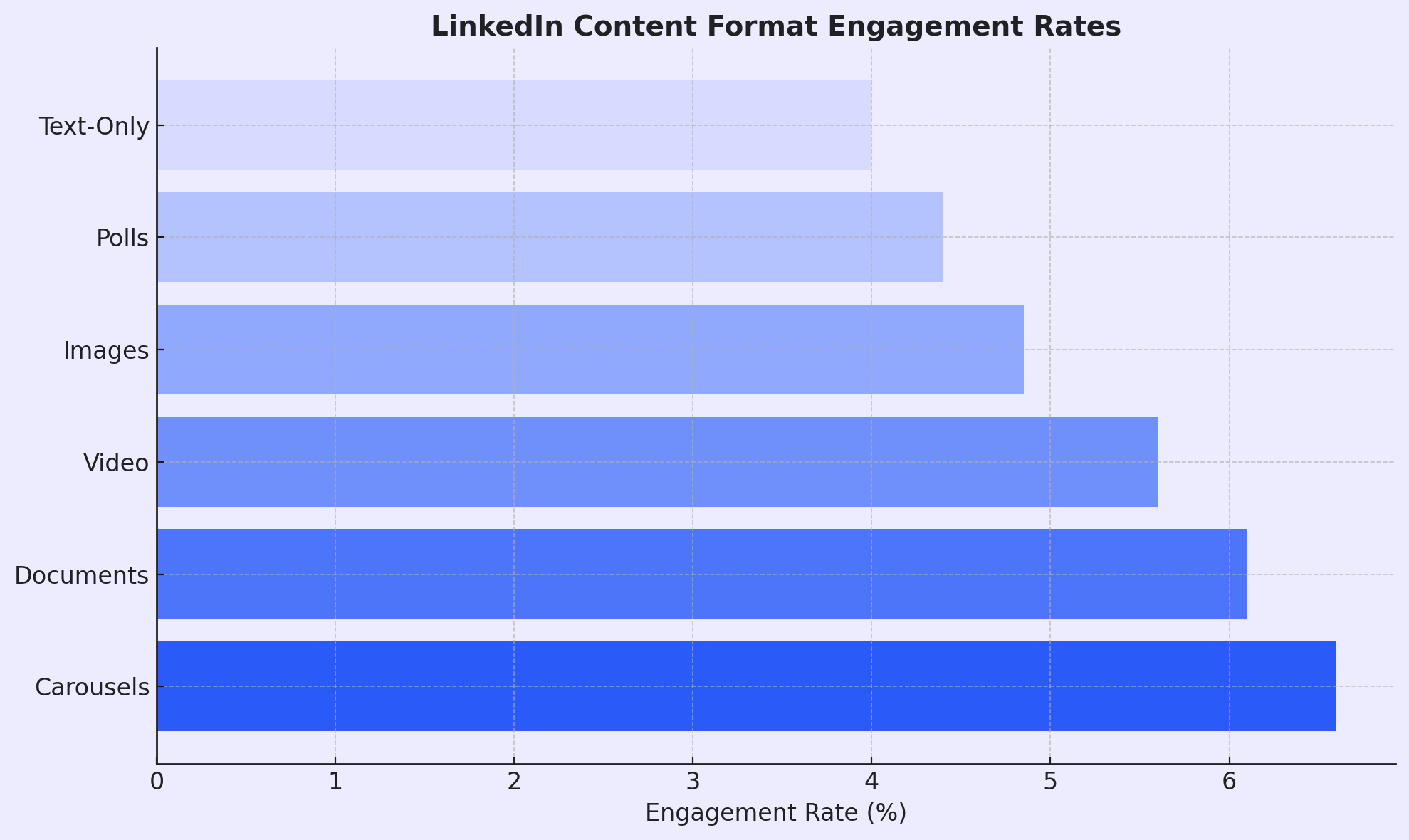
Content Format Performance: Multi-image carousels dominate with 6.60% engagement rates, crushing text-only posts by 596%. Video content averages 5.60% engagement while building deeper trust through face-to-camera presence.
Professional Impact: Sales professionals with high Social Selling Index (SSI) scores generate 45% more opportunities and are 51% more likely to hit quota. Four out of five LinkedIn users drive business decisions—this isn’t recreational scrolling.
The Connection vs. Follower Reality
Most people don’t realize there’s a massive difference between LinkedIn connections and followers.
Connections are reciprocal relationships capped at 30,000 people. Fewer than 1% of LinkedIn users ever hit 10,000 connections—it’s a much smaller club than you think.
Followers work differently. When you activate “Creator Mode,” your profile’s main CTA switches from “Connect” to “Follow.” This removes the 30,000 cap entirely, allowing unlimited audience growth.
For professionals targeting broad industries or multiple sectors, the follower model is essential for scaling beyond networking limitations. You can build an audience of 50,000, 100,000, or more without hitting artificial caps.
The strategy shift: early on, focus on connections for reciprocal networking. As you publish consistent content, transition to Creator Mode and build a follower base that scales with your influence.
Growth Benchmarks That Matter
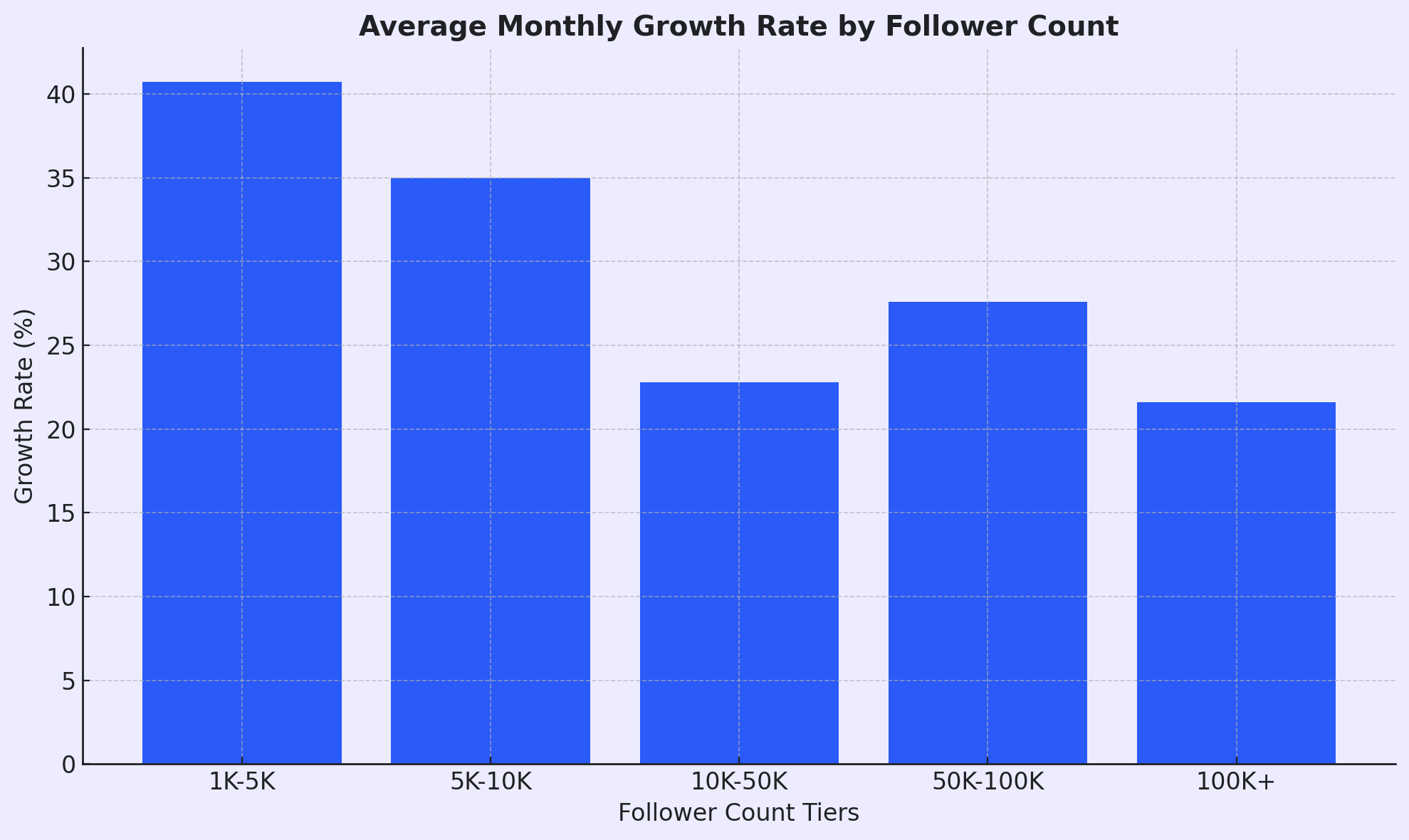
Average growth rates vary dramatically based on your current follower count:
1,000-5,000 Followers: This is the sprint phase. You’ll see roughly 40% monthly growth with consistent activity. The algorithm is calibrated to help micro-creators find their audience, meaning your early efforts yield disproportionate returns.
5,000-10,000 Followers: Growth slows slightly to 35% monthly, but you’re entering the authority phase. Original content and employee advocacy become primary drivers.
10,000-50,000 Followers: Monthly growth averages 22.8%. While percentage drops, absolute numbers accelerate. A 22% growth rate on 30,000 followers means 6,600 new followers monthly.
50,000-100,000 Followers: You’re in the influencer phase at 27.6% monthly growth. Algorithmic distribution and viral mechanics drive most new followers.
100,000+ Followers: Your profile functions as a media entity. Growth stabilizes around 21.6% as you’ve saturated your target market and need viral moments for step-changes.
The takeaway: if you’re under 5,000 followers and feeling discouraged, you’re actually in the highest-growth zone. Consistency matters more than anything else.
Profile Optimization Numbers You Can’t Ignore
Before anyone follows you, they evaluate your profile in seconds. Here’s what moves the needle:
Profiles with professional photos receive 14 times more views than those without. In cold outreach contexts, a missing photo signals “bot” or “spam account” to most decision-makers.
Users who list current job positions receive up to 5x as many connection requests. But here’s the trick: your headline shouldn’t just say “Account Executive.” It needs to convey value. “Helping CFOs Optimize Cash Flow” beats generic job titles every time.
Listing at least five relevant skills increases the likelihood of being messaged by 31x. This impacts LinkedIn’s internal search capability, ensuring your profile appears when prospects search for specific expertise.
The optimization hierarchy: professional photo > value-driven headline > detailed current position > skills that match your target audience’s search behavior.
Content Format Performance Breakdown
Not all content performs equally. Here’s the hierarchy backed by 2025 data:
Multi-Image Carousels: 6.60% Engagement These are the gold standard. Carousels trigger micro-interactions (swipes) at every step, signaling active interest to the algorithm. They earn 278% more engagement than video and 596% more than text-only posts.
Tactical application: convert your PDF case studies or whitepapers into 7-10 slide carousels. Keep users on-platform, maximize dwell time, and demonstrate expertise without sending traffic away.
Native Documents: 5.85-6.10% Engagement Excellent for dense information sharing. Think detailed whitepapers, research reports, or comprehensive guides. These have a 1.45x reach multiplier versus standard text posts.
Video: 5.60% Engagement Video builds deep trust through face-to-camera presence. It’s growing at 2x the rate of other formats, and weekly immersive video views increased 6x quarter-over-quarter in early 2025.
Strategic use: video acts as a “pre-meeting” for sales professionals. Prospects hear your voice, cadence, and confidence, reducing friction on actual sales calls because they feel they already know you.
Single Images: 4.85% Engagement Standard performance tier. Good for culture posts, event updates, or simple visual content. Offers a 1.18x reach multiplier—nothing spectacular, but reliable.
Polls: 4.40% Engagement Lower depth engagement but 1.64x reach multiplier. Polls have high viral potential and work exceptionally well for market research or audience surveys.
Text-Only Posts: Lowest Performance These receive just 0.88x the reach of other formats. Only use text-only for quick, high-impact storytelling where the message itself is the hook.
The Commenting Strategy Nobody Talks About
For professionals intimidated by content creation, commenting is the secret weapon.
Strategic comments generate 30-75x more views than likes. When you leave insightful commentary on an influencer’s post, you leverage their audience. Decision-makers reading that thread are compelled to click your profile.
Profile views are primarily driven by meaningful commenting. Not “Great post!” or generic emoji reactions. Actual thoughtful analysis that adds value to the conversation.
The 30-minute routine: spend 30 minutes daily engaging with prospects’ content. This correlates directly with higher SSI scores and increased pipeline generation.
The visibility multiplier works because you’re not starting from zero. You’re borrowing authority from the original poster’s audience, appearing in their feed as someone worth paying attention to.
Engagement Rates by Industry
Context matters. What’s “good” varies dramatically by sector:
Marketing & Agencies: ~3.7% engagement. These are power users running highly active but critically discerning audiences. Fluff content gets ignored immediately—you need deep tactical insights.
Education & Non-Profit: ~2.8% engagement. Slower adoption of aggressive social selling creates opportunity. Consistent activity helps you stand out easily due to lower noise levels.
SaaS & Technology: Highly competitive space. The average SaaS professional is extremely active, making this the most saturated vertical. Generic “I help companies scale” headlines are worthless here—you need video and advanced carousel strategies.
Legal & Professional Services: Higher response rates (~10.42%) due to less saturation compared to tech sectors.
Software Industry: Lower response rates (~4.77%) driven by audience fatigue from constant outreach.
Understanding your industry baseline helps set realistic expectations and identify competitive advantages.
Multichannel Integration: The Real Strategy
Here’s what nobody tells you: LinkedIn alone isn’t the answer.
The most successful professionals orchestrate LinkedIn with email outreach in a unified workflow:
The 3x Conversion Lift: Combining LinkedIn touchpoints (profile views, connection requests, comments) with email outreach generates 3x better conversion rates versus single-channel approaches.
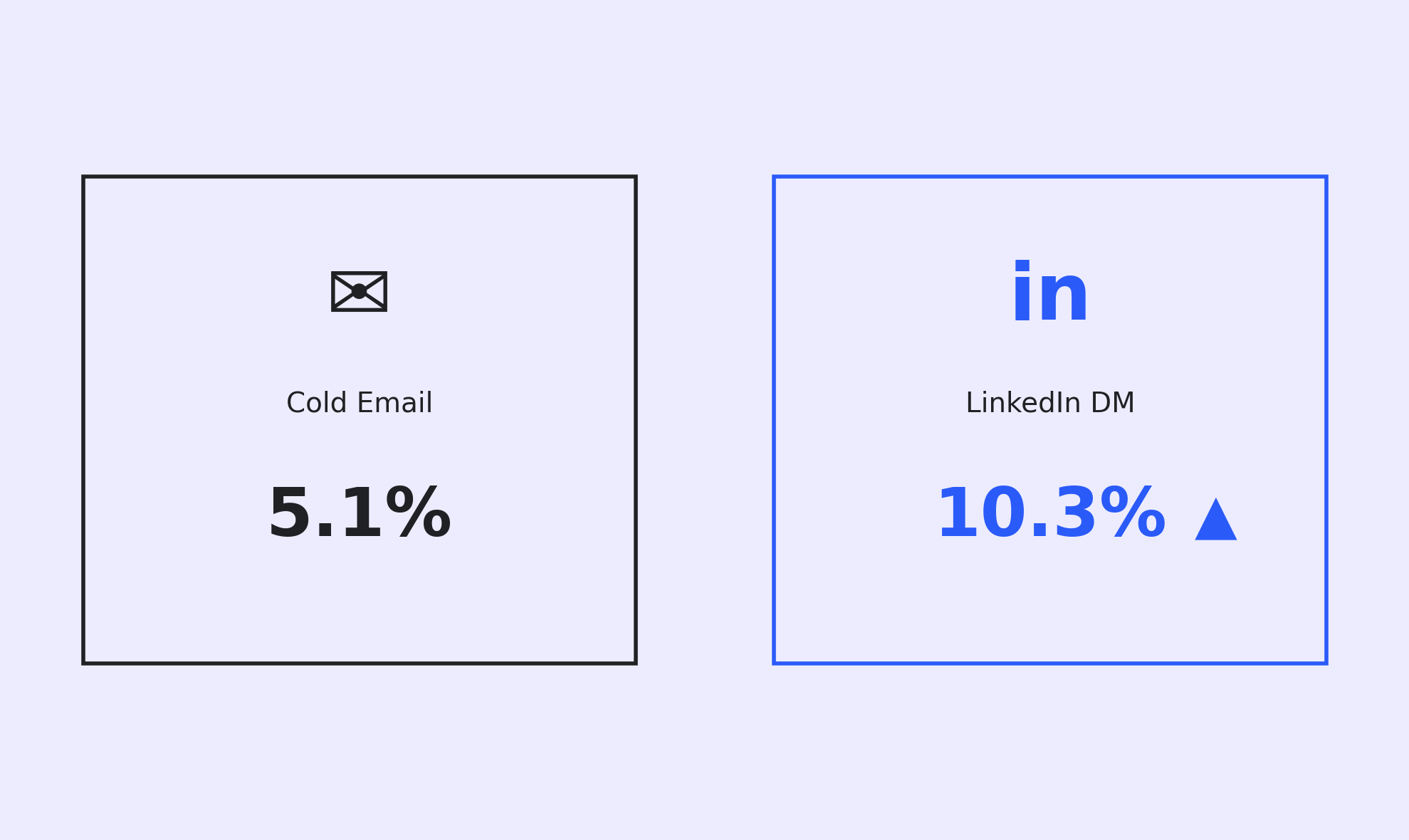
Response Rate Comparison: Cold email response rates average 5.1%, while LinkedIn Direct Messages achieve 10.3%—effectively double. LinkedIn InMail reportedly has a 300% higher response rate than traditional email.
The Warm-Up Mechanism: This is about familiarity bias.
- Day 1: View prospect’s profile (they see the notification)
- Day 2: Comment on their post (they see your name and headline)
- Day 3: Send personalized email
When your email arrives, the name in the “From” field is already familiar. Their brain categorizes you as “known entity” rather than “stranger,” dramatically increasing open probability.
The Follow-First Protocol: Cold connection requests have 15-30% acceptance rates. But utilizing “Follow, Engage, then Connect” boosts acceptance to 65-80%.
The workflow:
- High-Value Prospects: Follow first, comment on 2-3 posts over two weeks, then send connection request with personalized note referencing your interactions
- Volume Prospects: Send connection request immediately, but ensure your profile is fully optimized to do the heavy lifting
Social Selling Index Impact
LinkedIn’s SSI measures effectiveness across four pillars: establishing your brand, finding the right people, engaging with insights, and building relationships.
The numbers are stark:
45% more sales opportunities for professionals with high SSI scores versus low scores. This isn’t correlation—it’s causation driven by algorithmic visibility and relationship warmth.
51% more likely to reach quota for high-SSI sellers. When LinkedIn visibility compounds over months, it creates steady pipeline generation rather than boom-bust cycles.
78% of social sellers outsell peers who don’t use social media channels strategically.
Deal Velocity: Audiences exposed to consistent brand messages on LinkedIn are 6x more likely to convert when contacted through other channels.
Large Deal Impact: 31% of sales reps using social selling reported closing deals over $500,000 without a single in-person meeting. Digital trust can sustain even high-stakes enterprise transactions.
The mechanism: your LinkedIn presence creates “pre-validation.” By the time prospects receive your email or answer your call, they’ve already consumed your content, watched your videos, and mentally categorized you as an expert.
The Compliance Reality Nobody Discusses
Here’s where most people screw up:
Many professionals use tools that “scrape” LinkedIn data to find email addresses. This practice sits at the intersection of contract law and privacy regulation.
The hiQ vs. LinkedIn Precedent: This landmark legal battle established that while scraping publicly available data might not violate the Computer Fraud and Abuse Act, it absolutely violates LinkedIn’s User Agreement (Section 8.2).
The implication: if you use a scraping extension while logged into your account, you’re breaching your contract with LinkedIn. LinkedIn can—and does—permanently ban accounts for this. That’s career-ending for sales professionals.
GDPR Considerations: Using scraped emails for cold outreach faces significant scrutiny under European regulations. “Legitimate Interest” is often cited by outbound teams, but it’s a grey area when data was scraped without the subject’s knowledge.
The Guessing Risk: Some tools “guess” emails based on patterns (first.last@company.com). Using these without verification leads to high bounce rates, damaging your domain reputation and potentially violating privacy laws.
Ethical Prospecting:
- Avoid “live” scraping with browser extensions—it’s easily detectable
- Use verified databases from providers who source through compliant means
- Leverage LinkedIn Sales Navigator for identification, but move transactions to compliant channels
What Actually Drives Follower Growth
After analyzing thousands of profiles, here’s what consistently drives growth:
Consistency beats quality (to a point): Three mediocre posts per week outperform one perfect post per week. The algorithm rewards frequency and engagement patterns.
Reply to every comment: This doubles your engagement rate and signals to the algorithm that your content sparks conversation. LinkedIn prioritizes posts that generate discussions.
Post when your audience is active: Midweek posting remains standard, but there’s emerging opportunity in weekend posting—competition for feed space drops dramatically.
Use strategic hashtags: 3-5 relevant hashtags per post. More than that looks spammy; fewer than that limits discovery. Focus on niche hashtags (10k-100k followers) rather than massive generic ones.
Tag relevant people sparingly: Tagging 1-2 truly relevant people can expand reach. Tagging 10 people looks desperate and hurts performance.
Native > External: LinkedIn heavily penalizes posts with external links. If you must share a link, put it in the first comment after posting, not in the main post.
Building Your 30-Day Growth Sprint
If you’re starting from zero or stuck in low-growth mode, here’s your action plan:
Week 1: Foundation & Connection
- Update profile photo, banner, and headline with value proposition
- Turn on Creator Mode if you’re targeting broad audiences
- Send 20 connection requests daily to peers and lower-tier prospects
- Target: 30%+ acceptance rate
Week 2: The Commenting Engine
- Identify 10 “Top Voices” in your target industry
- Comment on their posts every morning (minimum 5 lines with unique perspective)
- Goal: Drive profile views from their audience
- Track: Profile views should double
Week 3: Content Initiation
- Post 1 text + image (personal story about why you’re in your industry)
- Post 1 PDF carousel (repurpose company whitepaper or educational content)
- Engage with every single comment on your posts within 1 hour
- Track: Follower growth should accelerate
Week 4: Multichannel Integration
- Start sending cold emails to prospects you engaged with in Week 2
- Reference your LinkedIn interaction in subject lines
- Track: Response rates should be 2-3x your normal cold email benchmarks
By day 30, you should see 100-300 new followers (if starting from under 1,000) and significantly higher email response rates from the multichannel touch strategy.
